Studio Diary, Reflecting on Barbara Hepworth and Henry Moore.

OLYMPUS DIGITAL CAMERA

You can imagine how massively pleased I feel when people say my work must be influenced by Barbara Hepworth and Henry Moore. They have been the corner-stone of my development as they have for so many artists of all disciplines.

Last July I finally made my first visit  to the Yorkshire Sculpture Triangle. I was invited by a lovely Collector who is from Yorkshire and is a big Hepworth/Moore fan. She has a range of my formative pieces; she is interested in those transitionary points in Artist’s work.

After the visit I poured out the first impressions in the Studio for a few months and now I’m re-studying the work of these giants and reviewing their influence on what I make and the process; The Doubts are always hovering on the edge. They regularly get to me and leave me questioning the validity of my work process; can you really share experience and ideas through abstract form?

Barbara Hepworth was confident that Sculpture was  an  essential natural work for humans, that it must be because we have done it since our very earliest days. Studying her work and biography taught me that you can join forces with your material to translate the voice of your environment into  forms  that will communicate to others.

Hepworth, Moore and most of their extraordinary contemporaries were quite sure that if you trained your craftsmanship thoroughly, and knew and respected your material, you would be able to work directly through your well informed intuition to create valuable, meaningful artwork that ‘felt right’ to you and spoke to others. The incomparable Conceptual Artist Grayson Perry talked about these values in his Reith Lectures this year and stated that perhaps the time we are in now is in need of evocative, powerful art that talks to the soul rather than the intellect.

I decided to write this post over these reflective months to clarify what I’m doing in my own practice. I will add to it over time to help maintain my focus.

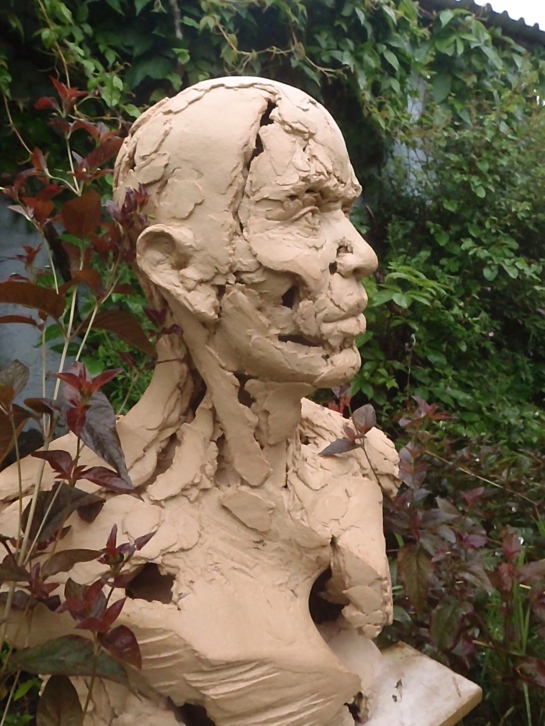
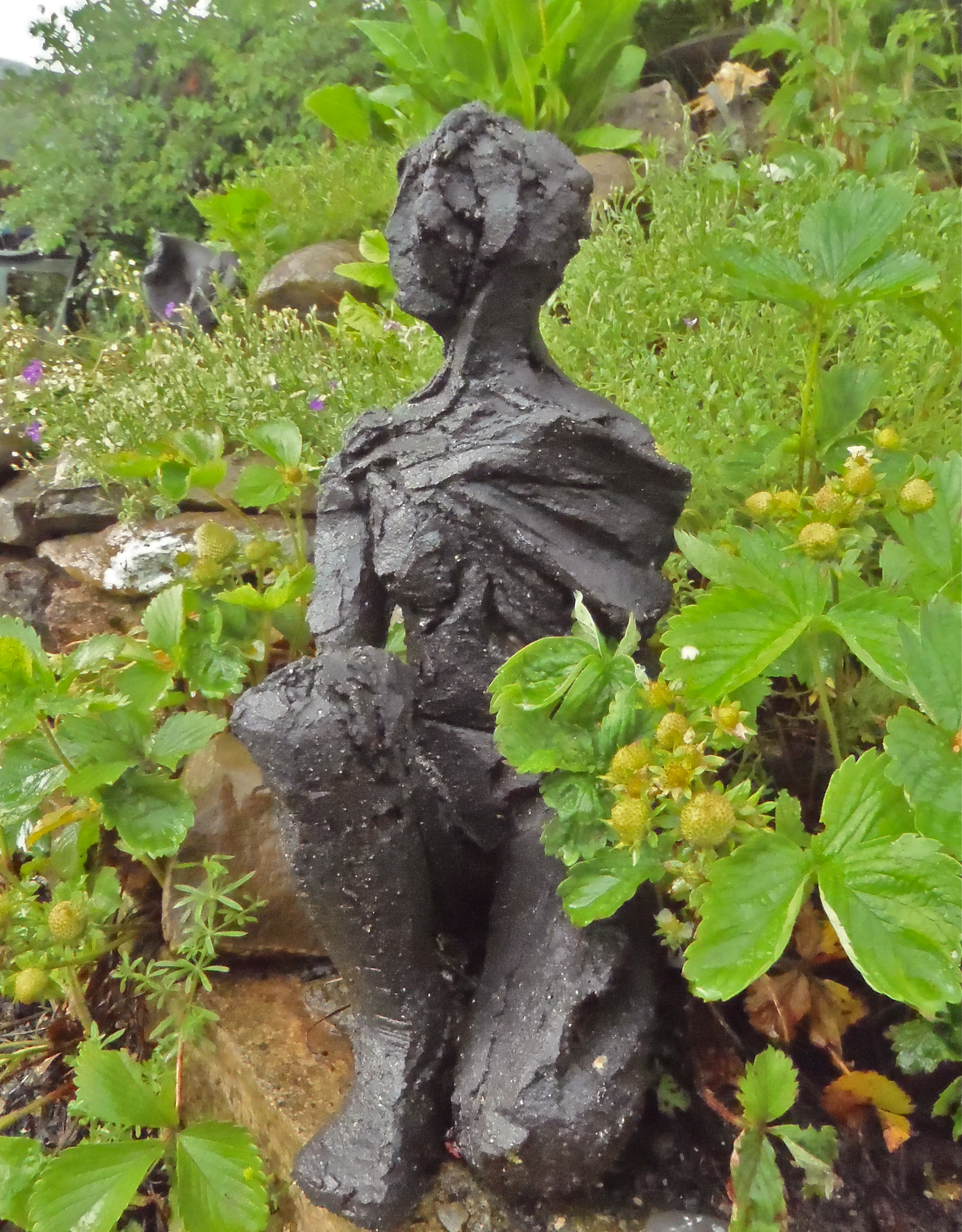
It really looks like this lad is checking his phone.
It really looks like this lad is checking his phone.

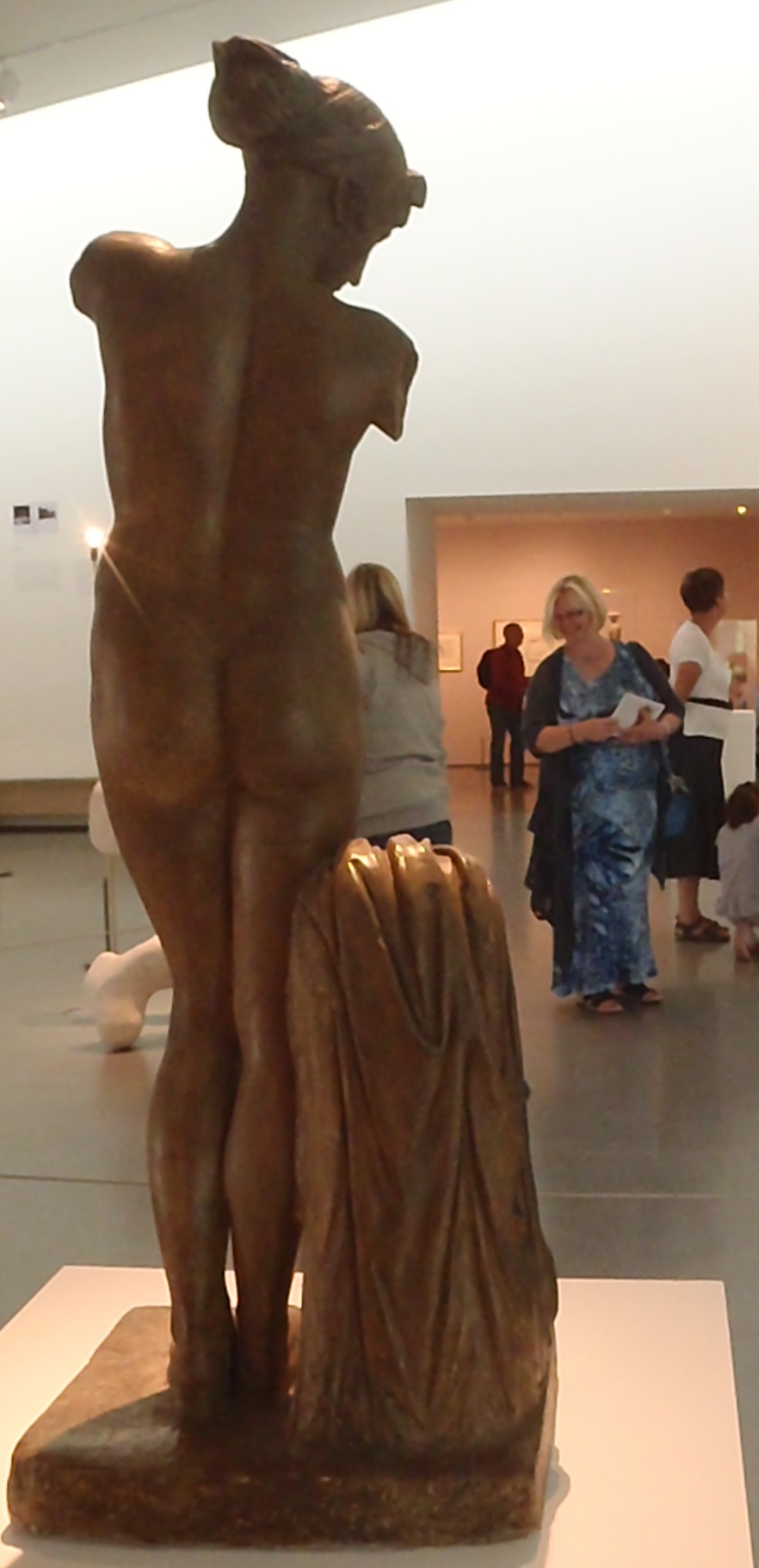
Both Hepworth and Moore studied the figure extensively in the traditional way.

Both Hepworth and Moore studied the figure extensively in the traditional way.

I was one of those kids who was always making things out of toilet paper and sellotape and by my teens, in the 1970s, I was taking my subject seriously. I read everything I could find about my favourites, Barbara Hepworth and Henry Moore and I tried to copy their  education. I lived in Oxford (UK) at the time so I could spend hours drawing in the Cast Gallery ( an amazing collection of casts from Greek and Roman statuary; extraordinary, muscly figures that kept still!)  in the basement of the Ashmolean Museum. In  Pitt Rivers Museum there was Skeletons and freaky taxidermy ( animals in crazy poses, that kept still.) At Oxpens Tech we did formal life-drawing of nudes and during my BFA hons at the Art Department of Boston University, USA, I was was hugely fortunate to be taught figure and portrait skills by Lloyd Lilly. He was a wonderful and exacting tutor and I owe him a great deal.
OLYMPUS DIGITAL CAMERA

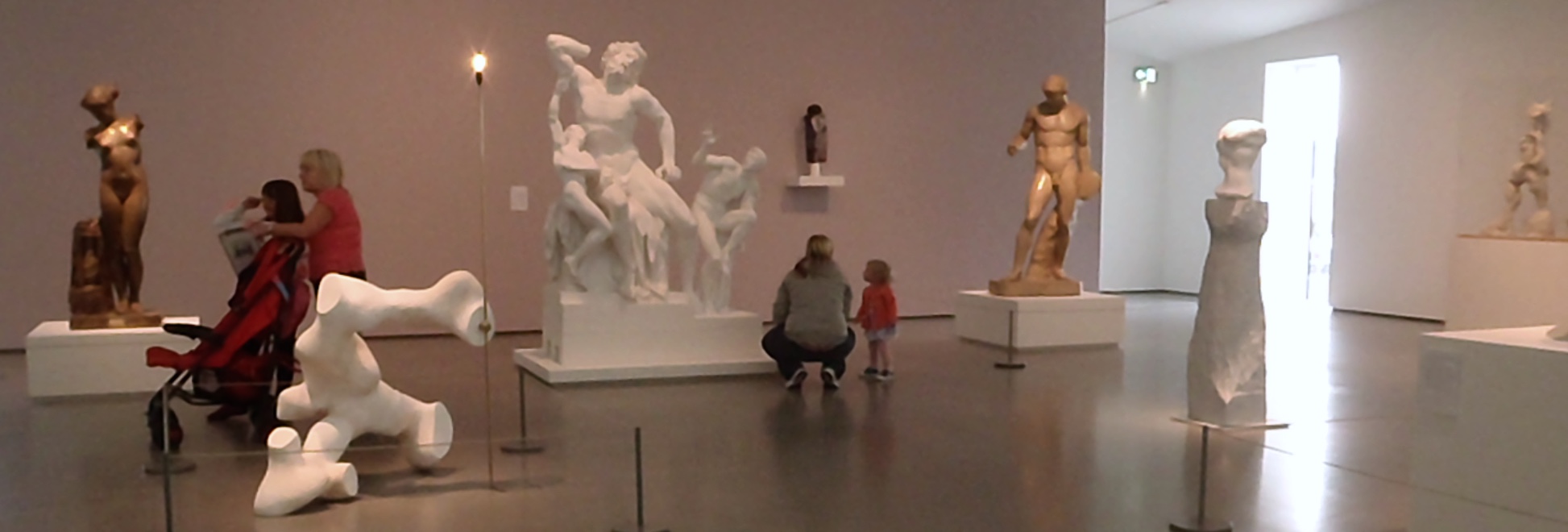
At The Hepworth in Wakefield.

In my early 20’s I lived in Cornwall, UK, for a year or so and visited  Hepworth’s Studios in St. Ives and kissed the ground she walked upon. My work started to properly Abstract around then under the wonderful, great-humoured, very practical guidance of the lovely sculptor Ron Wood.
OLYMPUS DIGITAL CAMERA     OLYMPUS DIGITAL CAMERA


So this trip to Yorkshire was a pilgrimage for me. And it was absolutely wonderful. Pippa was a fabulous host and such a great person to be with because she is fascinated with sculpture and comes to it from a different angle than I do, making talking it through with her intricate and revealing. Plus she is a laugh and we had a great deal of fun; she showed me the real Wakefield right down to the Rhubarb Liquor.
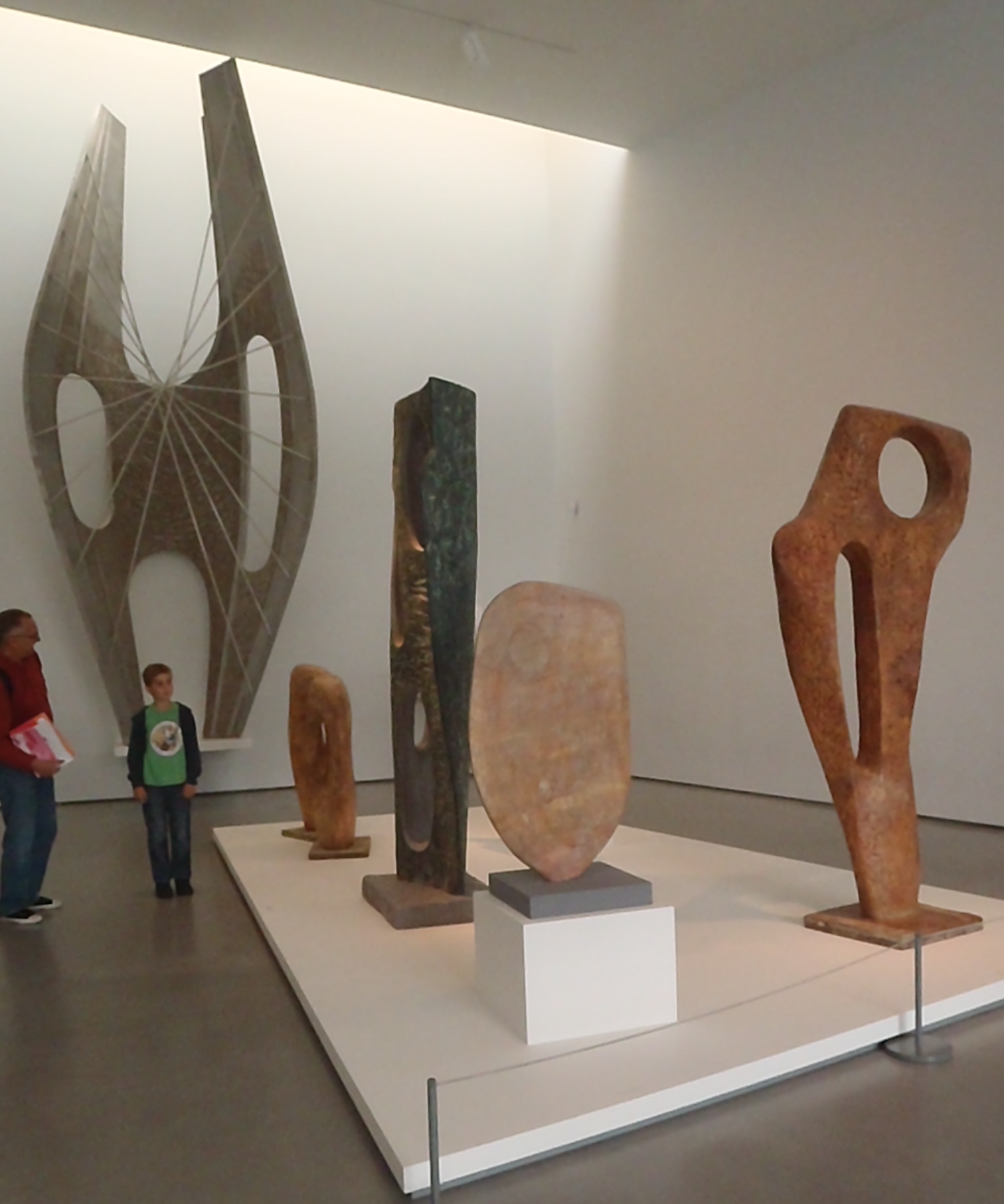
The Hepworth at Wakefield.

The Hepworth at Wakefield.

The Hepworth in Wakefield is just awesome. A striking modern building with wonderful light. It’s right in town near the shops and one of the things that made me so jubilant was seeing families who had clearly dropped in for another visit as a treat for their excited kids who were loving it. The Museum staff had groups of children sitting on the floor laughing and chatting and making things in front of these stunning sculptures. No hushed tones, everyone there (and it was busy) was relaxed and enchanted.
OLYMPUS DIGITAL CAMERA

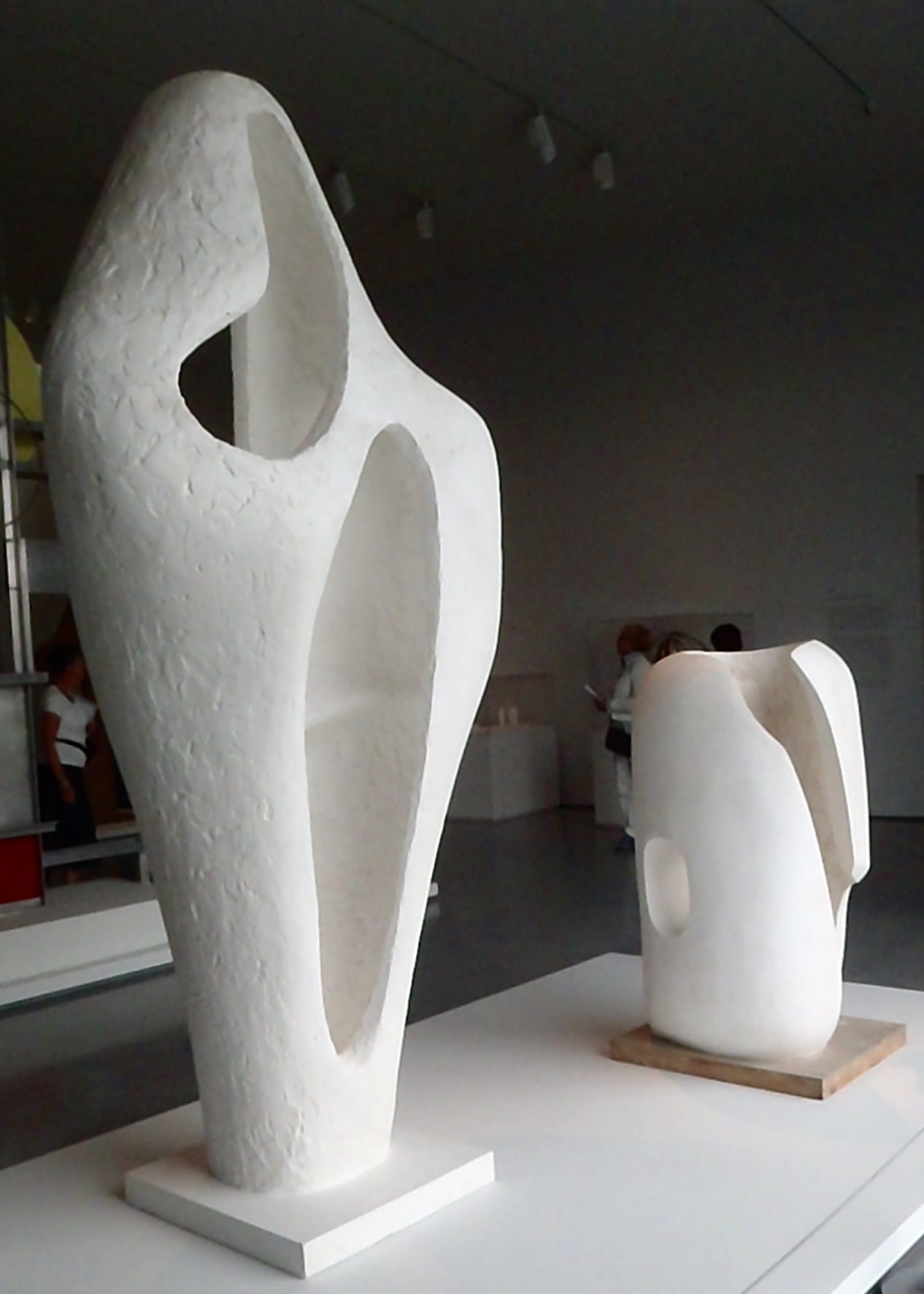
Barbara Hepworth, Figure for Landscape, 1960.

The major Hepworth Retrospective ‘Sculpture for a Modern World’ is at the Tate in London this year, so  everything was re-arranged and Pippa spotted pieces she had never seen before.
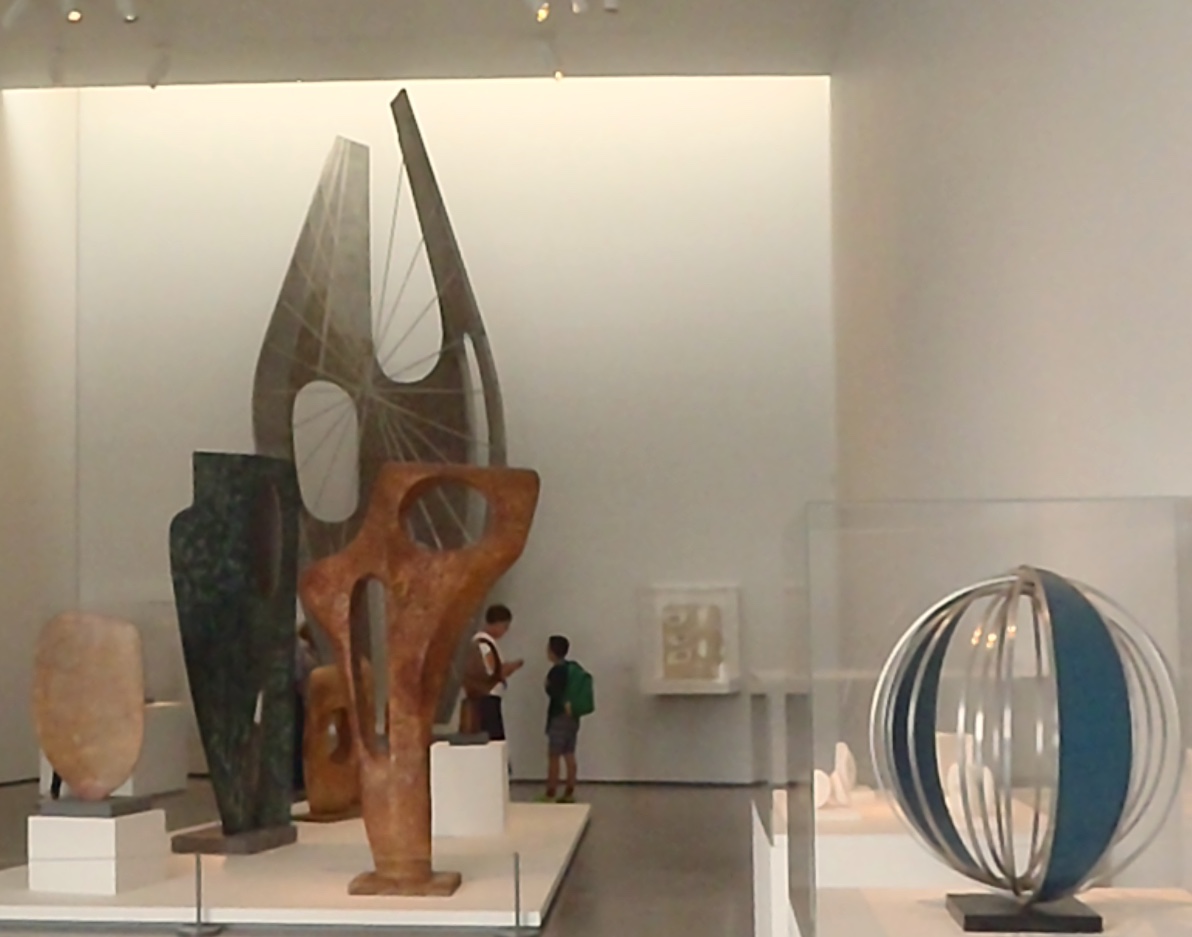
This room is fantastic.

This room is fantastic.

The scene was the same at the Yorkshire Sculpture Park. It was an ordinary weekend and the huge carparks were packed. Families and friends were walking amongst the fantastic sculptures with the relaxed ease of familiarity, having picnics, playing, soaking-in the presence and passion of the artwork.
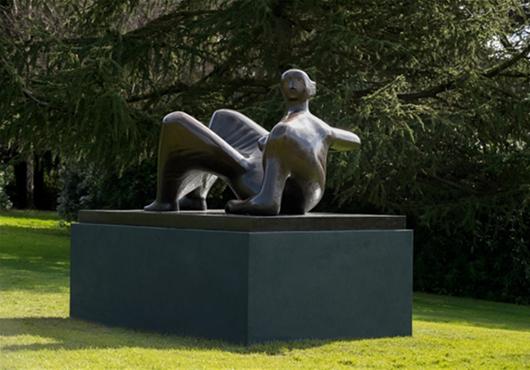
Henry Moore
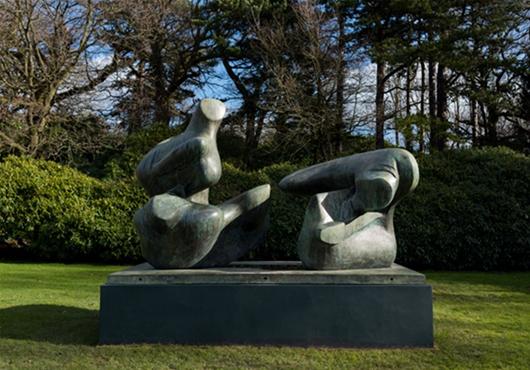
Henry Moore
Henry Moore

Henry Moore

 Anthony Caro
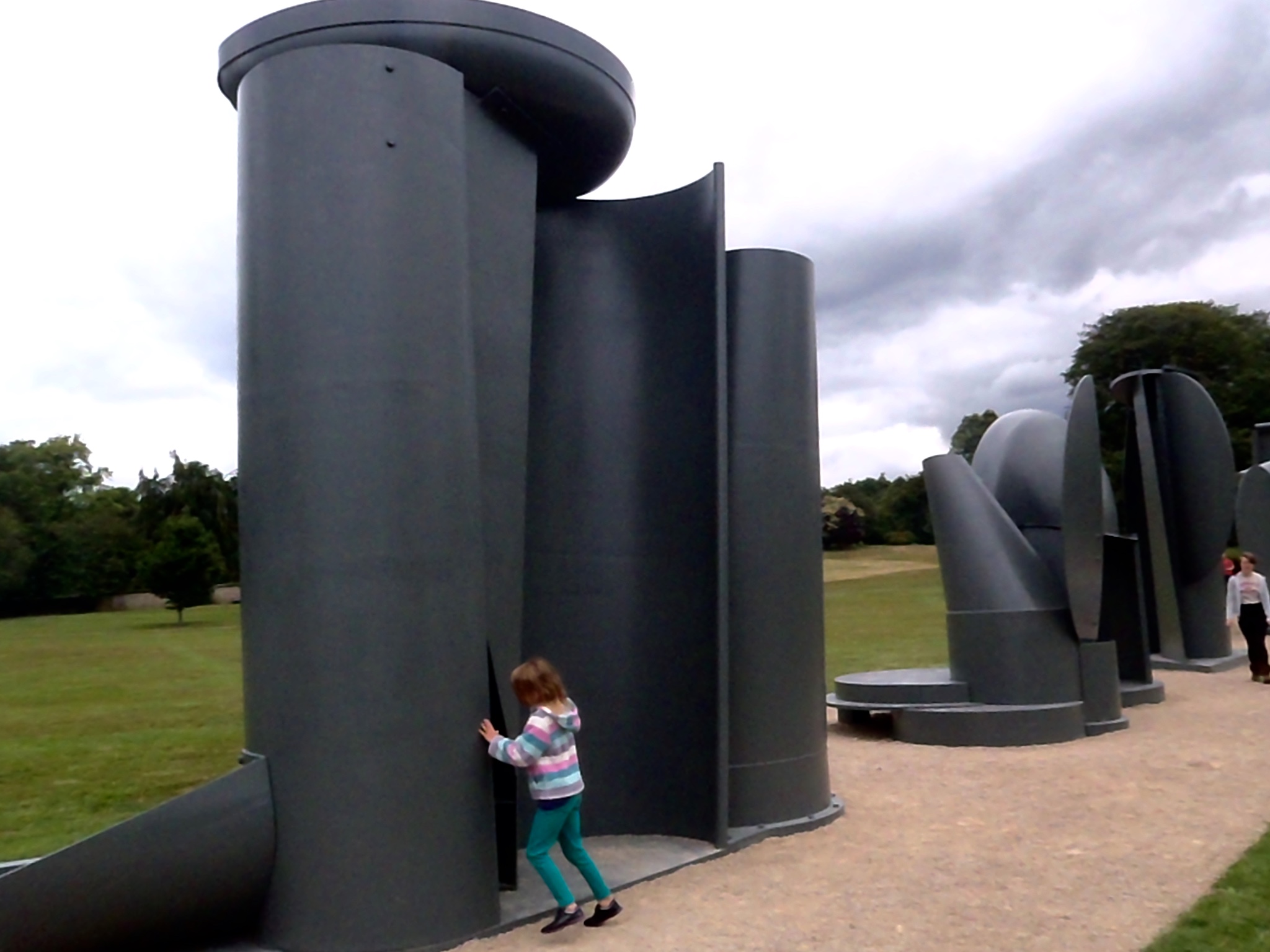
Anthony Caro

Rebecca Buck, Osprey Studios

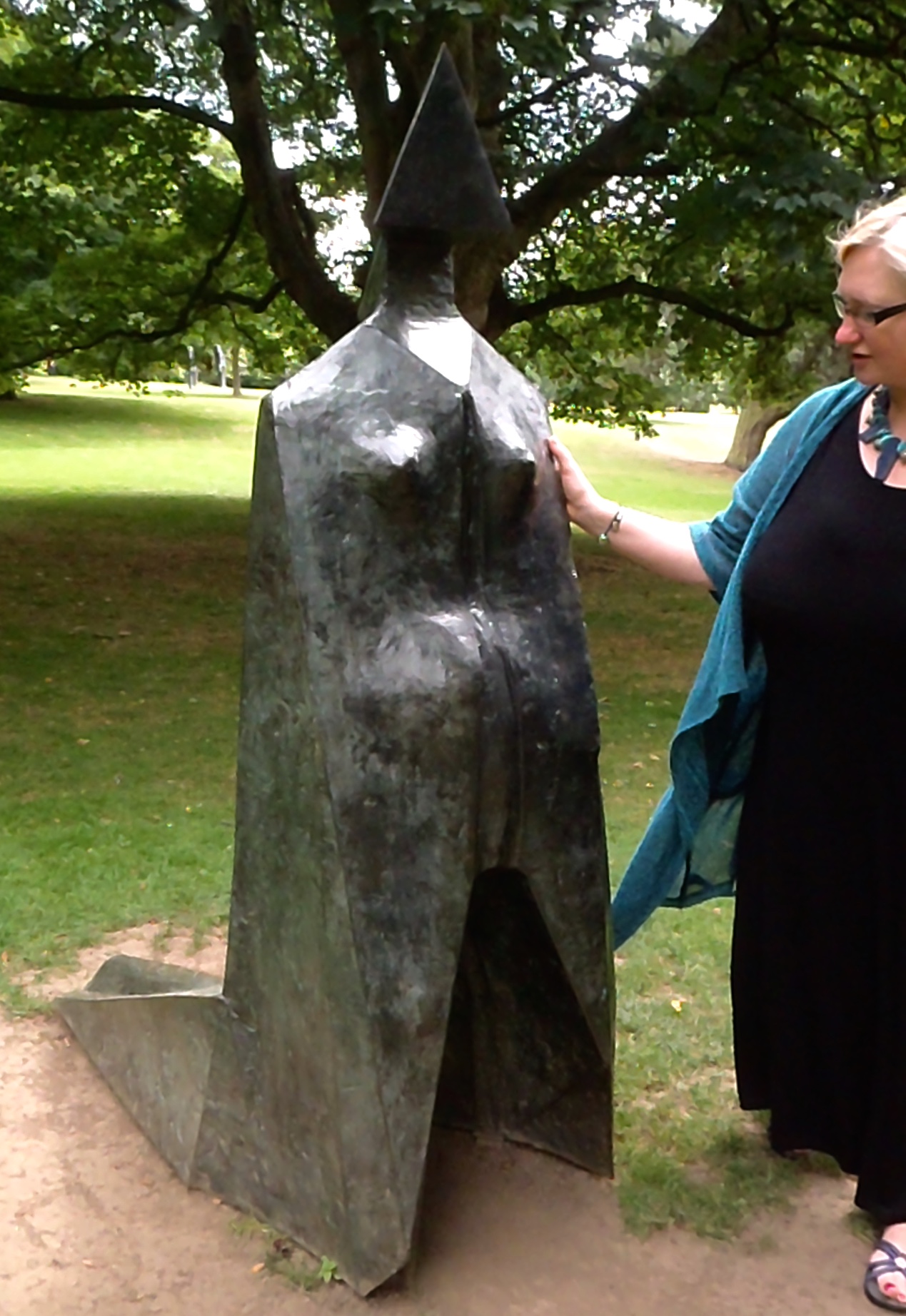
Lynn Chadwick.

In the Underground Gallery they had set a completely stunning exhibition ” Henry Moore, Back To A Land”. Such a great title, I was hooked as soon as I saw it as we entered the Park.  The Show  was beautifully lit and spacious. There were pieces I had never seen before.  And lots of preparatory work like small scale models, drawings, found objects like intriguing stones. His tools were  laid out respectfully. I would dearly love to have had this Show as my home. It was wonderful. There is a nice short film that introduces the Show the very well; Henry Moore at YSP.

I had planned to do my BFA,Hons thesis on Henry Moore. I had an appointment to meet with him in 1985. I transported my feint ghost of a self, rigid with respect, awe and generalised terror, to his home and Studio. But sadly he was too unwell that day to see me. One of his very kind, thoughtful and generous assistants took me around the studios and told me all about it. I wrote my thesis about him in the end and I cringe to admit that I can’t remember his name. They were enlarging this sculpture, or one very like it , in polystyrene, scaling up from a small model Henry Moore had made many years previously. The Lovely Assistant told me that Henry often felt very anxious when this happened, that he wasn’t sure it was right to enlarge a piece made to be small. We all get the doubts…!
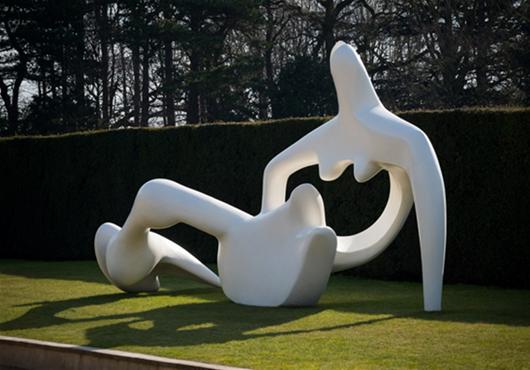
Henry Moore

Henry Moore

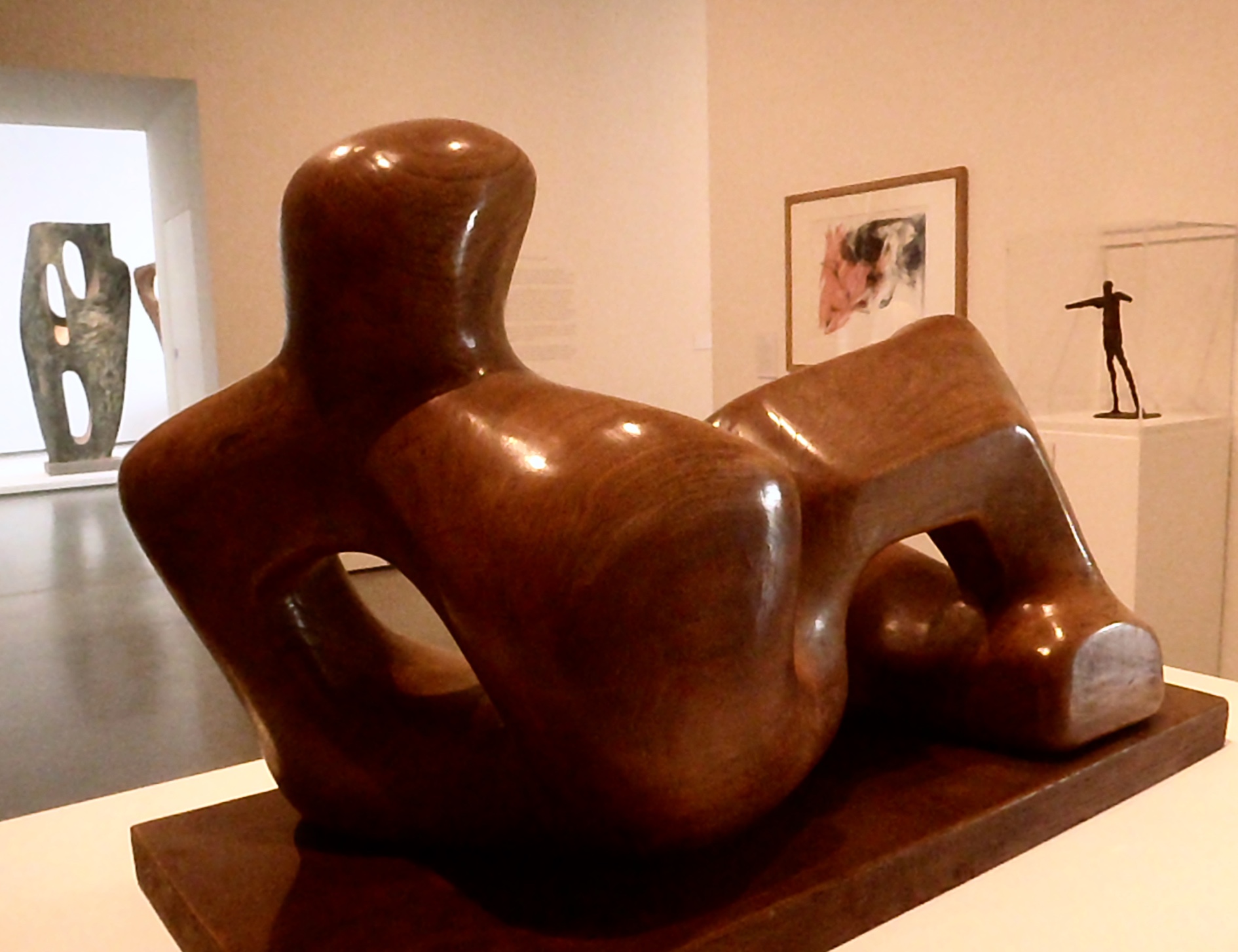
Both Hepworth and Moore used evocative, shifting textures that further describe the forms by capturing shadows and reflecting concentrated spots of light. In both of these exceptional venues you can get right up close and inspect the craftsmanship. At YSP, even outside, they do ask that you don’t touch the work  but the sheep use them as windbreaks and scratching posts so most people feel there their gentle caress wont do any harm and it feels very good to send Henry Moore a whispered message of gratitude and recognition from the heart and through the hand.
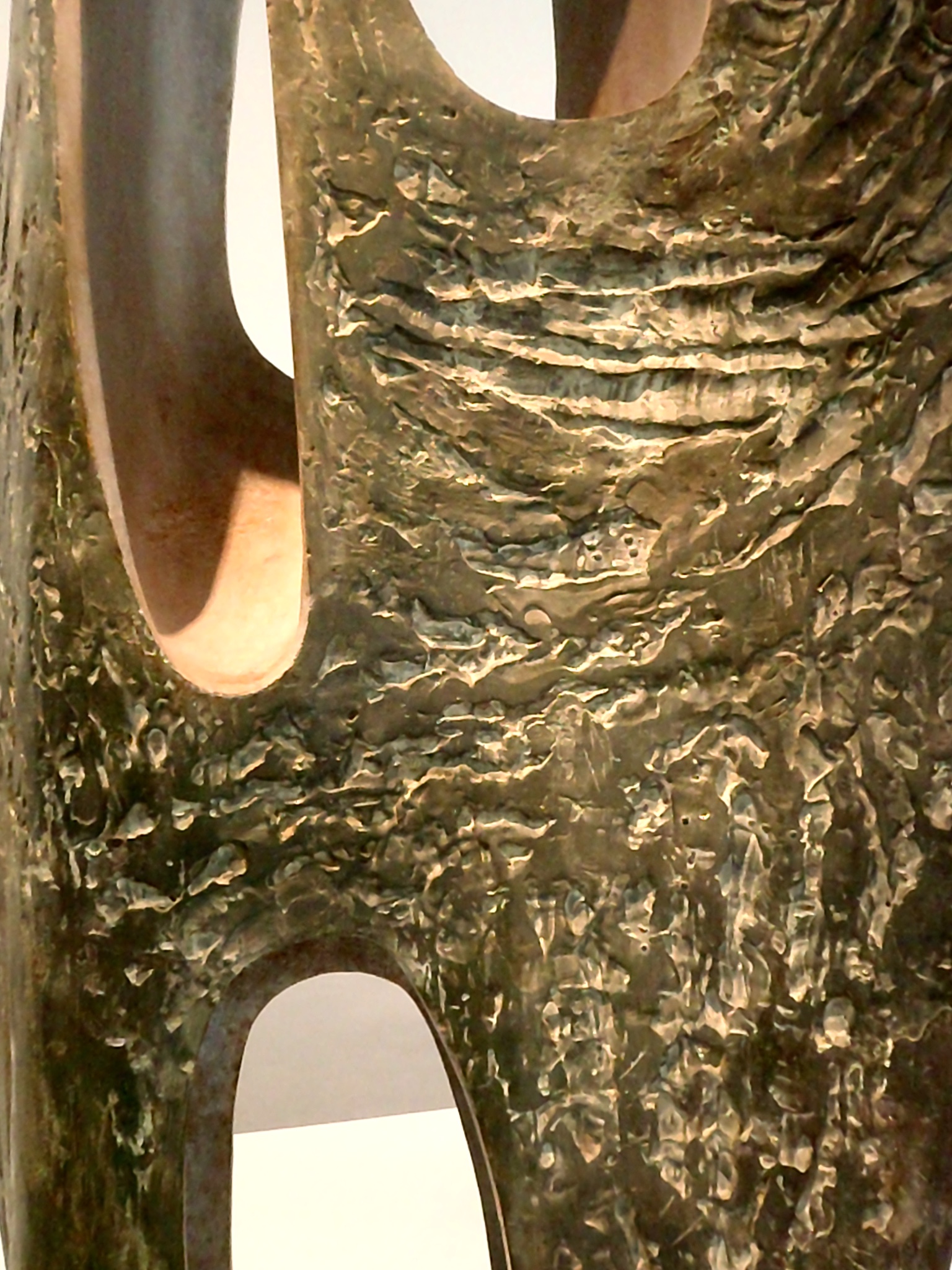
Barbara Hepworth

Barbara Hepworth. Detail of Rock Form (Porthcurno), 1964.
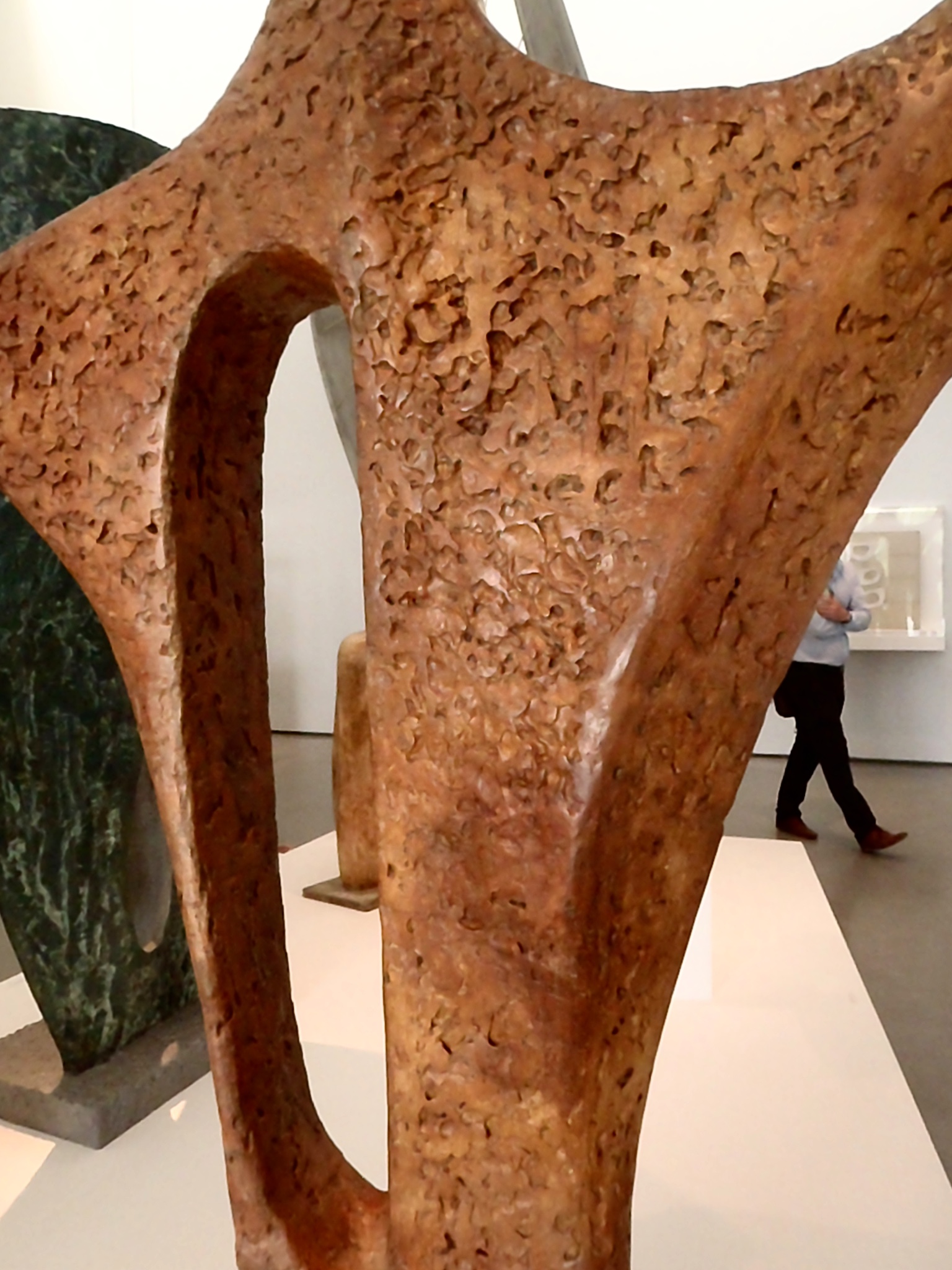
Barbara Hepworth

Barbara Hepworth, Figure (Archaean) 1959.

These details of Rock Form and Figure (Archaean) show the deeply textured surface built up in plaster with the intension of ultimately being bronze. Both Moore and Hepworth had carving as their true-love but both built up forms with plaster, and occasionally clay, for models, to be cast in bronze. Here’s the whole of Rock Form showing the texture across the form;

Barbara Hepworth
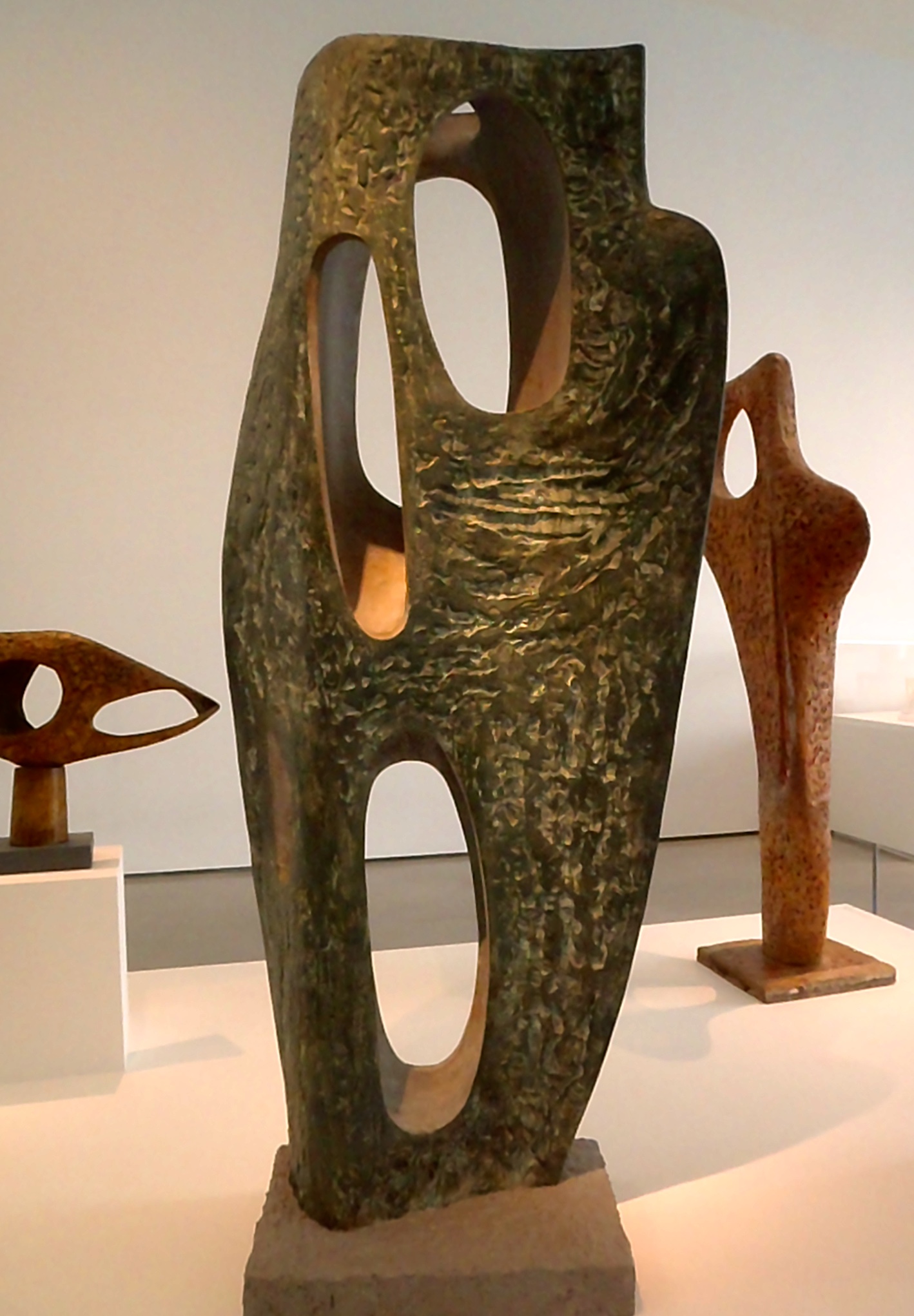
Barbara Hepworth

Barbara Hepworth

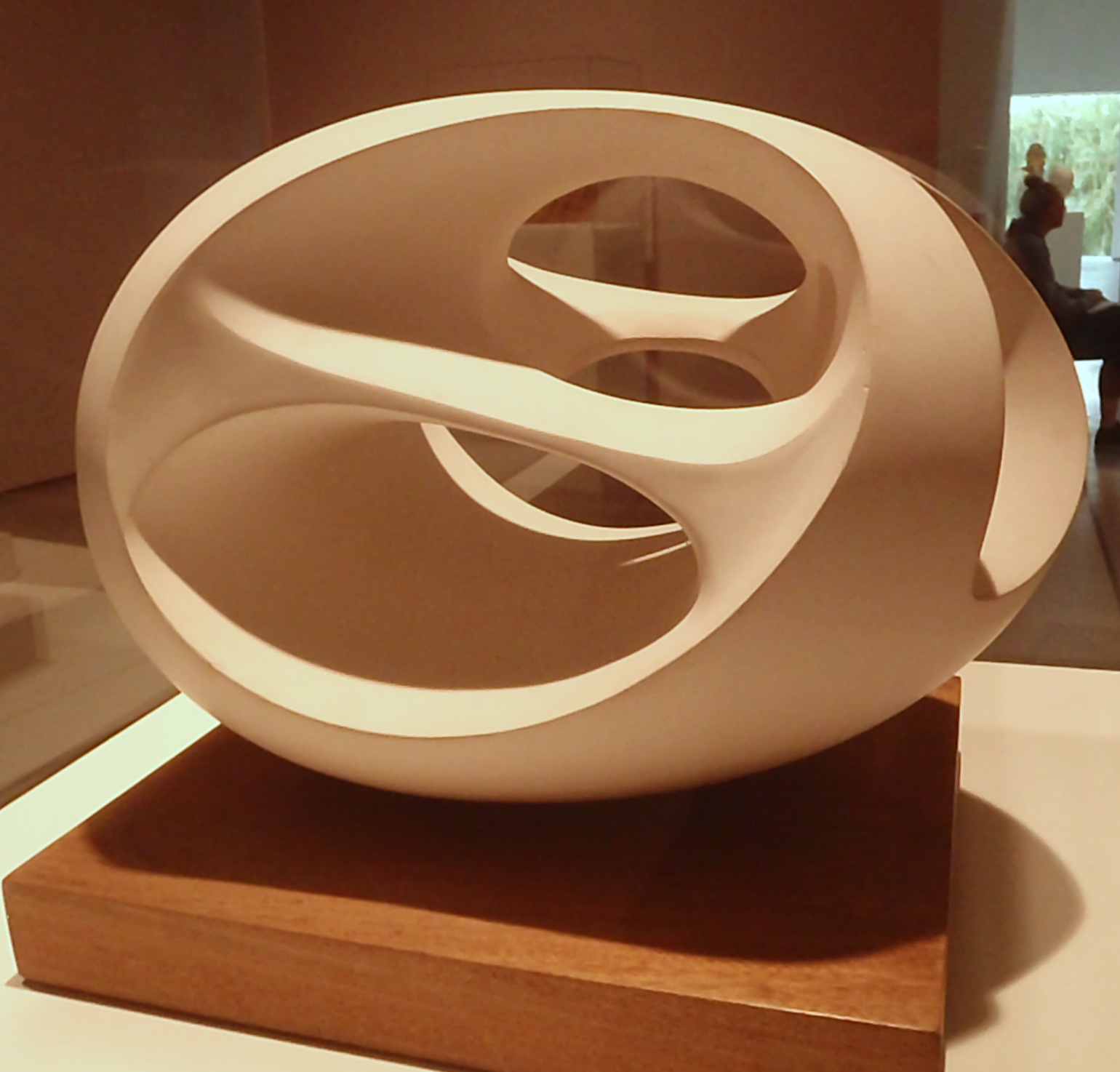
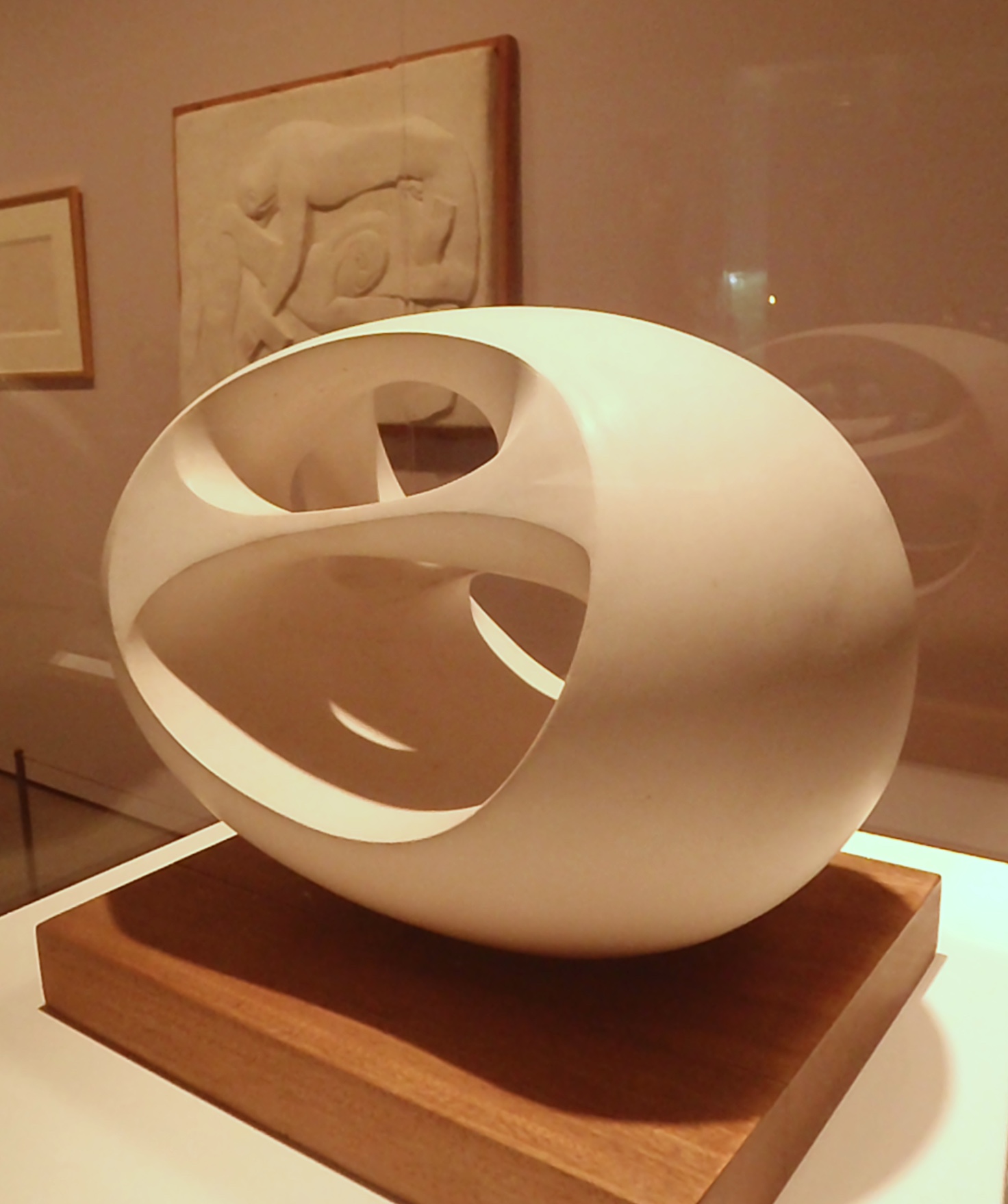
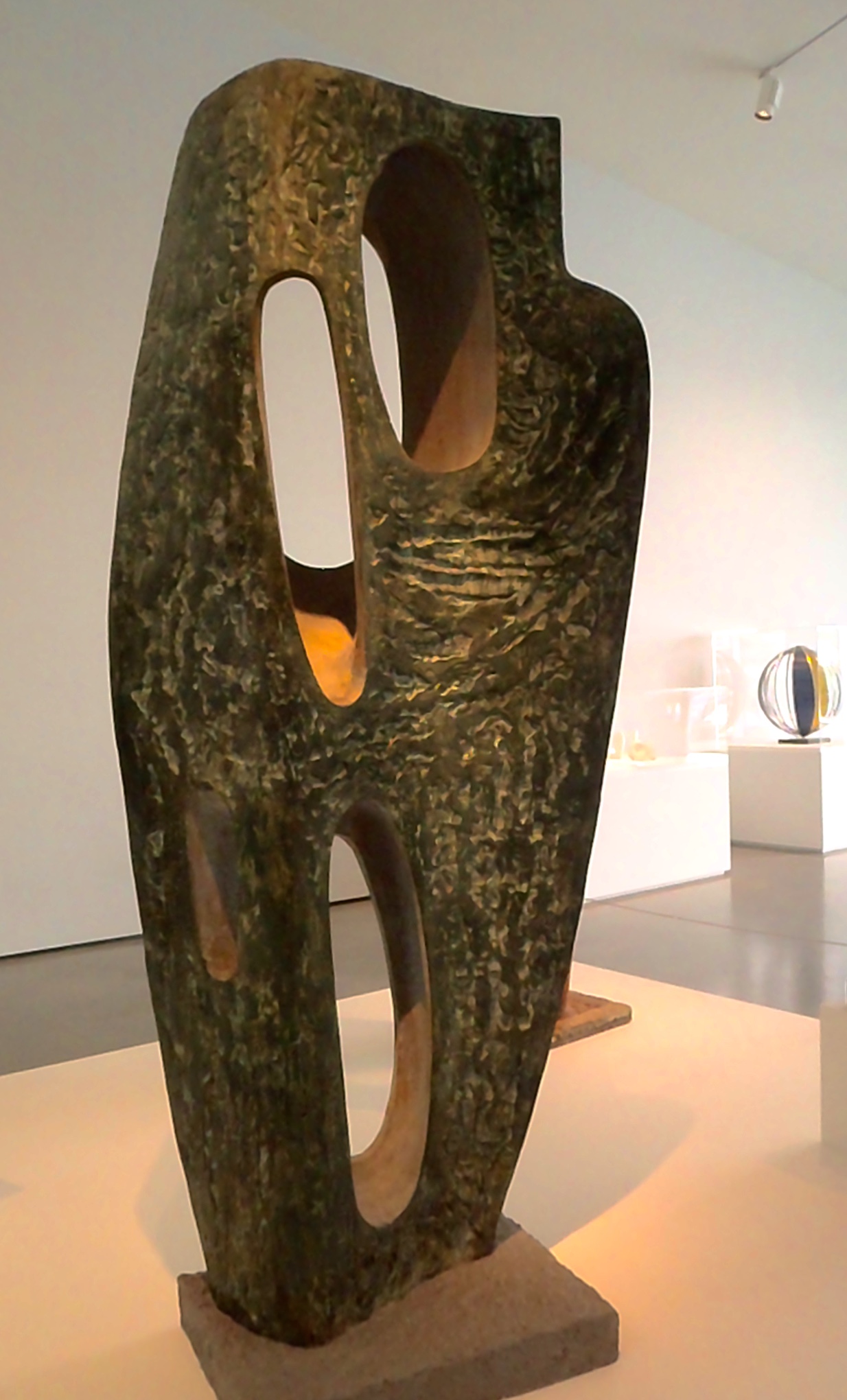
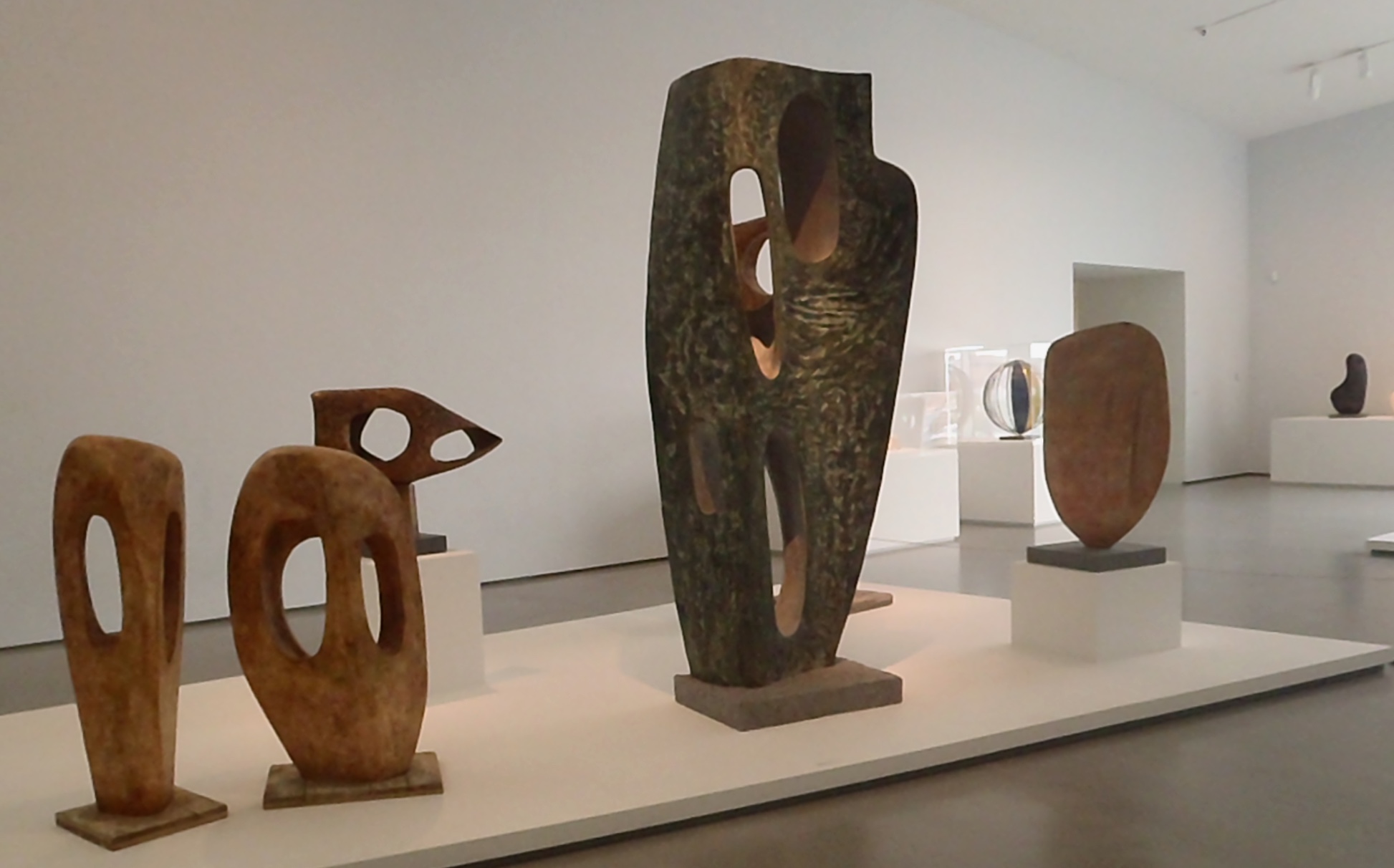
Barbara Hepworth, Rock Form (Porthcurno), 1964. She wrote of the group of pieces that include this one;’these are all sea forms and rock forms, related to Porthcurno on the Land’s End coast with its queer caves pierced by the sea. They were experiences of people- the movement of people in and out is always a part of them’. I lived in St Agnes on the north Cornwall coast around 1980ish. Fabulous area over-flowing with strange myths, legends and other-worldly beings. People often go there to loose themselves for a while. Hepworth moved her young family there just before WW2 broke out. Her Studio and the work in it left in London was destroyed by bombings. She stayed in Cornwall for the rest of her life, playing her part in the prosperity of the area along with Bernard Leach’s Pottery that continues to this day with the Tate Gallery having a wing there.
Barbara Hepworth
Barbara Hepworth

Barbara Hepworth

Barbara Hepworth

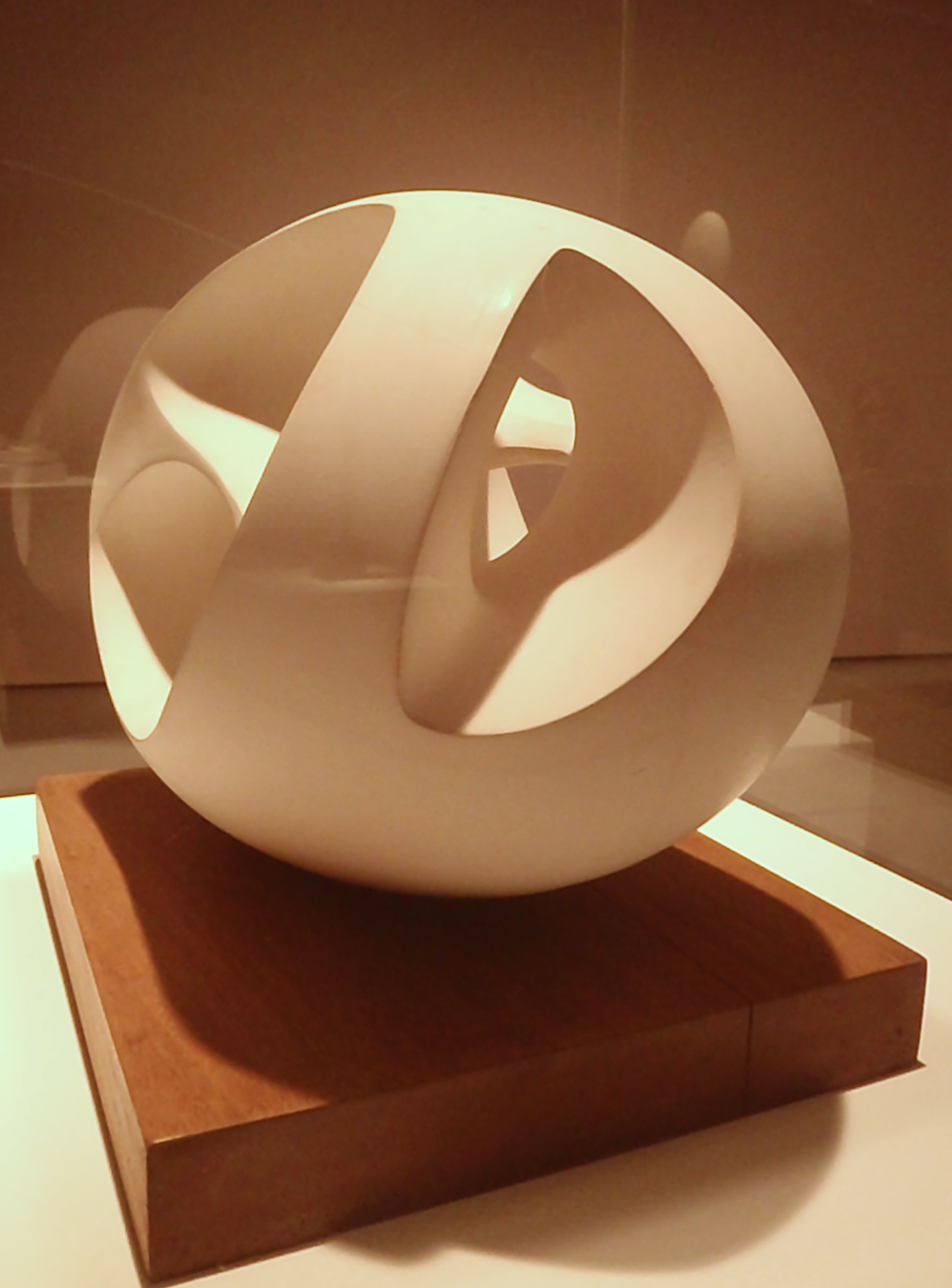
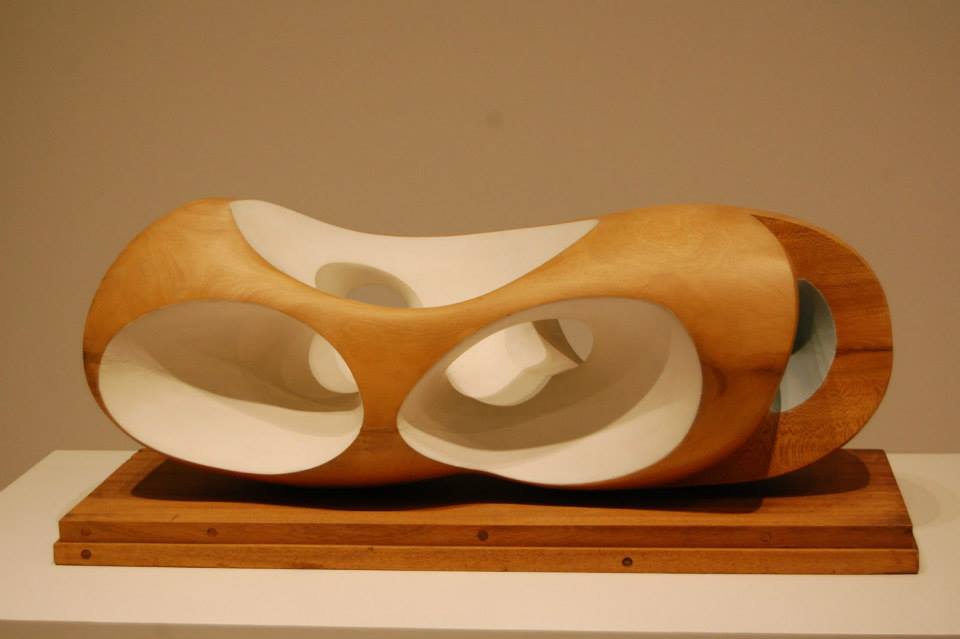
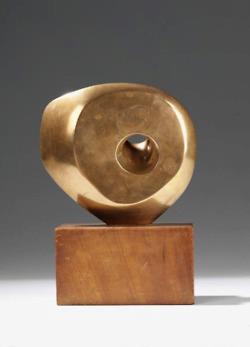
I particularly love Rock Form. The holes face into the form bringing light in to meet within the shelters of the sculpture. Both Moore and Hepworth use the edges of holes so ingeniously to hold or pour light around the forms. Interior space is a massive issue with sculpture made in ceramic because the pieces usually have to be hollow if they are over a certain size wether that space has meaning to the theme or not. Bronzes are hollow too but, no matter what it is made into, ceramics always carries it’s ancient history of pots that is so intricately entwined in our evolution that we describe our bodies as vessels; no one can resist looking into the openings of big pots , can they. I am particularly re-studying the use of holes and the directing of a flow around forms in both sculptors work.

Henry Moore

Henry Moore

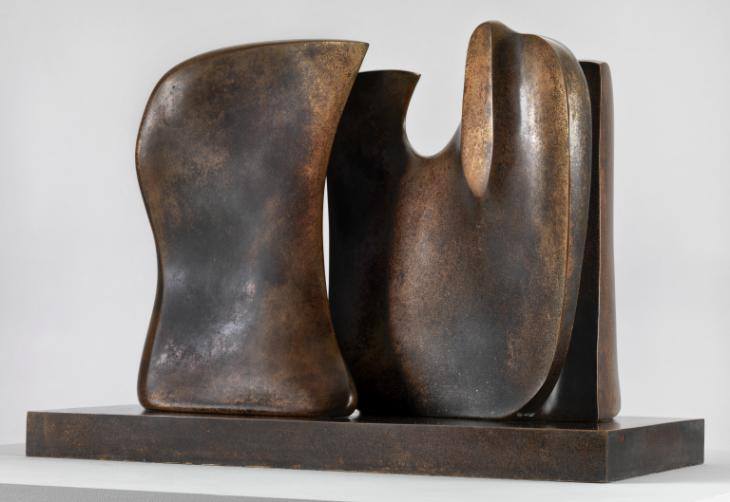
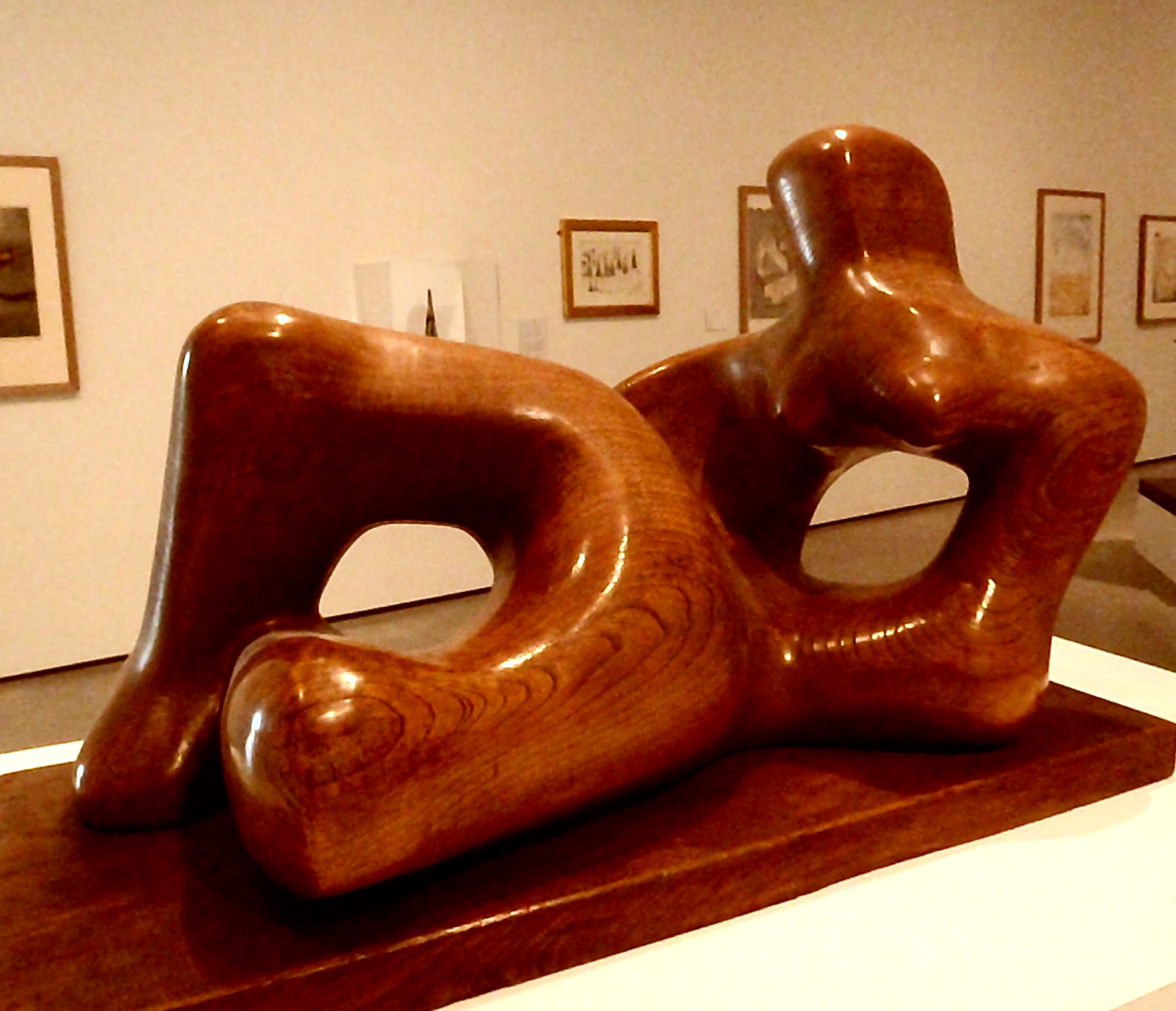
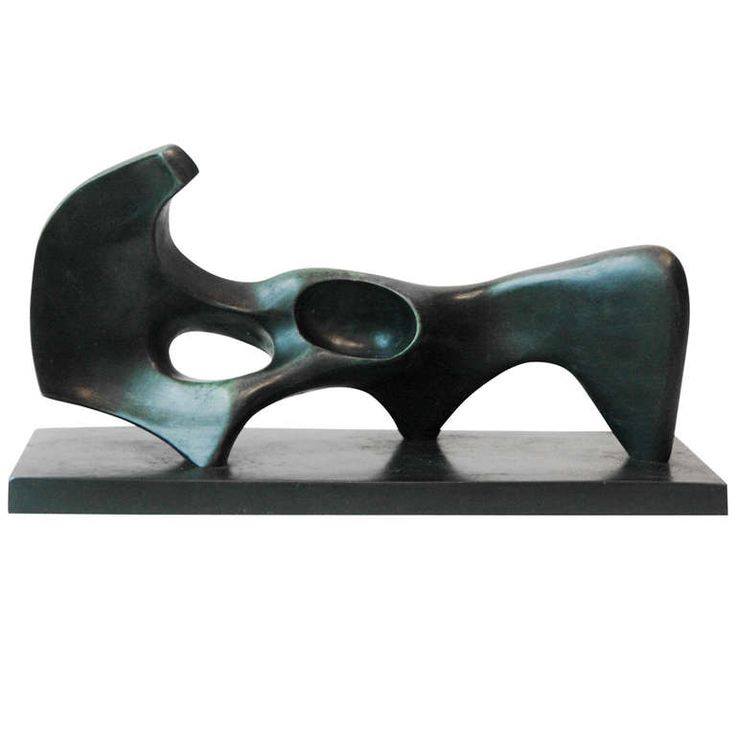
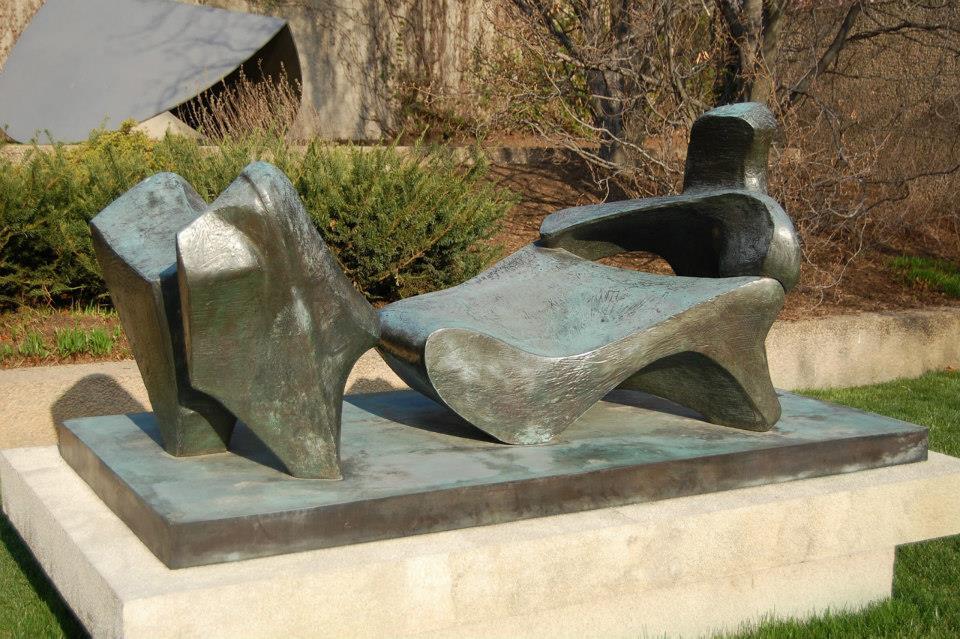
They both also used grouped forms a lot and one sculpture made of several parts is classic Moore. It’s really hard to do. Currently my work is gradually disassembling; bases reduced as far as possible, interior space integrated with the exterior (to a point…LOT more work needed there…) surfaces deeply textured. But so far any attempts to divide the form reek of pastiche. You can’t fake this stuff, it has to be sincere and real. Henry Moore had a strong relationship with the monumental formations of stone on the moors of his formative environment and tunnelling coal mines of his community. For the last 17 years  I have lived in a landscape and culture shaped by mining; 12 in the Rhondda Valley and making Pit Markers and Memorials across the Valleys and the last 5 years  in the Upper Tawe Valley, with the front of Osprey Studios  facing a working pit and and the back  facing the ancient, worn, mountains of the Brecon Beacons. The Landscape Series ( with the awesome Photographer, Stephen Foote) is all about describing our place within  the Natural World in this location and experiential frame-work; I am guided by the foot-steps of  giants. Pleasingly I live at the foot of Cribarth, the Sleeping Giant mountain, which rounds that train of thought off nicely.
Anthony Caro

Anthony Caro

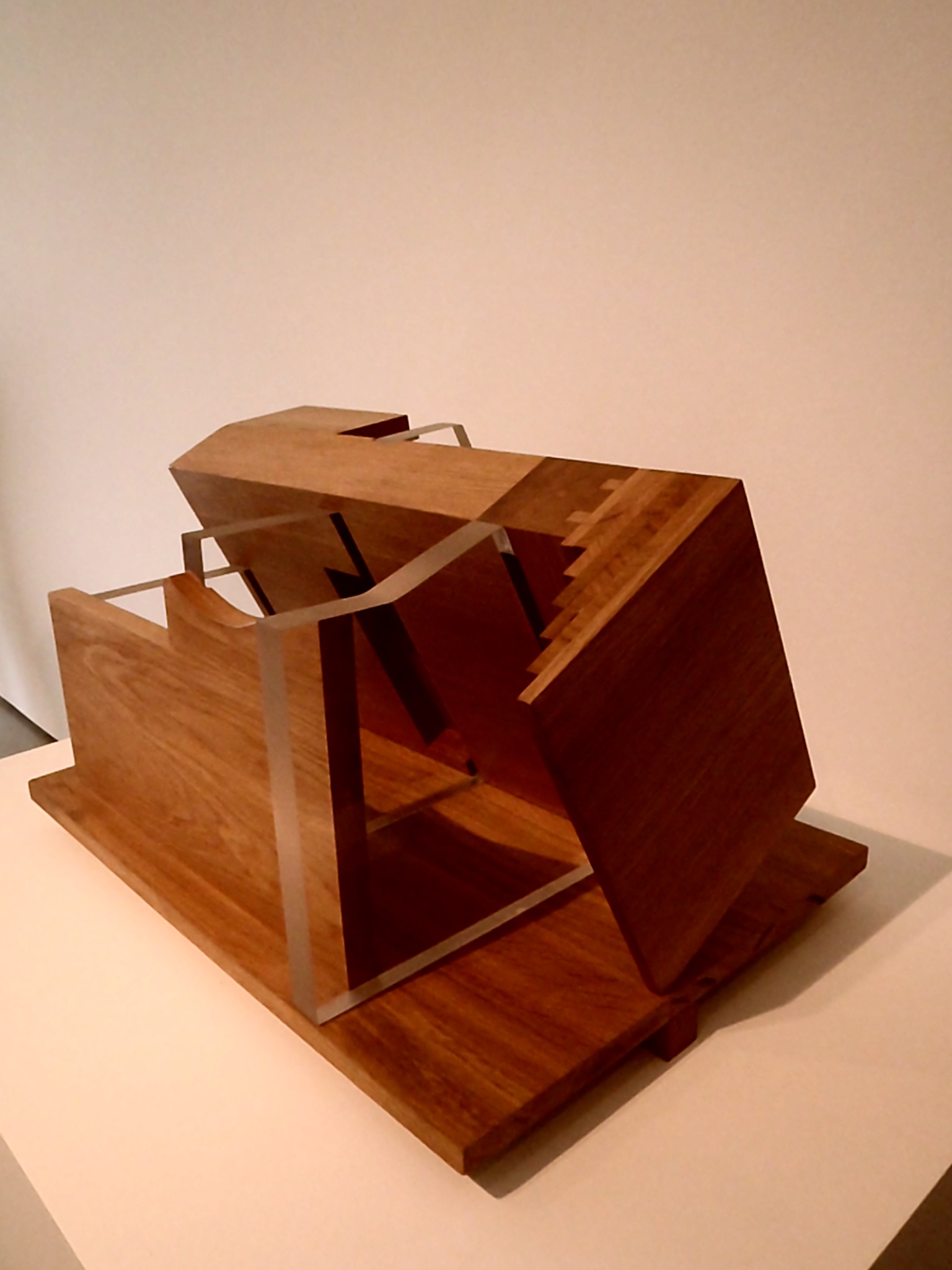
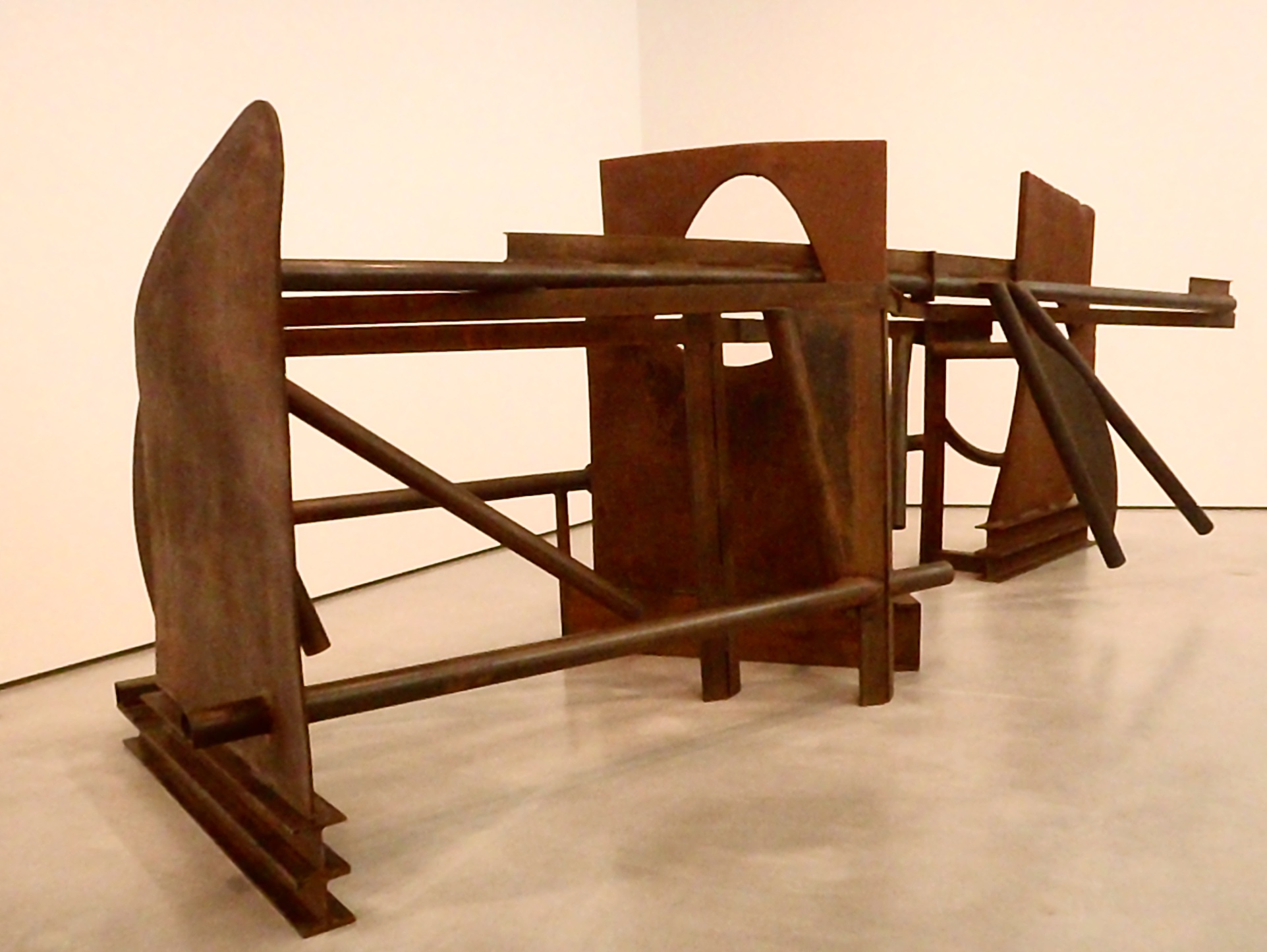
Anthony  Caro was also on show at YSP, with lots of fab models and a few sculptures that got to me because they played with contained space and were beautifully made.
Anthony Caro

Anthony Caro

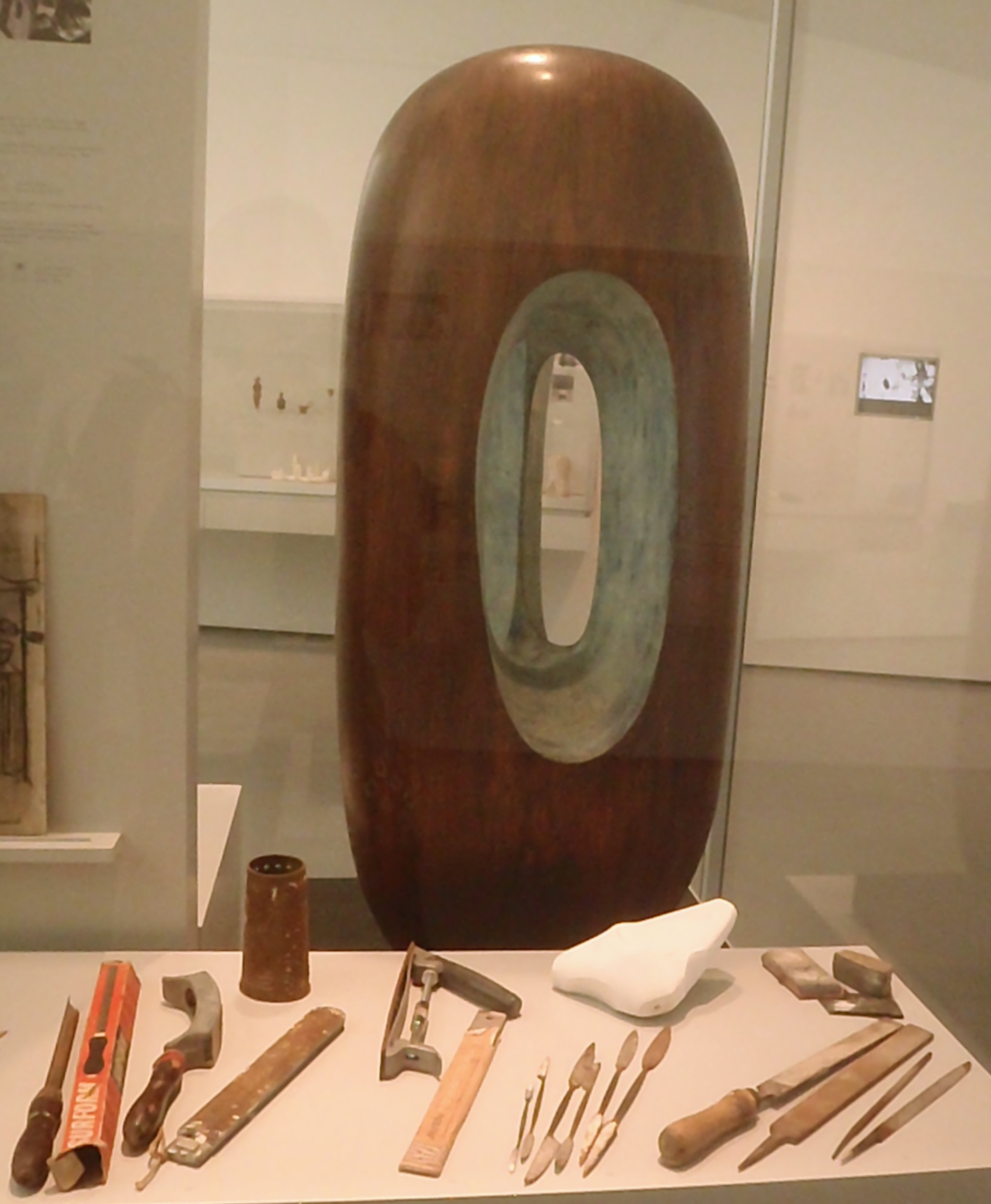
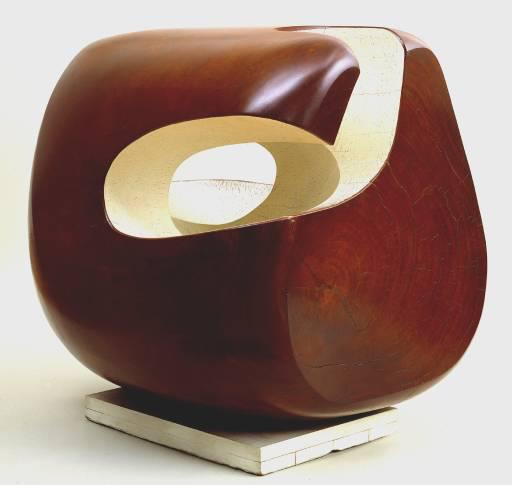
The carvings of Hepworth and Moore are beyond beautiful. The ethos of Truth To Materials, held by their group of artist colleagues for some years, shines out especially in the wood pieces. I took this idea very much to heart as an intense teenager. Clay comes in a multitude of disguises, no  single one speaking for all clay. Each blend of wild clays has it’s own characteristics to be celebrated. I still honour my material and work for it. It is a powerful material fully aware of the ties that bind us to it. It has shaped us and our societies countless times over the Millenia.
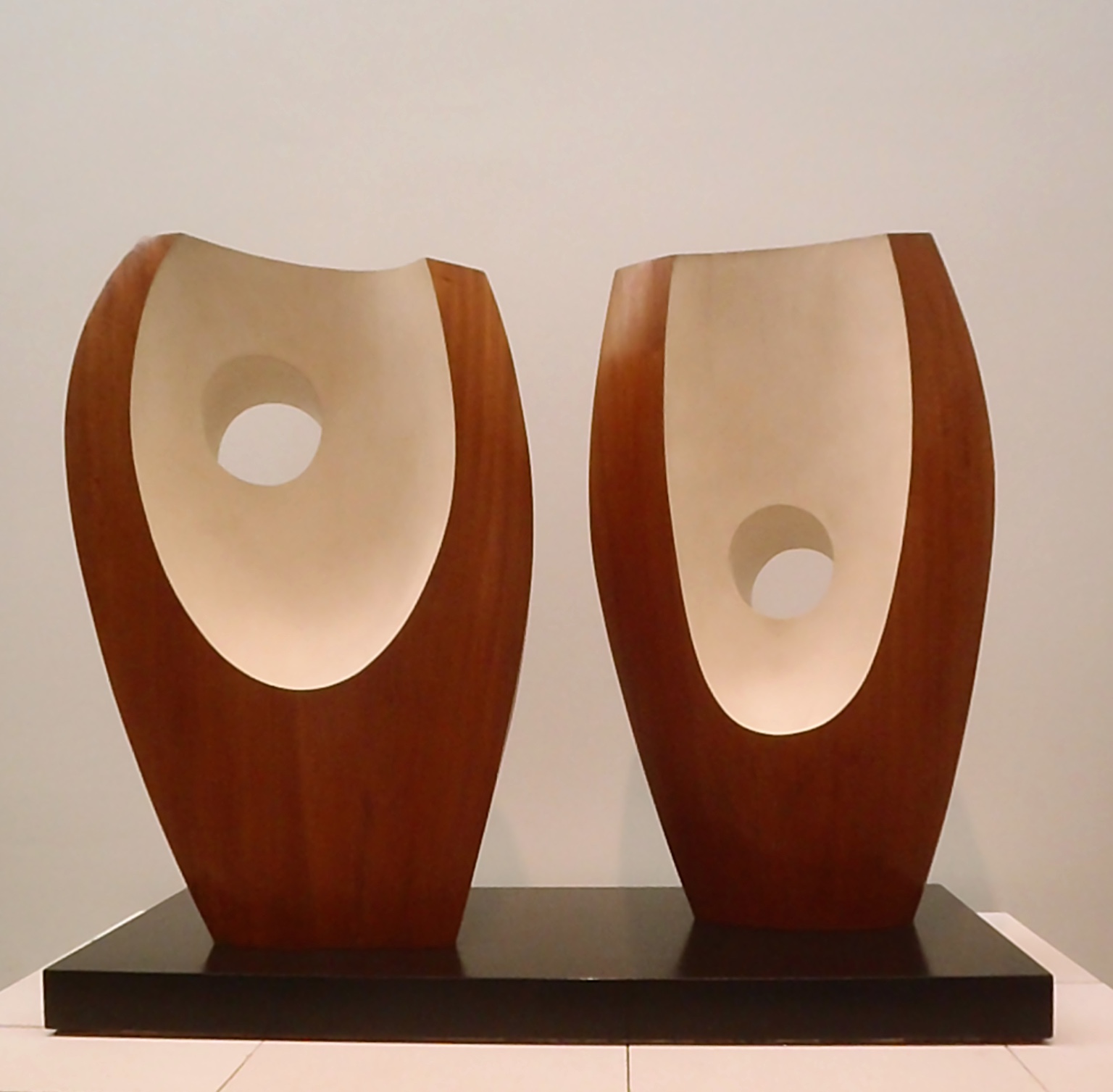
Barbara Hepworth
Barbara Hepworth

Henry Moore

Henry Moore
Henry Moore

Henry Moore

Barbara Hepworth

Barbara Hepworth, carving in wood and some of her plaster-work tools.

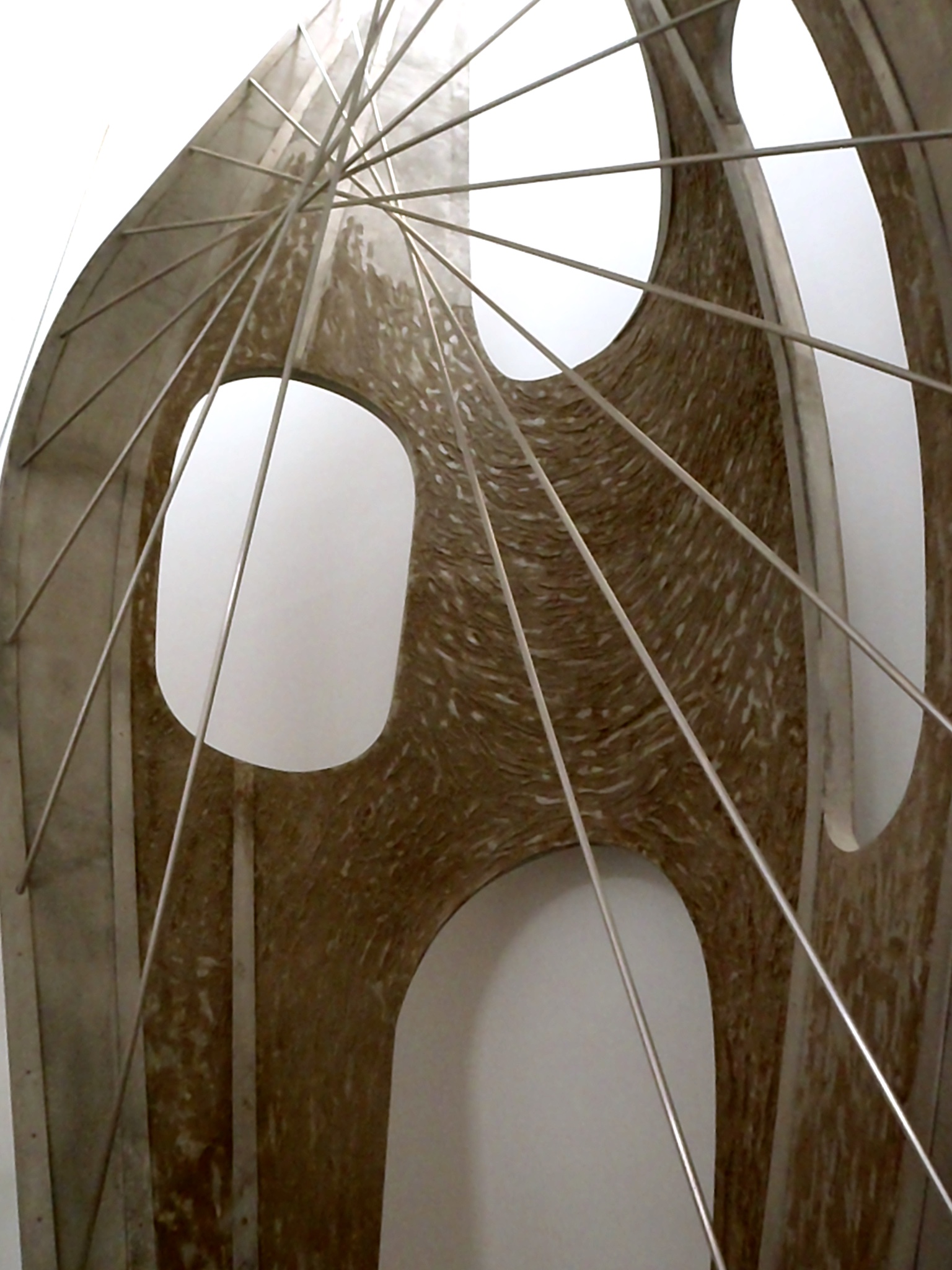
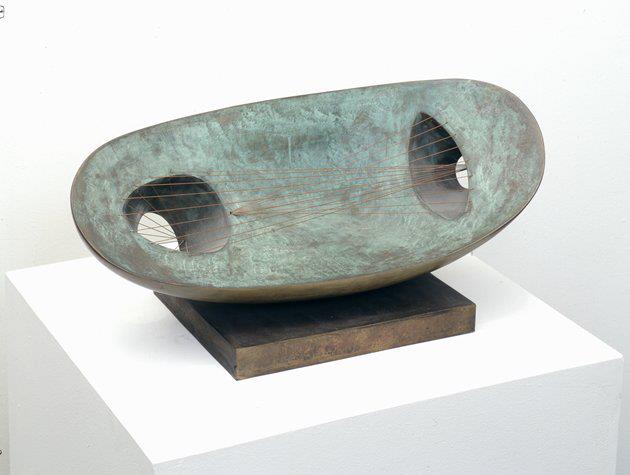
Barbara Hepworth used lines of string or steel to follow the forces running through the forms. Henry Moore often cut lines into the surface. Both are such bold and fantastically effective things to do in certain circumstances. Working from these examples I’ve been using repeated patterns of texture or curves  to achieve the same thing with various degrees of success.
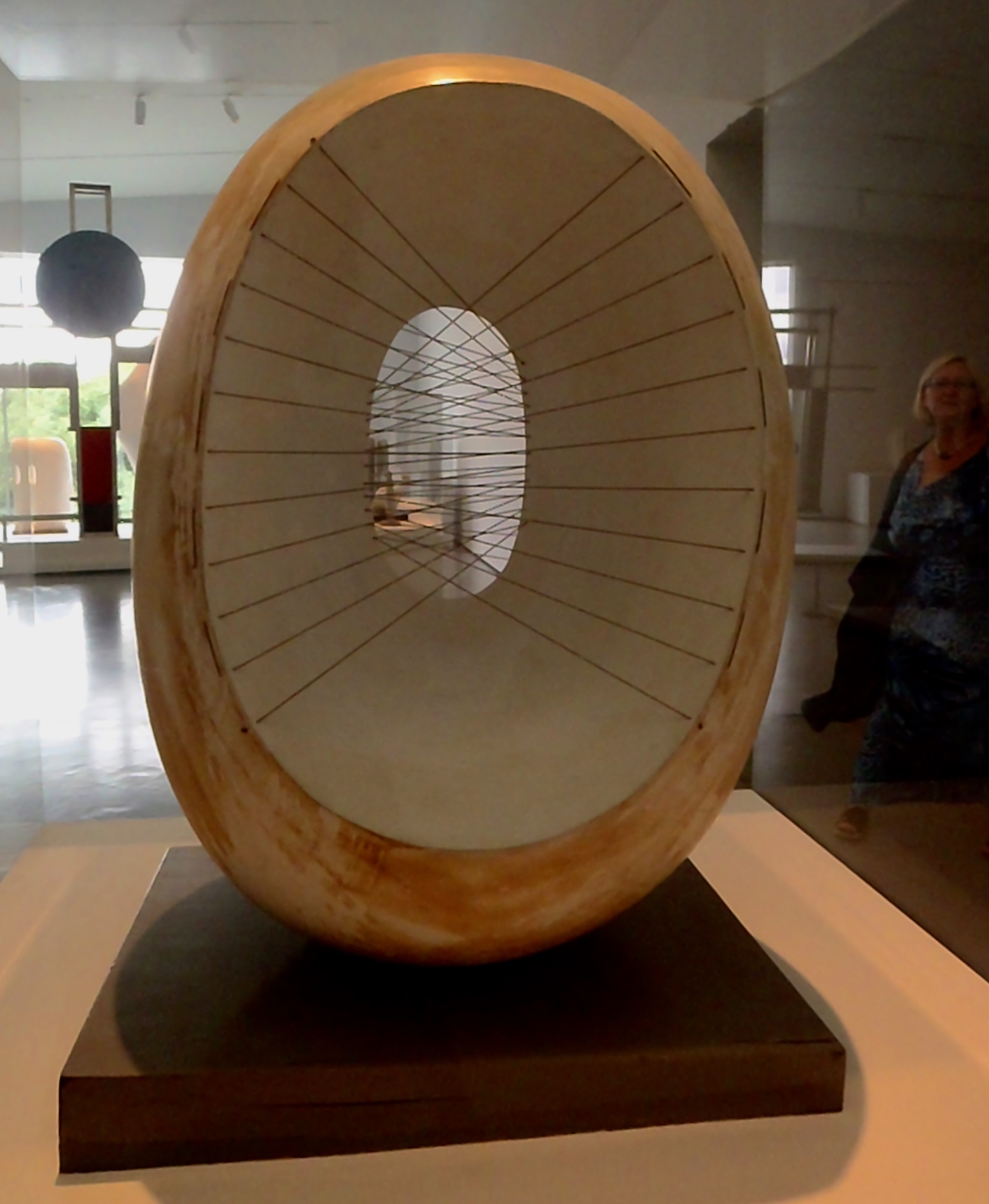
Barbara Hepworth
Barbara Hepworth

Barbara Hepworth

Barbara Hepworth

Here’s some other images of beautiful sculptures from Barbara Hepworth and Henry Moore, some taken by me and many collected from the internet. My thanks to the photographers and I am sorry I do not have your names.
Barbara Hepworth

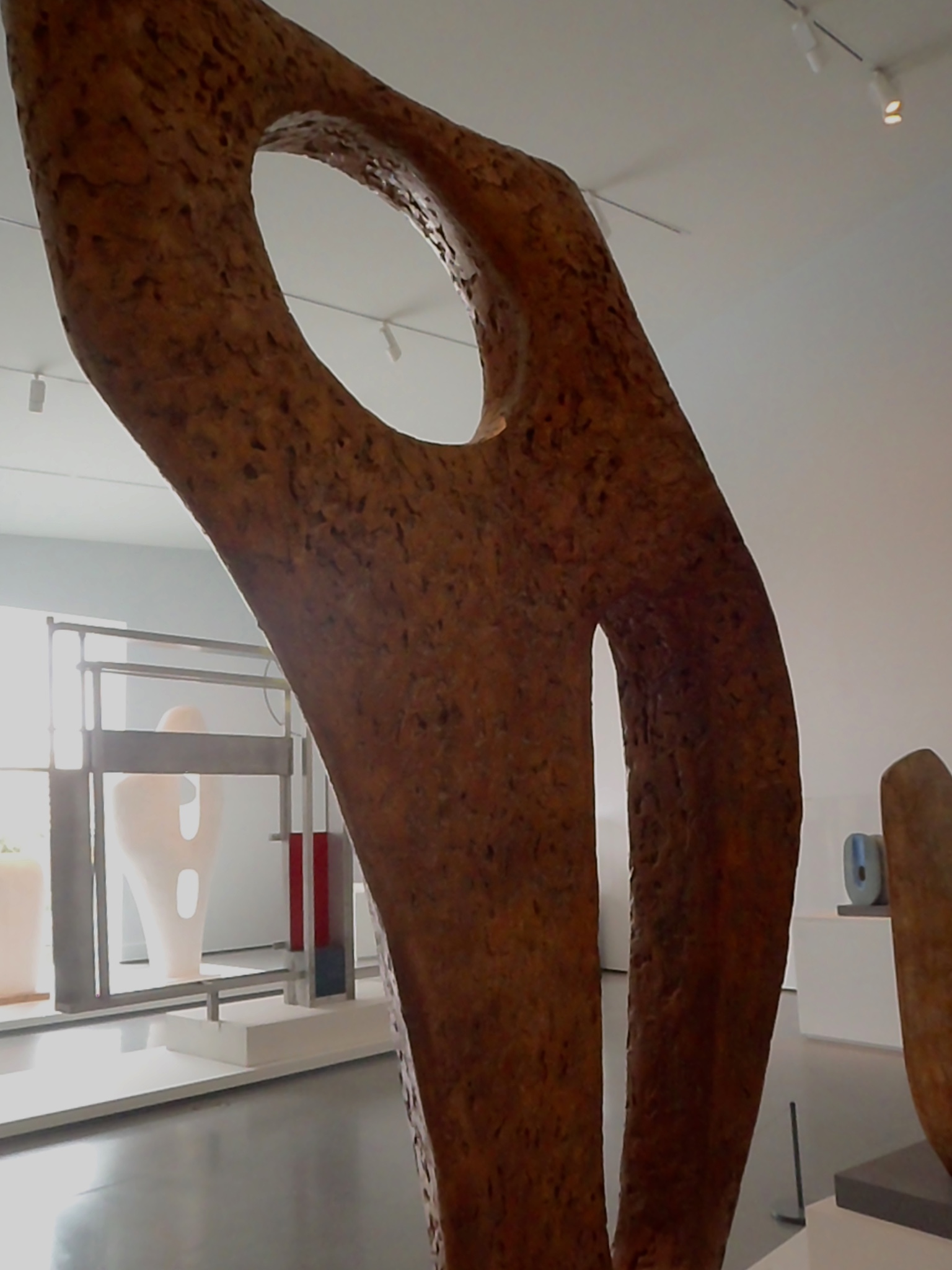
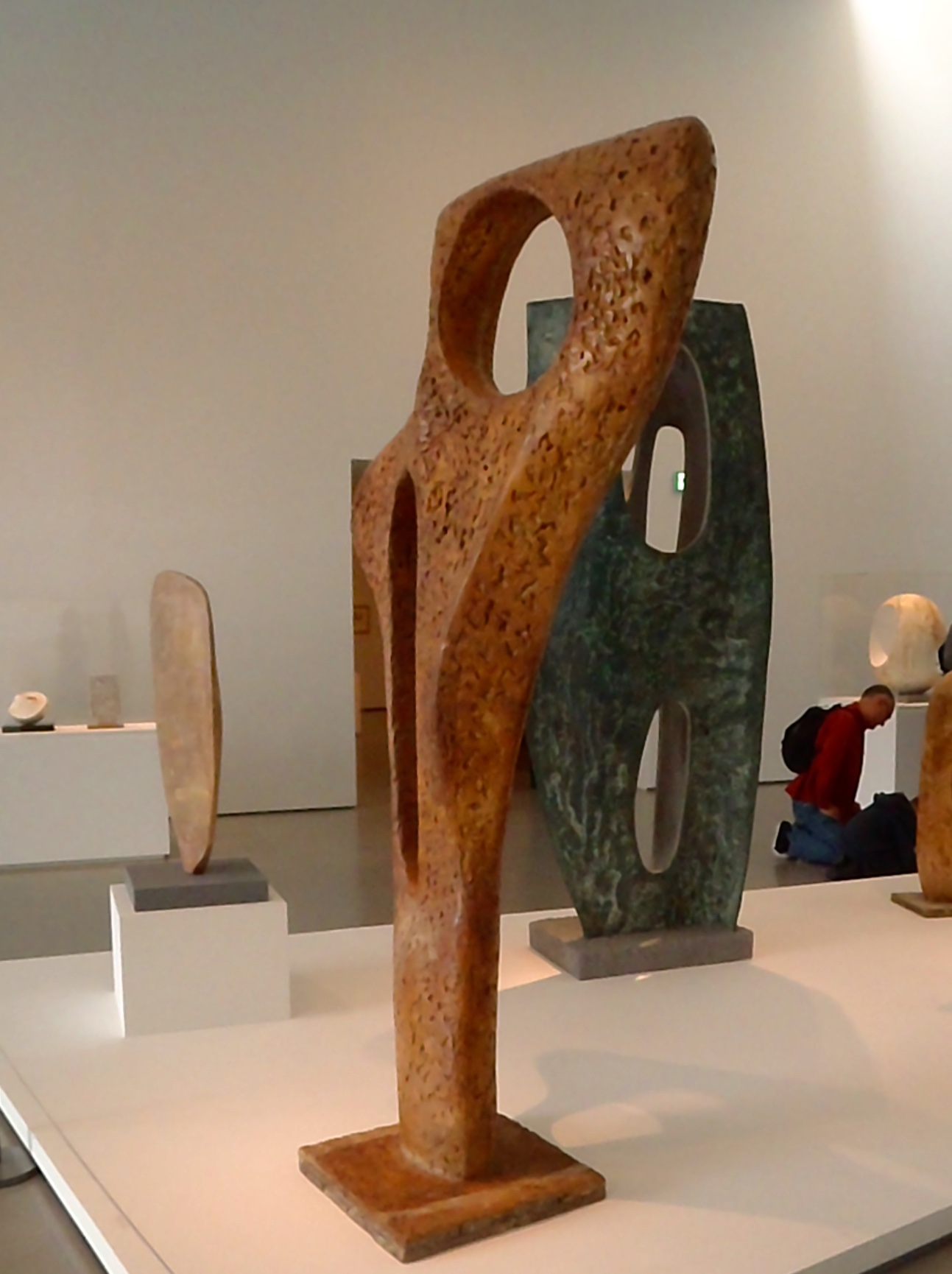
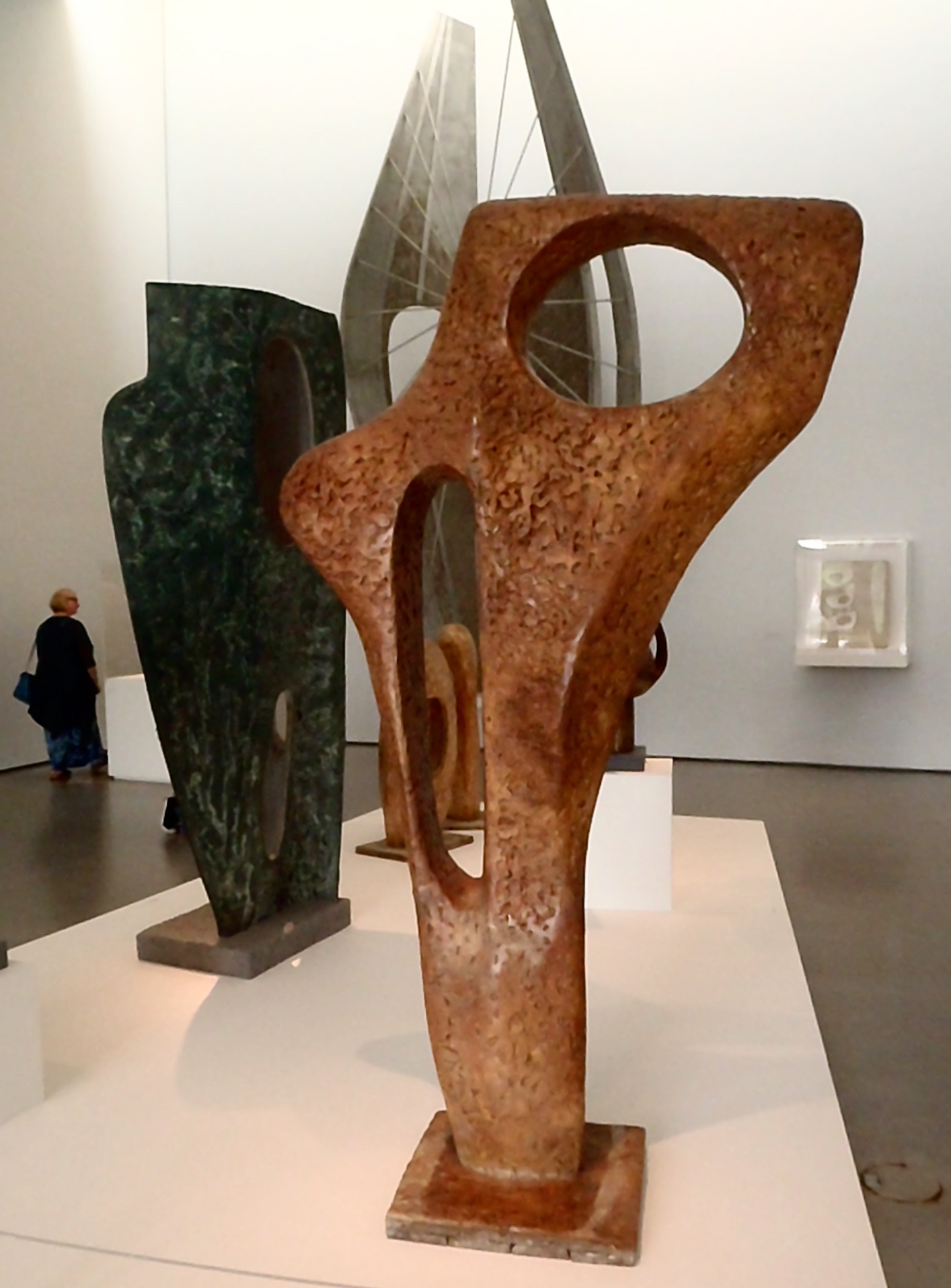
Barbara Hepworth, Figure (Archaean), 1959. The name derives from the ancient Greek word for beginning or origin. The Archaean period saw the emergence of life on earth. Hepworth was very drawn to standing stones and felt a connection as a sculptor to the people who had been compelled to put them up. She often talked about how a person out in a landscape was a sculpture and part of the landscape. She saw her sculptures as living people. Not in a crazy way but in that her work was not done until the form was imbued with life. Over time her relationship with that piece would evolve and change, just as it does with other living beings.
Barbara Hepworth
Barbara Hepworth

Barbara Hepworth

Barbara Hepworth. Wouldn’t it be amazing to have this part of The Hepworth, Wakefield as your living room?
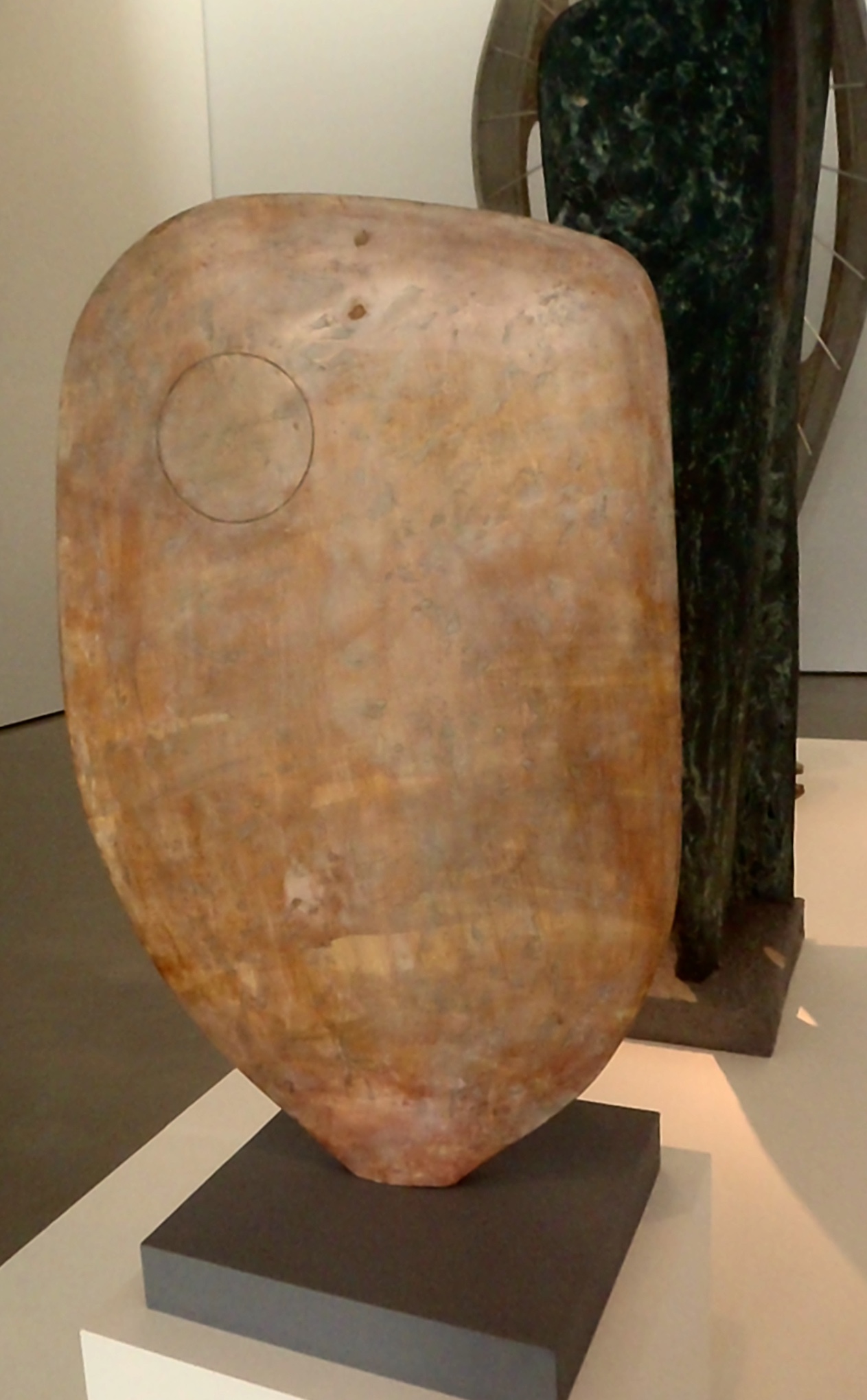
Barbara Hepworth

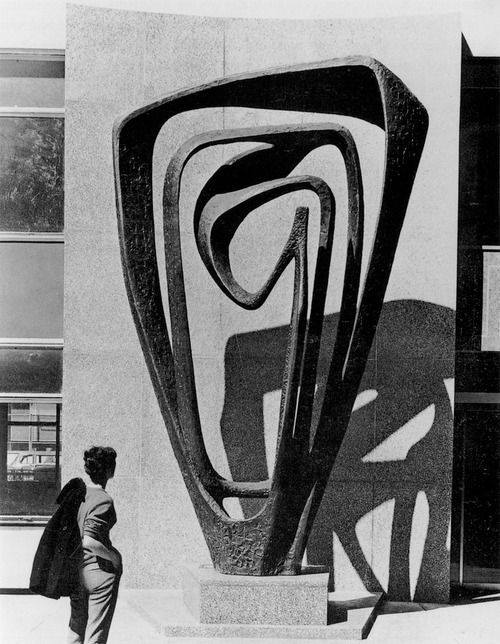
Barbara Hepworth, Single Form (Chun Quoit), 1961. Chun Quoit is a Neolithic chamber tomb in the beautiful landscape between St Ives and Land’s End (Cornwall, UK), an area that had a profound effect on Hepworth. It was created with her friend Dag Hammarskjold in mind. When he died not long afterwards she made the stunning, 3metre high version for the new United Nations Secretariat Building in New York City. I can’t deny that I get a kick out of this wonderful sculpture being made and installed there in the year of my birth in NYC!

OLYMPUS DIGITAL CAMERA

Barbara Hepworth.

Here is a charming video with some lovely footage of Hepworth working made by the Kroller-Muller Museum: Barbara Hepworth, Sculpture for a Modern World.
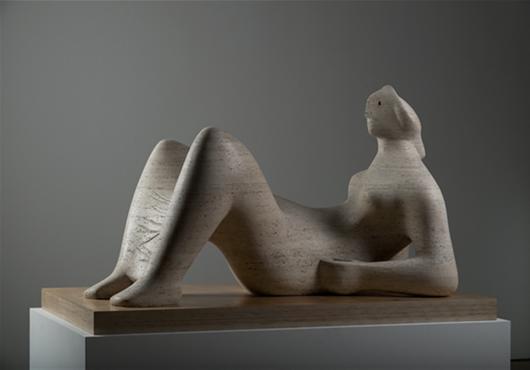
Henry Moore.
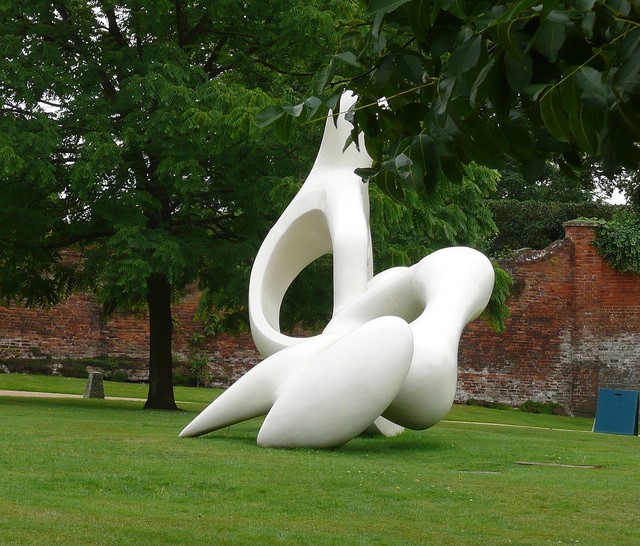
Henry Moore.


Henry Moore

Henry Moore
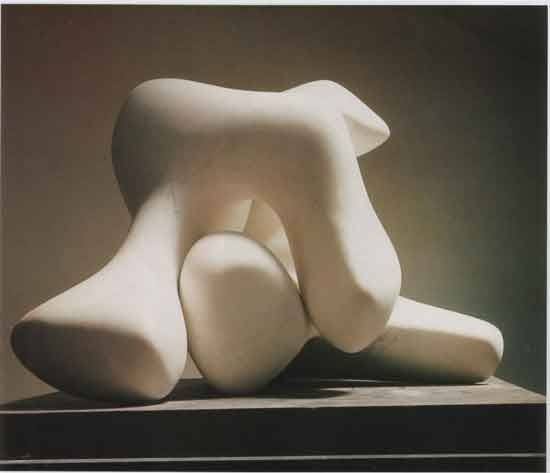
Henry Moore
Henry Moore

Henry Moore

Henry Moore

Barbara Hepworth
Barbara Hepworth
Barbara Hepworth
Barbara Hepworth

Barbara Hepworth

Barbara Hepworth

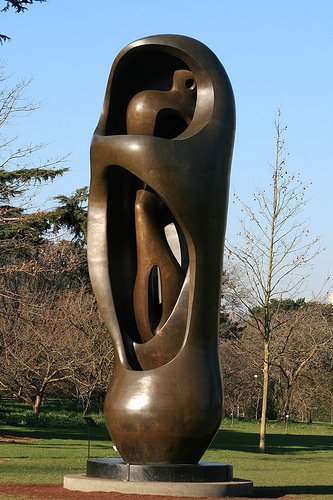
Henry Moore
Henry Moore
Henry Moore
Henry Moore

Henry Moore

Henry Moore

Barbara Hepworth

Barbara Hepworth

Barbara Hepworth at work.
Barbara Hepworth at work.

Barbara Hepworth

Barbara Hepworth

Henry Moore at work.
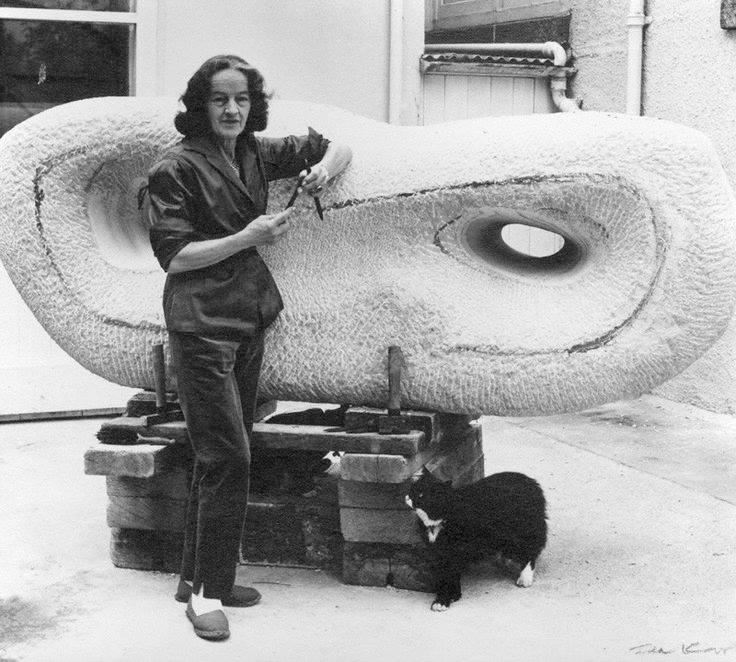
Henry Moore at work.

Barbara Hepworth at work
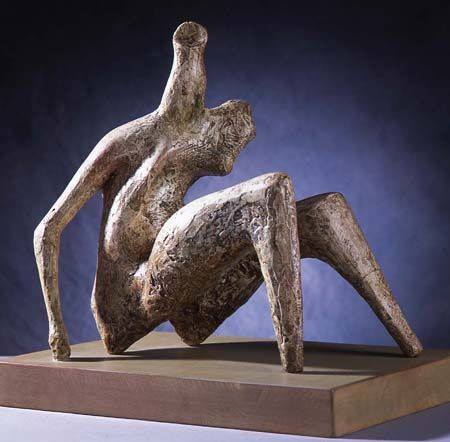
Barbara Hepworth at work

Henry Moore

Henry Moore


Studio Diary; The Landscape Project, part 6, Review so far…

It’s the end of the 1st year and time to take stock. You can see the earlier parts of the story via the Contents page. Click on any picture to see it full size.

Stephen Foote and I met up after 30 years. We were good friends as teenagers, both rather disengaged with school, both making art in our own time. 30 years on we both still use art work as a major part of our interaction with this nutty world. Sharing our images was a key way we got to know each other again and harnessing that process in a joint project was simply a way of capturing a what was occurring naturally. We set a straightforward ” Artist Responds to Landscape ” brief and kept a very open mind while we walked, talked, Steve took pictures and I just took it all in. We met every few months and sent each other pictures of the ensuing work in-between times.

Steve is also a Cameraman and was involved in filming for Panorama during the early, very heated phase in Kiev and the Crimea. I was coming to the end of the Up Is Down Series . Our first visit was Bracelet Bay, Mumbles, Swansea. Then we went into Porth Yr Ogof caves and had a mind-blowing day for me; we spent hours in the dark, natural cave while Steve took a fab series of photographs. I stood in the river in the darkness, held the lights and listened to the flow of water, felt the under-ground breezes. From there the project clarified for us as the travels of the water from the sky above the Brecon Beacons to the river, especially the Tawe, down to the wide bay at Swansea, and out into the Ocean where much of it will return to the clouds and begin the circle again.

These pictures are roughly in sequence for the progression of work over the last year with Steve’s Photos next to the related Sculptures.

Bracelet Bay , Stephen Foote.

Bracelet Bay , Stephen Foote.

Up Is Down- in progress

Up Is Down- in progress

10003791_10203331962960554_1179723863_o


Up Is Down- in progress

Up Is Down- in progress

Up is Down IX, 57cm W,

Up is Down IX, 57cm W,

Stephen Foote; Dunes

Stephen Foote; Dunes

Bracelet Bay, Mumbles, Swansea by Steve Foote

Bracelet Bay, Mumbles, Swansea by Steve Foote

in progress, July 2014

in progress, July 2014

Bracelet Bay, Mumbles, Swansea by Steve Foote

Bracelet Bay, Mumbles, Swansea by Steve Foote

in progress August 2014

in progress August 2014

Bracelet Bay, Mumbles, Swansea by Steve Foote.

Bracelet Bay, Mumbles, Swansea by Steve Foote.

It was this fabulous picture that shifted me abruptly into figures, much to my own surprise.

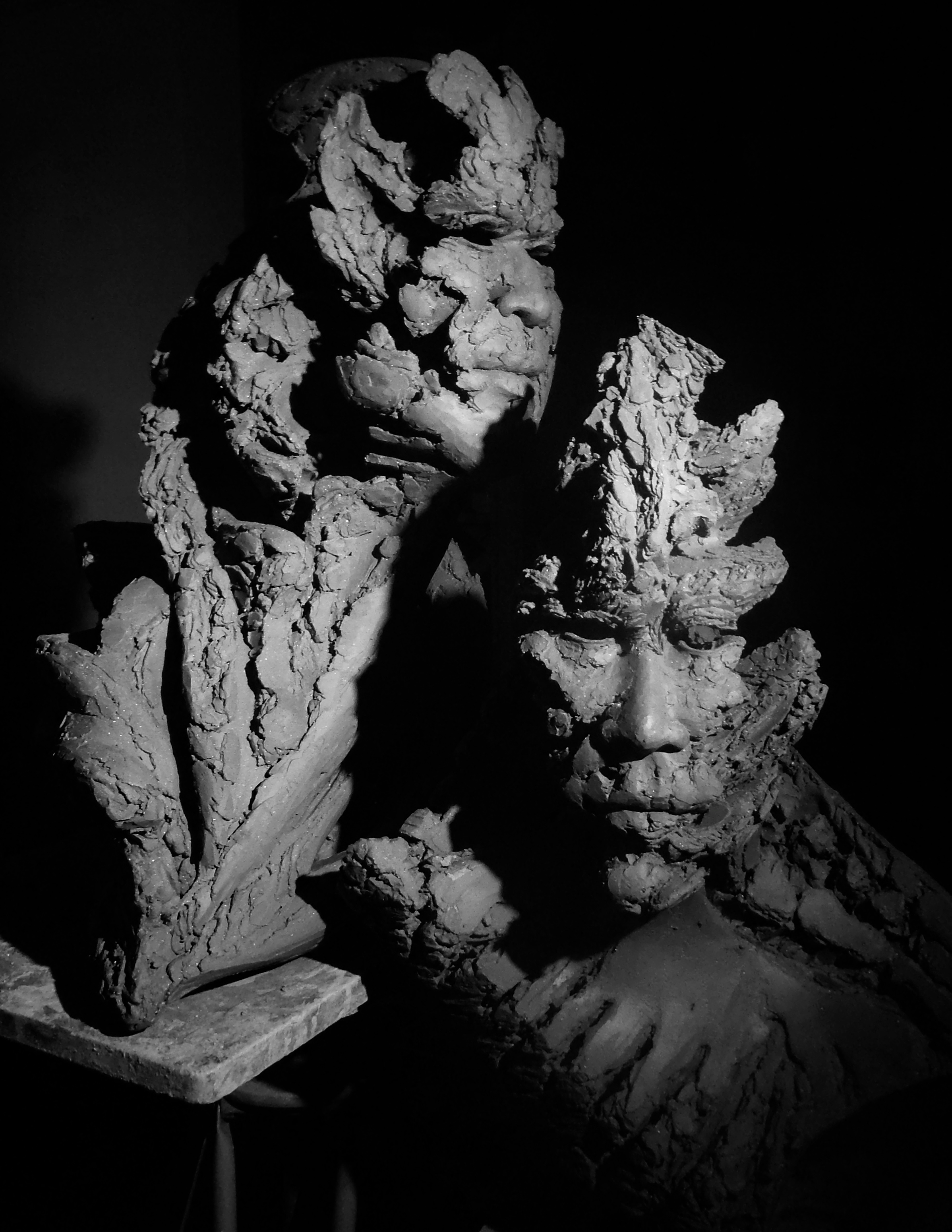
Busts in progress, Aug 2014.

Busts in progress, Aug 2014.

Bracelet Bay, Mumbles, Swansea by Steve Foote

Bracelet Bay, Mumbles, Swansea by Steve Foote

OLYMPUS DIGITAL CAMERA


A narrative developed that was also influenced by the awesome storms of the previous winter. A trio of figures, the Guardians of the Aquasphere, the Lithosphere and the Atmosphere, arose and they and their Harbingers took on characteristics that the  many life-forms of the Biosphere could relate to so that all would understand what was happening; The Triumvirate were going to let loose their forces. This was not to threaten or  punish. They simply knew it was time.


Brecon Beacons, by Steve Foote.

Brecon Beacons, by Steve Foote.

OLYMPUS DIGITAL CAMERA The Atmosphere in the form of an Osprey.


Porth Yr Ogof Cave, Brecon Beacons, by Stephen Foote.2014

Porth Yr Ogof Cave, Brecon Beacons, by Stephen Foote.2014


OLYMPUS DIGITAL CAMERA

Guardian of the Atmosphere, The Osprey


The Wyvern and the Osprey, 2014.

The Wyvern and the Osprey, 2014.

OLYMPUS DIGITAL CAMERA

The Wyvern, Guardian of the Lithosphere.


Frame-works for The Wyvern IV and, in the back ground, The Leviathan.

Frame-works for The Wyvern IV and, in the back ground, The Leviathan.

The Lithosphere has The Wyvern, a dragon that has taken a number of forms so far.

The Leviathan in progress, Sept 2014.

The Leviathan in progress, Sept 2014.

The Wyvern and The  Leviathan. in progress, Sept 2014.

The Wyvern and The Leviathan. in progress, Sept 2014.

_F146711

_F147762

OLYMPUS DIGITAL CAMERA

The Wyvern.

1981984_10203331966200635_1180227792_n

Bracelet Bay, Stephen Foote.

OLYMPUS DIGITAL CAMERA

The Wyvern.

_F147928

Bracelet Bay, Stephen Foote.

OLYMPUS DIGITAL CAMERA

The Wyvern.

_F147916 _F147712

OLYMPUS DIGITAL CAMERA

Osprey.

OLYMPUS DIGITAL CAMERA

Wyvern

_1020883

OLYMPUS DIGITAL CAMERA

Leviathon

_F147947

OLYMPUS DIGITAL CAMERA Osprey.

OLYMPUS DIGITAL CAMERA

Leviathon

OLYMPUS DIGITAL CAMERA

Wyvern.

OLYMPUS DIGITAL CAMERA

Wyvern

OLYMPUS DIGITAL CAMERA

Wyvern

The Guardian of the Aquasphere took on the form of the Mountain Ponies that run free in the Beacons.OLYMPUS DIGITAL CAMERA _F148186 _F148023 _F148792 _F148797 OLYMPUS DIGITAL CAMERA   _F147964   OLYMPUS DIGITAL CAMERA OLYMPUS DIGITAL CAMERA _F148811   _F148835  _F148822   _F148837

It has been a fantastic year in the Studio; I am harnessing the narrative and collective sides of the monumental Community Sculptures of the last 13 years. But I’m free to use any scale. The architectural clays I use have given me the freedom to go anywhere in space. My amazing collection of Sculptor and Ceramist friends, from all over the world, on Facebook have encouraged and inspired me enormously. I’m settled into my lovely big Studio ( and gotten over the shock of having it at last!). Stephen and I communicate very well and we egg each other on.

Many thanks to everyone who has visited the work over this last 6 weeks and given invaluable advice and feed-back.I will continue with this series of sculptures until it is done.

We will start a new project focussing specifically on the passage of water from the mountains to the ocean along the  Tawe Valley. We are partnering with some Public art venues and setting up some Community participation to widen our perspective. We will  visit  a small Coal-mine and the Open-cast mine. Only a few years ago, on the 15th of September 2011, 4 men were killed in a dreadful accident at Gleision Colliery when their mine was inundated with water. Making the Pit Markers in Blaengarw, I heard about these type of accidents but, like everyone else, I never thought such a thing could happen here, in this century. From just below the Studio down-wards the River has an extra-ordinary history in the Industrial Revolution.

Neither of us have any idea where this will lead. We feel confident that we have something with substance and a great deal of potential and we have found a work-method that is productive and sustainable. I know from past projects that the community will come up with all sorts of treasures that will lead us into work that is far richer and more interesting than we would make alone. We will trade Workshops in photography and ceramics for input from community groups and individuals. It will be a fun process. We need images, stories, myths, legends,  history-including the ancient history and favourite,  special spots on the river or tributaries.

Studio Diary, The Tumble Commission Finale.

The Celebration Day at Gwalia Mynydd Mawr, 5 November 2014

The Celebration Day at Gwalia Mynydd Mawr, 5 November 2014

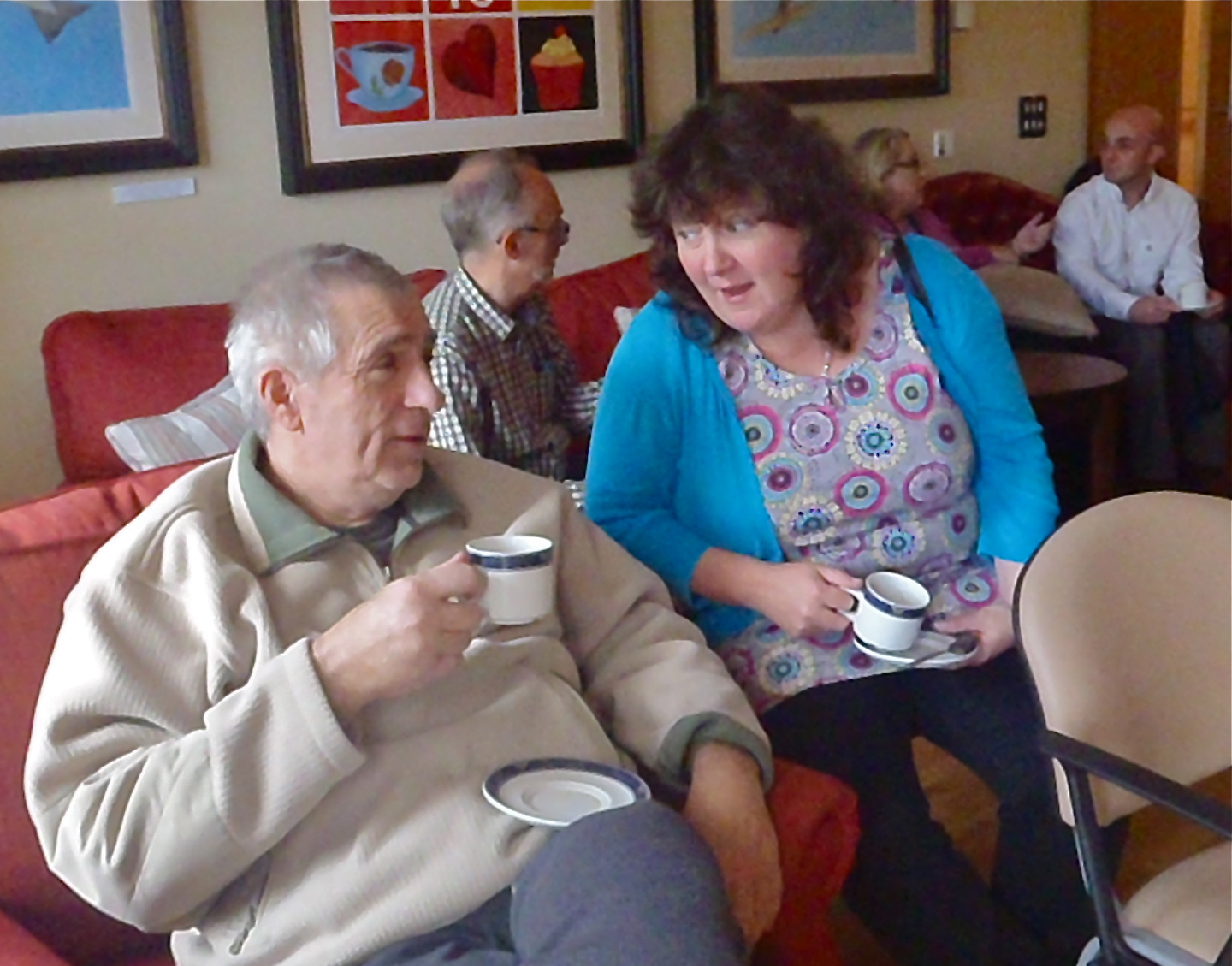
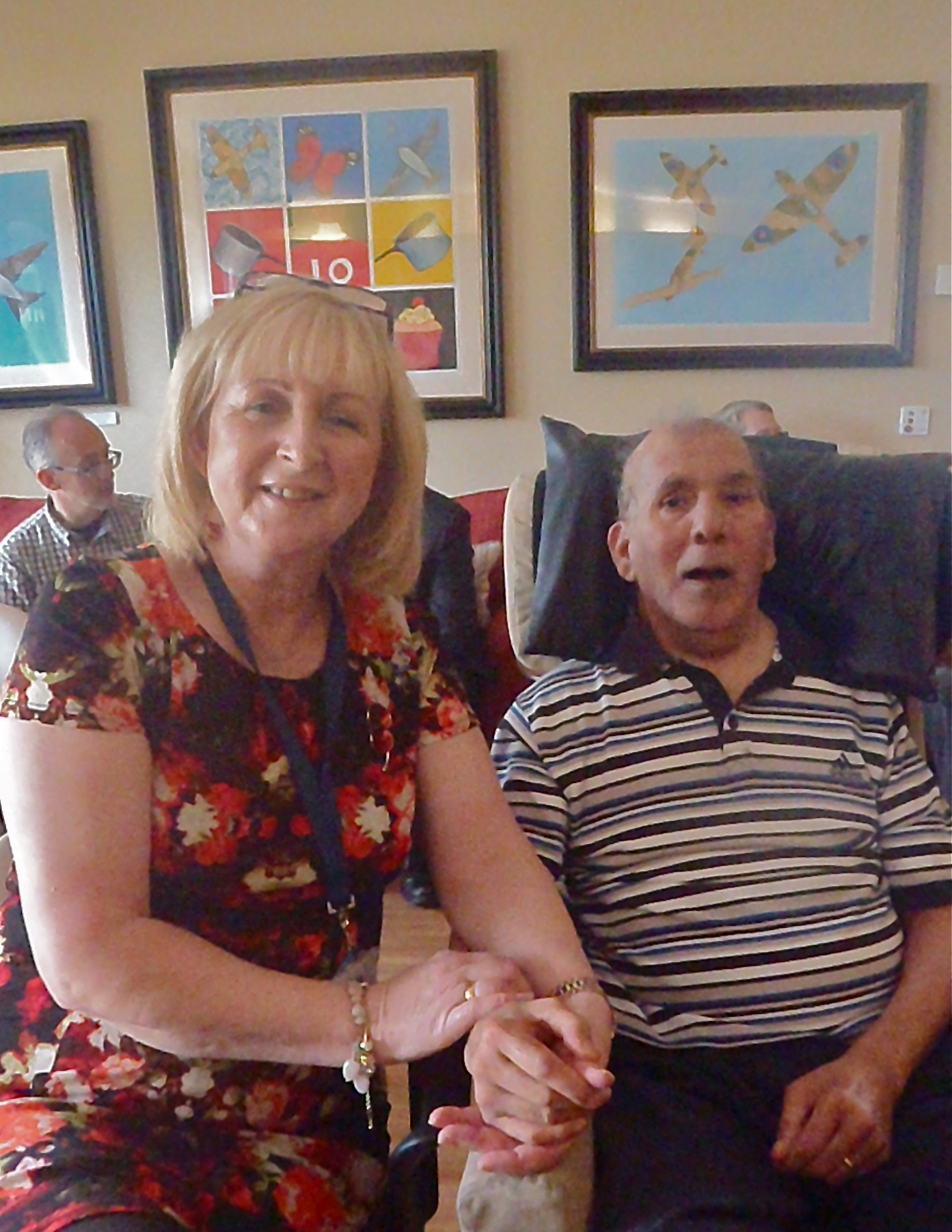
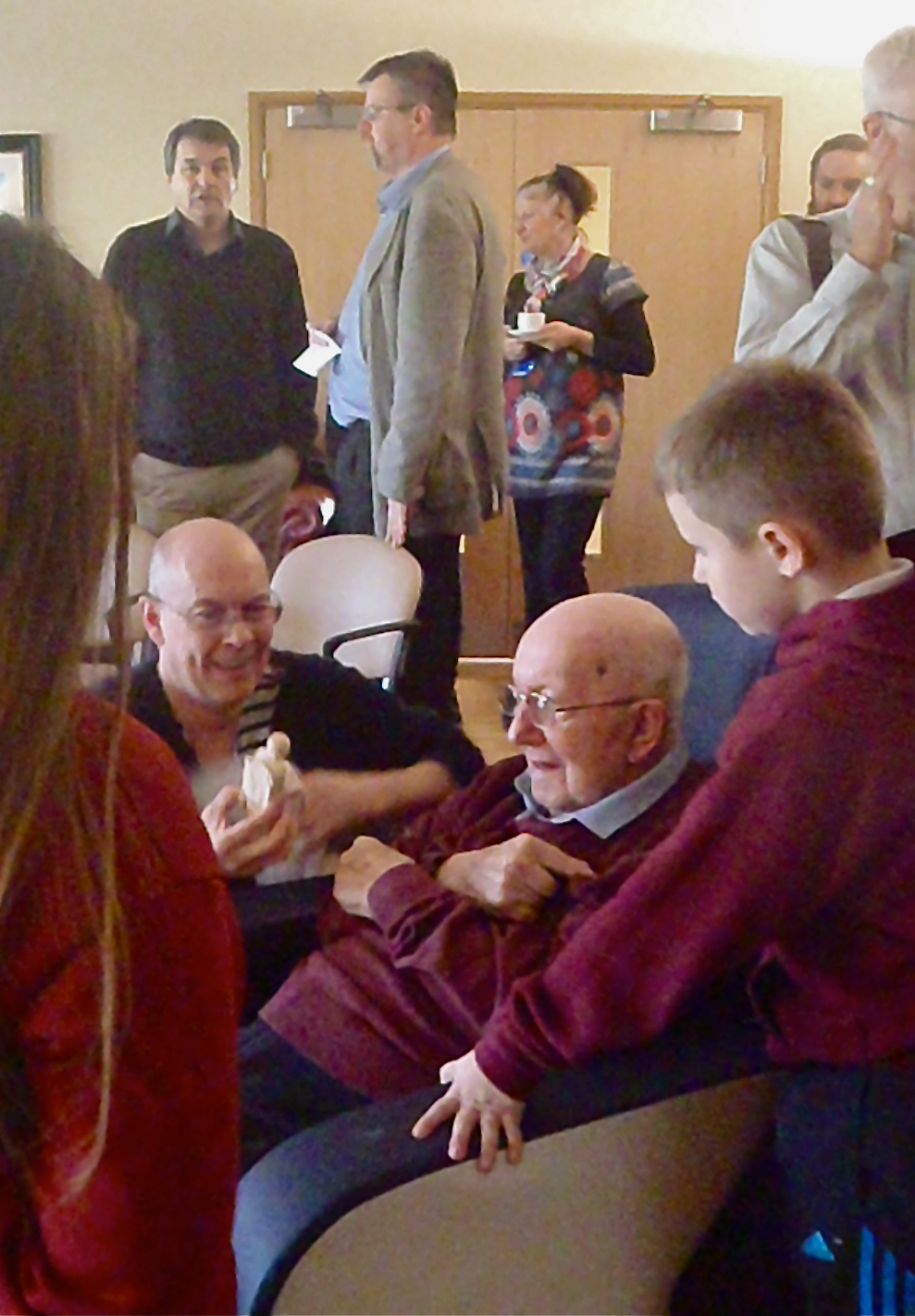
A perfect , clear blue day for the un-veiling of the Sculpture and a celebration of the whole Project and all the lovely, dedicated people who were involved from Arts Care Gofal Celf, Gwalia, the Primary schools in the area and the extraordinary Staff and Residents at Gwalia Mynydd Mawr.

The video here describes the whole project:


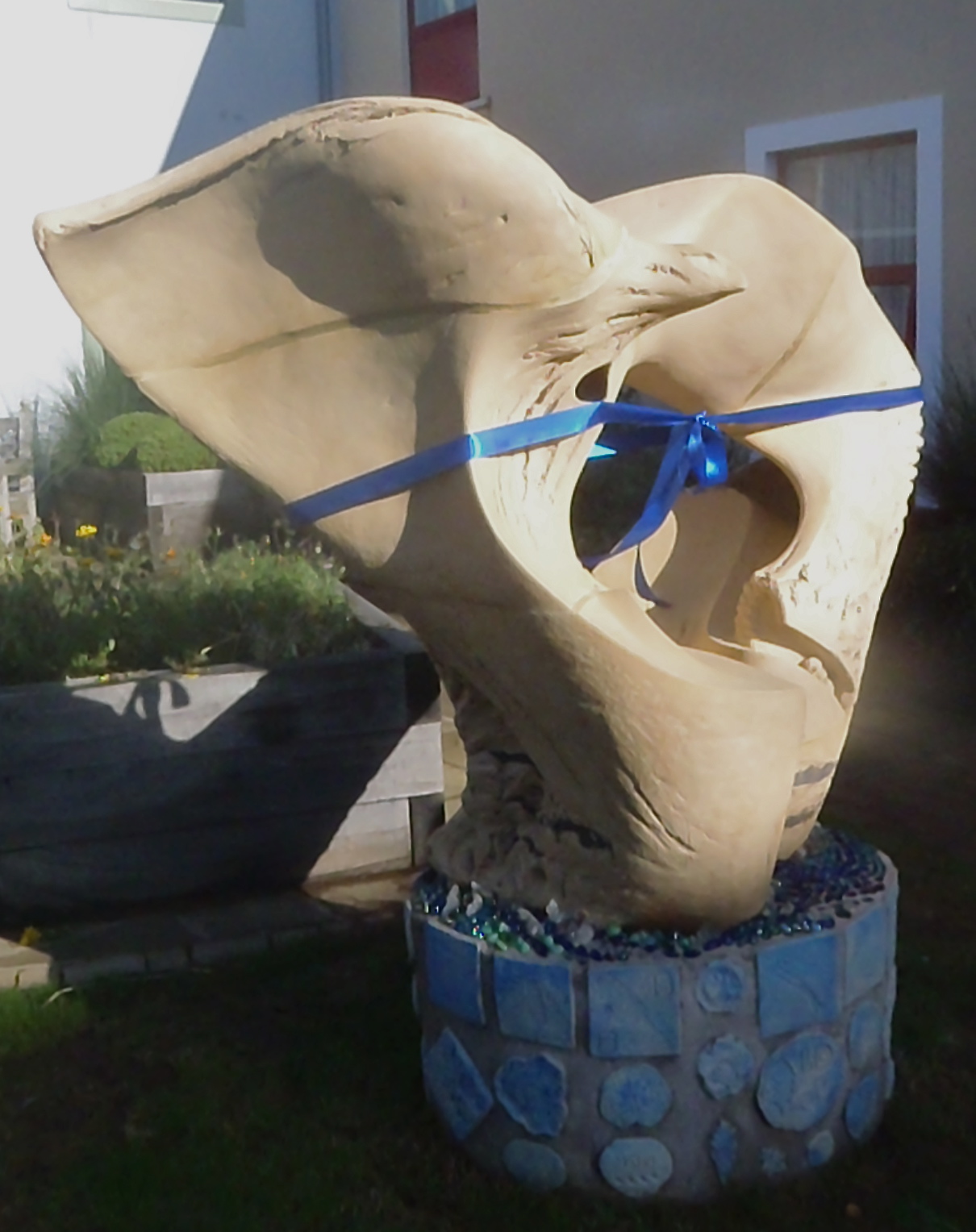
Mynydd Mawr Courtyard Sculpture, 2m h x 190cm w, 2014.

Mynydd Mawr Courtyard Sculpture, 2m h x 190cm w, 2014.

OLYMPUS DIGITAL CAMERA

OLYMPUS DIGITAL CAMERA OLYMPUS DIGITAL CAMERA

OLYMPUS DIGITAL CAMERA OLYMPUS DIGITAL CAMERA OLYMPUS DIGITAL CAMERA OLYMPUS DIGITAL CAMERA OLYMPUS DIGITAL CAMERA OLYMPUS DIGITAL CAMERAOLYMPUS DIGITAL CAMERA

Studio Diary ,The Tumble Commission pt 7; Installation.

From the outset the many people from Arts Care Gofal Celf, Gwalia and Mynydd Marw involved in this 2 year , multi-fasceted, Baring Foundation ‘Yma a Nawr’ project have put in their all to make it out-standing. After the excellent Installation of the Sirhowy Wyvern I knew that Andrew Preece and his team at Smartfix Property Maintenance would also do whatever it takes to make this Sculpture look fantastic. They are incredibly picky and fastidious, it’s marvellous. Best materials,committed craftsmanship, and they always stick to the Budget no matter how much extra time they have to put in.OLYMPUS DIGITAL CAMERA

Smartfix Property Maintenance at Mynnyd Mawr, Tumble

Smartfix Property Maintenance at Mynydd Mawr, Tumble

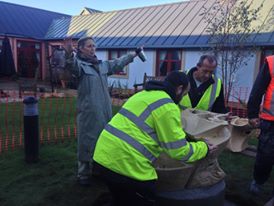
Moving the heavy sections around meant 4 men had to be on site.

Moving the heavy sections around meant 4 men had to be on site.

The 2 bottom sections are lowered over rebars set into the solid plinth and foundations.

The 2 bottom sections are lowered over rebars set into the solid plinth and foundations.

It was critical to get the position of these first sections correct.

It was critical to get the position of these first sections correct.

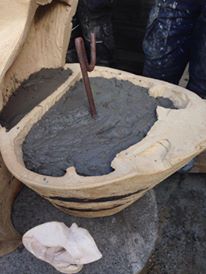
The sections are filled with concrete and left overnight to set.

The sections are filled with concrete and left overnight to set.

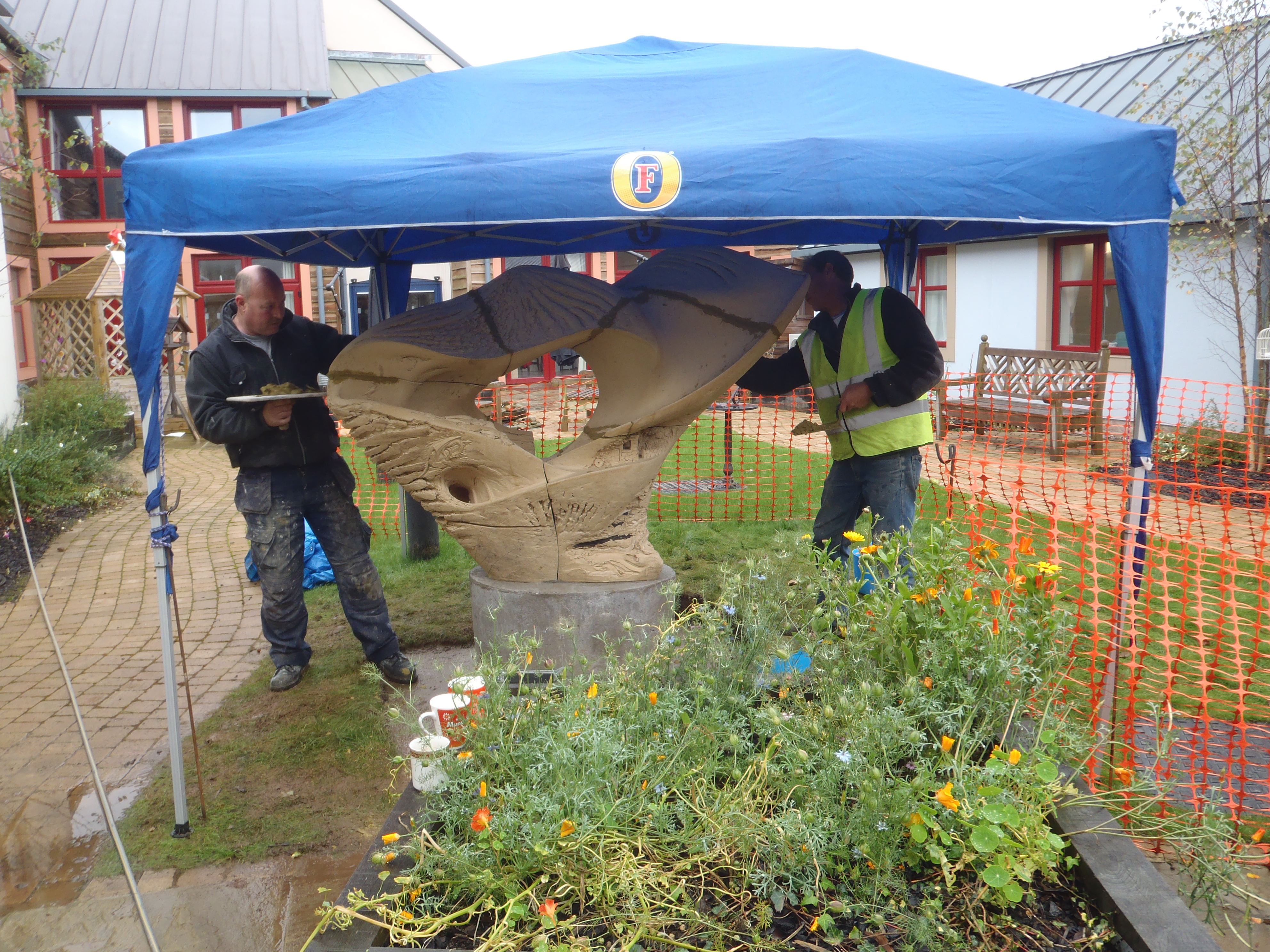
Once everything has set the supports can be removed and the joints pointed.

Once everything has set the supports can be removed and the joints pointed.

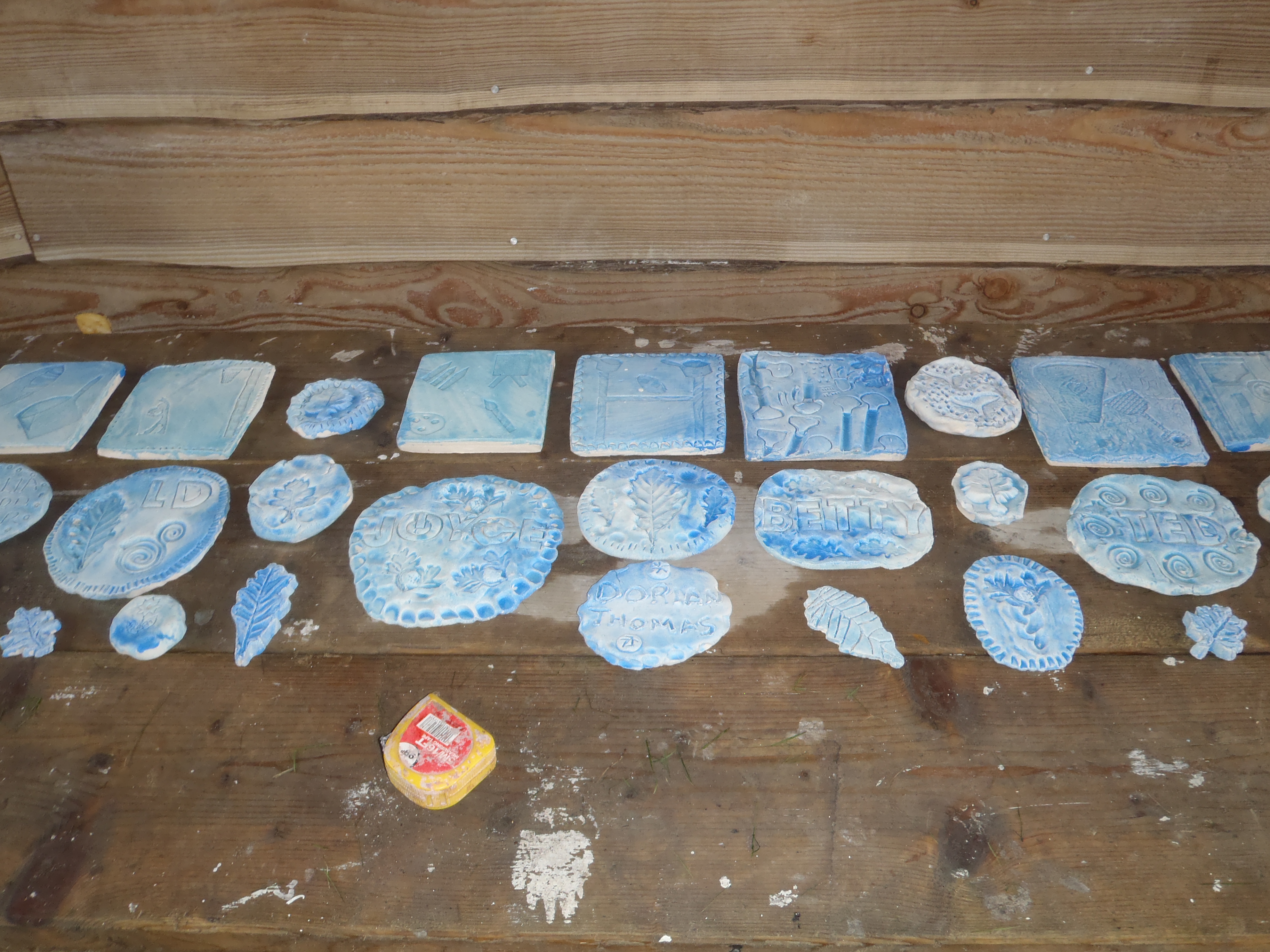
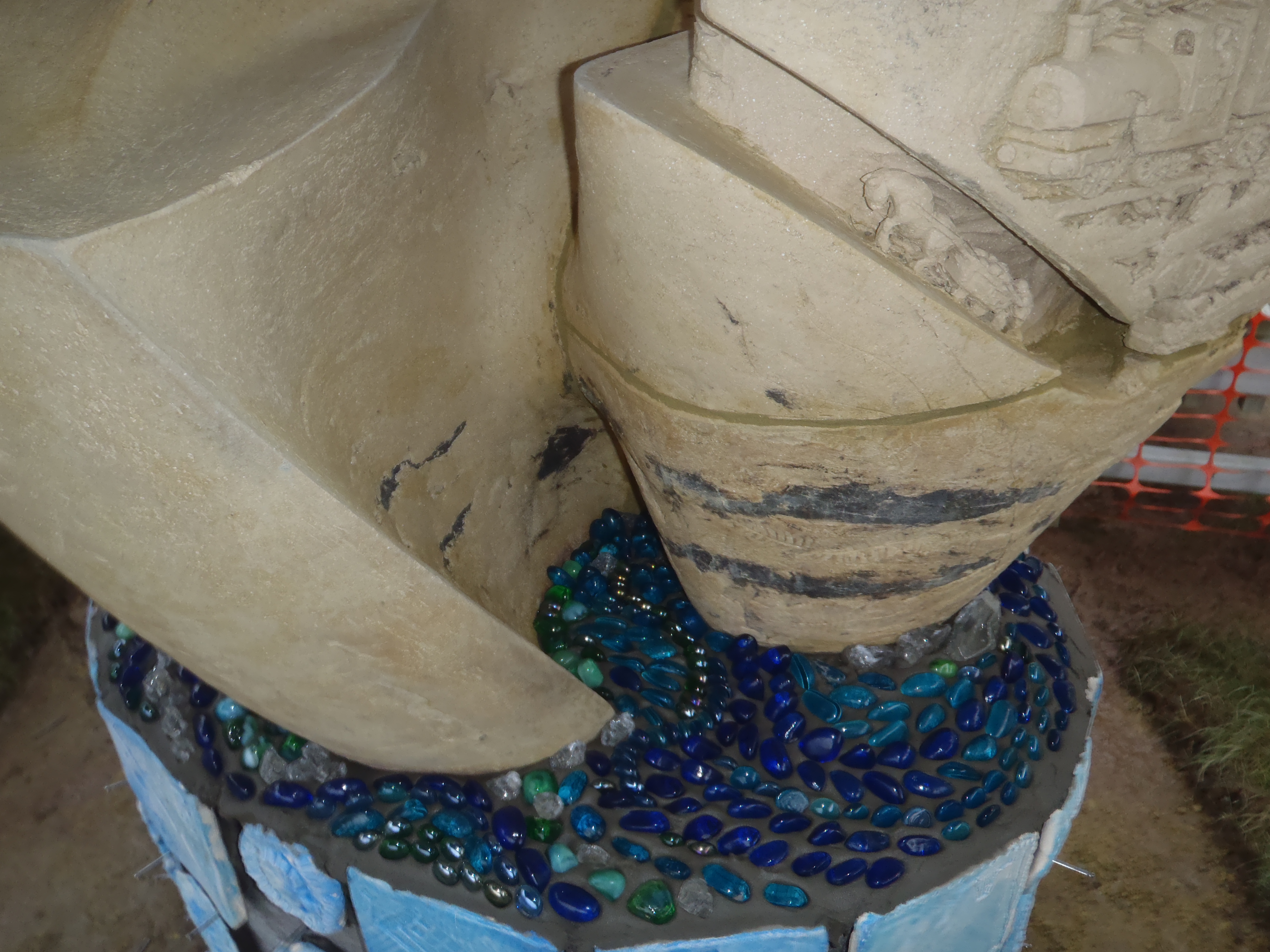
The charming tiles, made by pupils at Llannon Primary School and residents at Mynnyd Mawr are laid out in a measured pattern.

The charming tiles, made by pupils at Llannon Primary School and residents at Mynydd Mawr are laid out in a measured pattern.

Andrew and Phil set the tiles.

Andrew and Phil set the tiles.

I did the glass with Andrew.

I did the glass with Andrew.

OLYMPUS DIGITAL CAMERA OLYMPUS DIGITAL CAMERA OLYMPUS DIGITAL CAMERA OLYMPUS DIGITAL CAMERA OLYMPUS DIGITAL CAMERA07913743457_2014-10-14_14-1.32.501


Studio Diary, The Landscape Project, part 1

Busts in progress, Aug 2014.

Busts in progress, Aug 2014.

Lots of changes, lots of layers.This is the main photo I am  focussing on; The sky, the land and the ocean and man’s presence – everything is integrated.

Bracelet Bay, Mumbles, Swansea by Steve Foote.

Bracelet Bay, Mumbles, Swansea, by Stephen Foote, 2014.

These 2 pictures and the experience of being in both these places is never far from my mind these days.

Porth Yr Ogof Cave, Brecon Beacons, by Stephen Foote.2014

Porth Yr Ogof Cave, Brecon Beacons, by Stephen Foote.2014

A narrative is emerging that involves the passage of water from the Beacons’ sky to the ocean at the bottom of the Swansea Valley. The Tawe River passes the Studio and the ground beneath us is full of  tunnels from the rivers and from mining. The Wyvern, a dragon with a wonderful mythology about guarding the treasures of the subterranean world entered the picture when I was heavily involved with the history of local Coal Mining and  the Pit Marker Sculptures and it is re-emerging here. OLYMPUS DIGITAL CAMERAThe next clay-armature is more specific now that I have a clearer idea of where I’m going.
3rd Bust armature in progress, Aug 2014.

3rd Bust armature in progress, Aug 2014.

OLYMPUS DIGITAL CAMERA OLYMPUS DIGITAL CAMERA OLYMPUS DIGITAL CAMERA

in progress, Aug 2014.

in progress, Aug 2014.


Studio Diary; Return to the Figurative

in progress, July 2014

in progress, July 2014

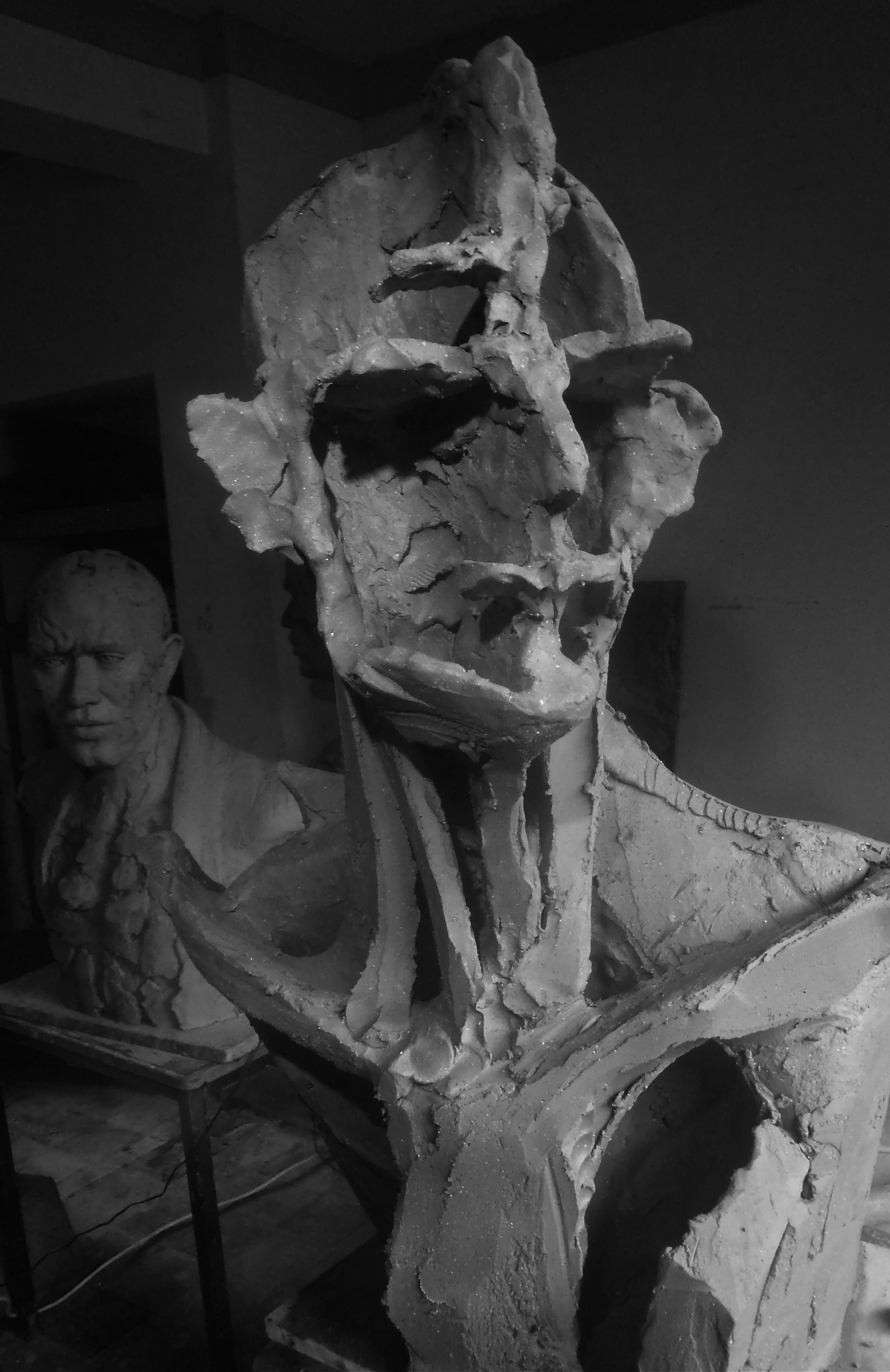
An intense couple of months ending in a merciful bereavement has lead me back to the clear boundaries and challenges of Figurative sculpture. Portrait skills are hard won and need to be practiced regularly or they will be lost.

I’ve been playing around with the technique of building outwards from a framework that wont be hollowed out later and/or is a visible part of the form for a couple of years now and  I wanted to try it with naturalistic work.

OLYMPUS DIGITAL CAMERA

The River,a commission. 1.5 m high

The River,a commission. 1.5 m high

Half a Century II, 48cm H x 32cm W.

Half a Century II, 48cm H x 32cm W.

I started with the exercise Lloyd Lilly taught us at Boston Uni (about 300 years ago); Make the skeleton and layer on the muscles and skin. It is fascinating to do and hugely informative. These are the skills that give Abstract work presence.

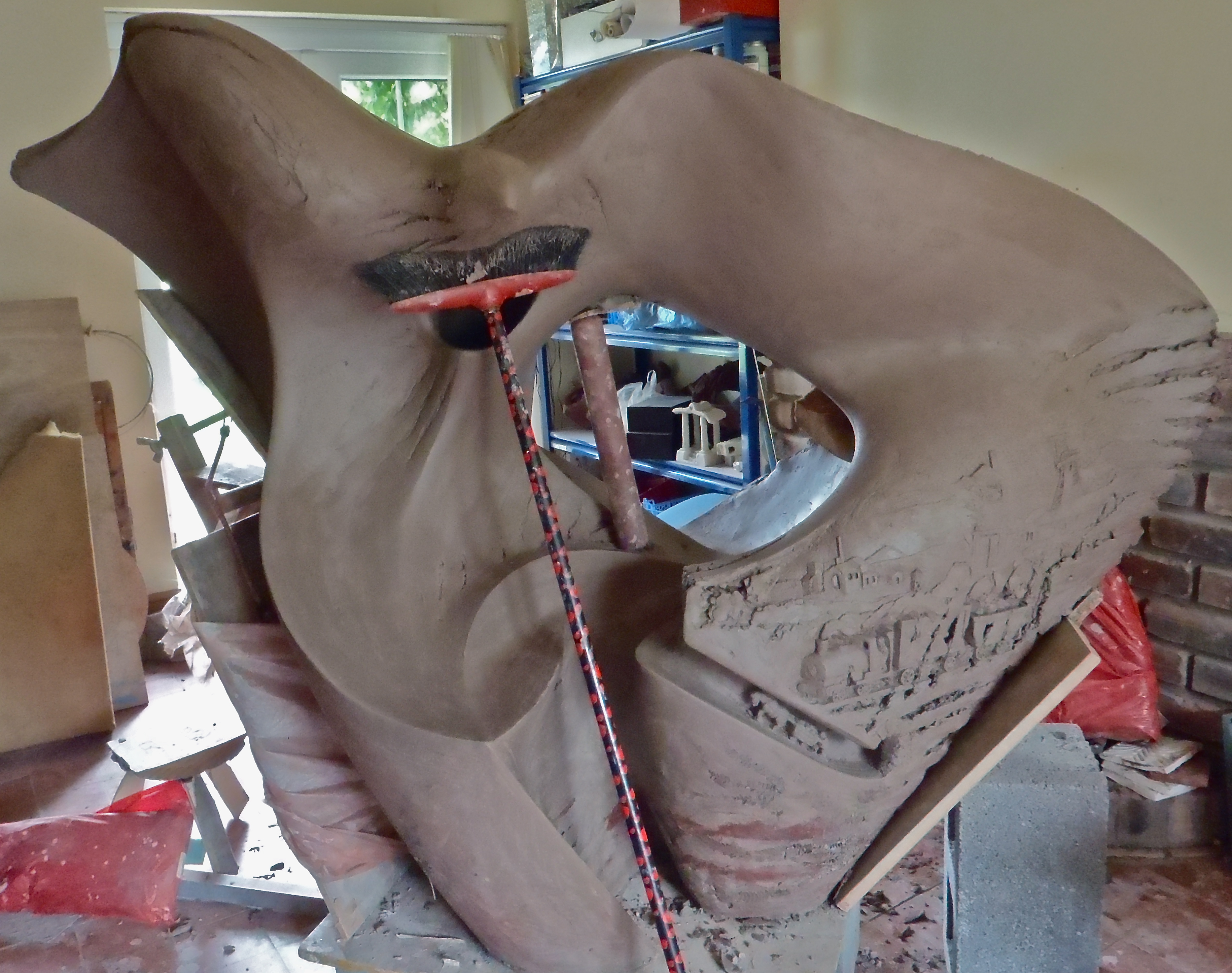
Anyone who has taken one of my Workshops will tell you, with tears in their eyes, that the key to figurative work is organising the huge amount of information into manageable stages and that the Skeleton is just a stick figure with the perfect proportions simplified for you.OLYMPUS DIGITAL CAMERA    OLYMPUS DIGITAL CAMERAI’m not sure how I manage to be so thick but once again I made a clay armature for a bust that allowed the head to tip forward. Good thing I have that red broom on hand to prop it up.

OLYMPUS DIGITAL CAMERA  With the 2nd one I made a much more interesting frame that would show in places.

in progress August 2014

in progress August 2014

It allowed me to work on the whole form from the outset  rather than build from the bottom up. I’m pushing myself hard to use new methods rather than fall into the same ol’ pitfalls and to be more expressive with the naturalistic format rather than only technical. I’ve done that many times before… but the results were pretty dire! This may also be yet anther very bad road but it’s the only route to get somewhere interesting. I’m aiming to integrate the figure with it’s landscape following the ideas of the Up Is Down Series. Wish me luck….!

Clay armature for a bust, aug 2014

Clay armature for a bust,  aug 2014

This clay armature is much stronger and the hollow spaces are more defined as part of the form good and early. The plan is to work towards integrating the Landscape work I’ve been doing with Cameraman Steve Foote using his stunning photographs.

Bracelet Bay, Mumbles, Swansea by Steve Foote

Bracelet Bay, Mumbles, Swansea by Steve Foote

Bracelet Bay, Mumbles, Swansea by Steve Foote

Bracelet Bay, Mumbles, Swansea by Steve Foote

Bracelet Bay, Mumbles, Swansea by Steve Foote.

Bracelet Bay, Mumbles, Swansea by Steve Foote.

Brecon Beacons, by Steve Foote.

Brecon Beacons, by Steve Foote.

Porth Yr Ogof Cave, Brecon Beacons, by Steve Foote.

Porth Yr Ogof Cave, Brecon Beacons, by Steve Foote.

This could take a while….

OLYMPUS DIGITAL CAMERA OLYMPUS DIGITAL CAMERA OLYMPUS DIGITAL CAMERA

Studio Diary, The Tumble Commission, part 6.

OLYMPUS DIGITAL CAMERA
You learn a lot about your own work from watching a skilled Photographer taking pictures of it. You get a more objective view. The lights are certainly a merciless test of your planes and edges. Stephen Foote’s top quality lenses will pick up every flaw.

OLYMPUS DIGITAL CAMERA


I went over the whole piece with fine portrait tools and his perfect pictures reward that. I’m very inspired by the excellent craftsmanship of  stone or glass artists like Sally Fawkes (http://www.sallyfawkes.com ) her process is incredibly harsh and difficult yet she doesn’t back off until her stunning sculptures are flawless. Clay is way easier but avoiding marks when you are handling the piece is a constant battle

Sally Fawkes 'Perceiving Significance II' photo ;Richard Jackson

Sally Fawkes ‘Perceiving Significance II’ photo ;Richard Jackson

OLYMPUS DIGITAL CAMERA

After a spell of controlled drying it’s time cut the sections. Luckily I have a fantastic Assistant, Michael Preece. I spent a lot of time  planning the cuts; we have opted for large sections and I needed to ensure they would fit in the kiln and be handleable. Mike  used a variety of tools to make the cuts and he and my son Daniel lifted the sections to thick memory foam where they will stay for at least a month.

OLYMPUS DIGITAL CAMERA

Working in clay you always have an eye on the Drying and Firing -Plan; accommodating  these long drying periods where the atmosphere needs to be controlled and having the right sized pieces ready to pack nice full kilns that will distribute the heat evenly.

OLYMPUS DIGITAL CAMERA


I went round all the edges of the cuts and tidied them and repaired any dings. I will cover the sections with sheets to ward off drafts and turn them regularly. Most cracks form at this stage although they may not show up until after the Firing.


Studio Diary; The Tumble Commission, part 4.


OLYMPUS DIGITAL CAMERAOLYMPUS DIGITAL CAMERA

Almost there- it’s down to finishing touches now. I’ve re-done the head about 90 times and I’m still not happy with it. The Sculpture is wrapped in plastic to rest and settle.I will un-wrap it with fresh eyes and be better able to see what’s needed. In theory.  Once the top feels firm I will remove those internal supports- a scary moment ; it could collapse which is why you need to have a ‘sensibly'(pessimistically ) long build time!  The supports have to come out because they are restricting the shrinkage and soon they will start causing damage. That broom will never be the same.  The outside supports will stay to the end and those sections will get their finishing touches during dismantling.

OLYMPUS DIGITAL CAMERAOLYMPUS DIGITAL CAMERA


OLYMPUS DIGITAL CAMERA


Andrew Preece of Smart-fix, my expert Installer came over and we plotted the sections. It’s great having his early input. I never compromise on the form but Andrew can advise on structural issues so that the Installation goes smoothly and we get the best result.

OLYMPUS DIGITAL CAMERA That hole in the top left is the last bit to go in. The fired colour will be a stony pale yellow.

Sculpture in the Garden

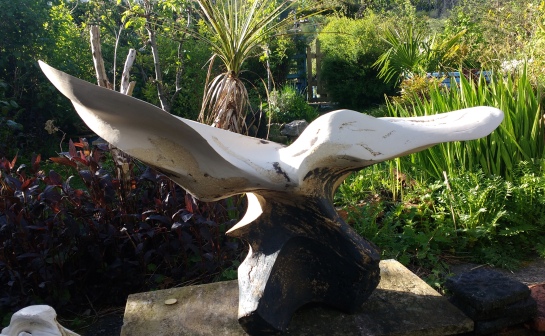
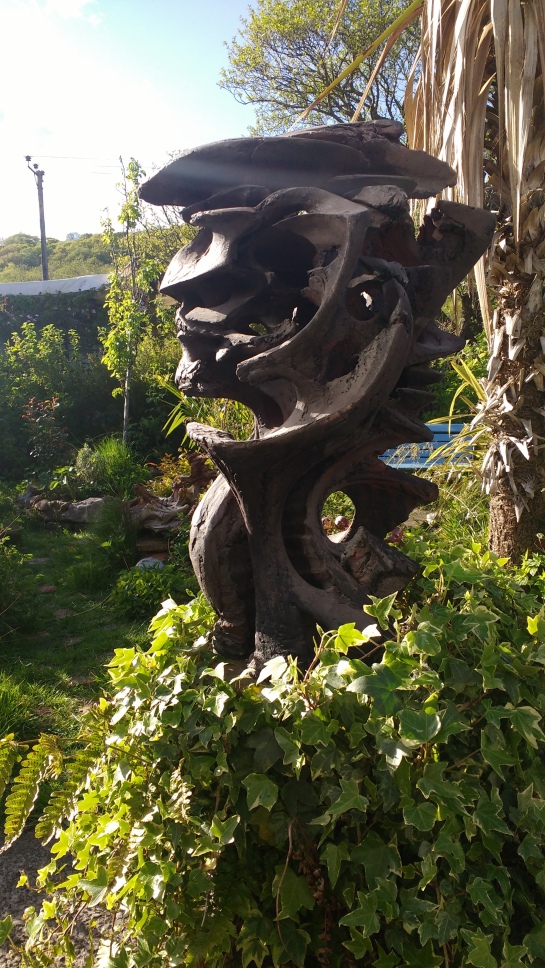
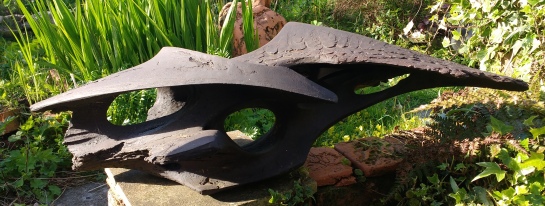
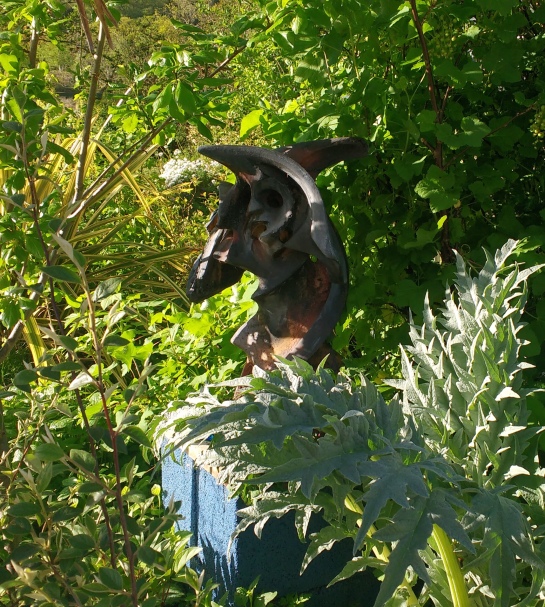
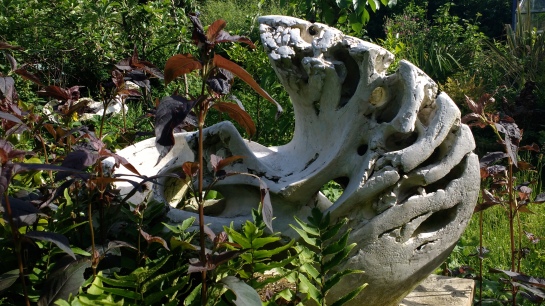
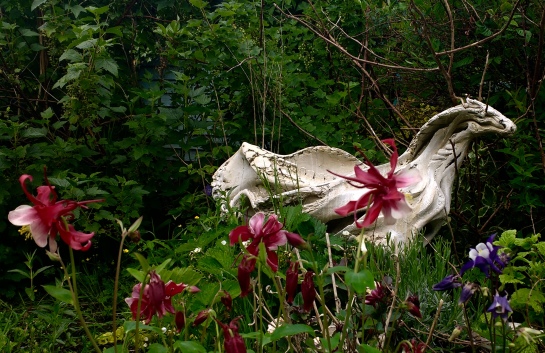
_F147690A Sculpture will transform any Garden, huge or pocket-sized, elaborate or austere. It will need to be made of beautiful, quality materials that have a radiance complimentary to your gorgeous plants. A piece needs to be frost-proof and easily cleaned. No material is as durable or as low maintenance as high-fired Clay.

IMG_20190504_180102126

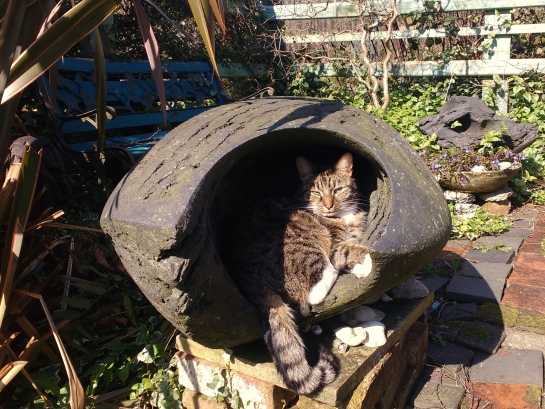
I make simple , movable plinths with old bricks and attractive stone paving tiles. Dig a hole and put in some bricks to make a foundation if the Sculpture is tall or very heavy, then build a hollow plinth with a small doorway that can double as a safe, cosy home for wild-life. If security is an issue or the piece is tall and vulnerable to high winds sink a stake into the ground, build the plinth around this and have the stake go into the Sculpture- many of my Sculptures are hollow and you can set them securely with cement if needs be.IMG_20190504_175930057My garden is 8 years old and is now really coming into it’s own. IMG_20190328_105048782IMG_20190504_180149583
IMG_20190504_175952314

IMG_20180603_090657302

IMG_20180526_130818064

IMG_20190504_180247885

The River, commission.

The River, commission.

Wyvern II, 70cm H x 52cm W. £850.

Wyvern II, 70cm H x 52cm W. £1100. (sold)

OLYMPUS DIGITAL CAMERA

Up is Down XV, £300 (sold)

OLYMPUS DIGITAL CAMERA

Harbinger I, £600. (sold)

OLYMPUS DIGITAL CAMERA

Up is Down XVI, 26cm H x 56cm L, £300.

OLYMPUS DIGITAL CAMERA

Up is Down II, 42cm H x 90cm L, £950.

OLYMPUS DIGITAL CAMERA

Half a Century III, 40cm H, £150.(sold)

OLYMPUS DIGITAL CAMERA

Some of the Sculpture is fresh from the Kiln and new work will be on the go in the Studio.

River Harbinger, 125cm H, £950

River Harbinger, at Wyndcliffe Court Sculpture Garden, 125cm H, £950 (sold)

OLYMPUS DIGITAL CAMERA

The River III, 80cm H, £500

The River III, 80cm H, £500 Sold

OLYMPUS DIGITAL CAMERA

The Edge III, 57cm H, £600, (sold).

I freely admit I spend countless hours staring into the pond ''thinking''...there are Newts !!

Callipygous, 41cm H x 73cm L, £600.

Callipygous, 41cm H x 73cm L, £600. (sold)

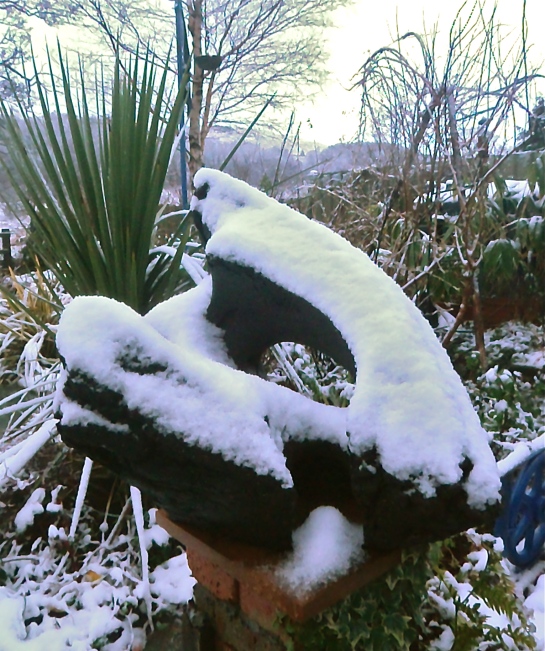
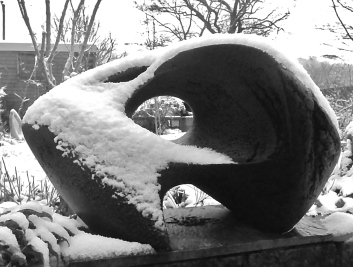
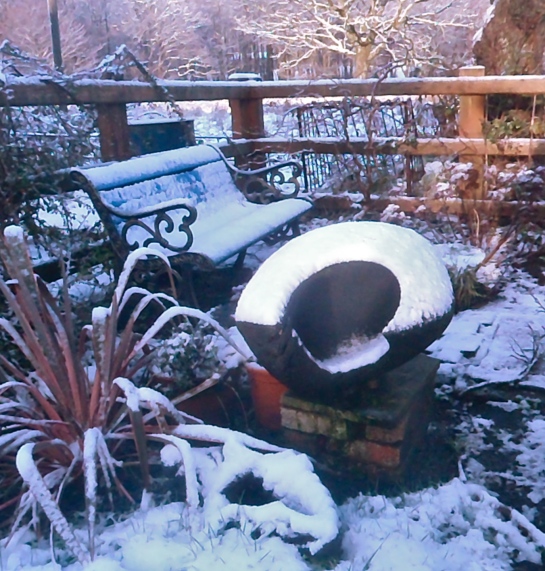
In the winter sculptures give the garden focal points and structure while the plants rest.

OLYMPUS DIGITAL CAMERA

Up is Down IV, 44cm H x 58cm L, £2400 (sold)

OLYMPUS DIGITAL CAMERA

Up is Down II, 80cm L, £300

OLYMPUS DIGITAL CAMERA

Harbinger I, £600. (sold)

The Garden backs right onto the wonderful country-side of the Brecon Beacons National Park

Osprey Studios Garden backs right onto the wonderful country-side of the Brecon Beacons National Park

Sculptures will define each area of your garden. This patio at the end of the garden is a calm, reflective place with dappled shade in the summer and warm sun in spring and autumn. In the winter the sculpture stands out and is eye catching from the house.

OLYMPUS DIGITAL CAMERA

Up is Down II, 41cm H x 80cm L, £300.

OLYMPUS DIGITAL CAMERA

Musings, 21cm H, £150. (sold)

_F147695

Musings, 20cm H, £150.(sold)

_F147699

The Edge XI, 77cm L x 49cm H, £300

The Edge I , 52cm H, £730.(sold)

The Edge I , 52cm H, £730.(sold)

The Edge XII, 71.5cm L x 46.5cm H x 40cm D.

The Edge XII, 71.5cm L x 46.5cm H x 40cm D. £1400 (sold)

The Edge XI, 77cm L x 49cm H x 40cm D.

The Edge XI, 77cm L x 49cm H x 40cm D. £300

Studio Diary; The Tumble Commission, part 3.

The shape looks crazy at this point.

OLYMPUS DIGITAL CAMERA   OLYMPUS DIGITAL CAMERAOLYMPUS DIGITAL CAMERA

The first draft of the details can go on; the most important thing right now is to get good joins for the clay.


OLYMPUS DIGITAL CAMERAOLYMPUS DIGITAL CAMERA

OLYMPUS DIGITAL CAMERAOLYMPUS DIGITAL CAMERAOLYMPUS DIGITAL CAMERA


OLYMPUS DIGITAL CAMERA When the clay has hardened these can be touched up by carving with a delicate tool. These images were taken from archive pictures of 2 mines and the Railway local to Tumble. Apparently the Train that ran from Great Mountain Colliery was the first ever passenger line.

120005_ILL2944 Morlais-Colliery-2 images-24

OLYMPUS DIGITAL CAMERA

I’m using smaller coils and each stage is taking longer.It is just approaching the point where the central hole will form and the top edges start to meet- lets hope my measurements were right! If it doesn’t meet properly I’ll cut out large sections and re-do them.

The props are getting more inventive!

OLYMPUS DIGITAL CAMERA OLYMPUS DIGITAL CAMERA OLYMPUS DIGITAL CAMERA OLYMPUS DIGITAL CAMERA

Those out-side supports will stay in place until after the upper parts are cut and lifted off. In theory it would be self-supporting….but if it collapsed it would do it fast! The final, fired and installed Sculpture will have cement and steel rods inside so it will be strong enough to climb on.