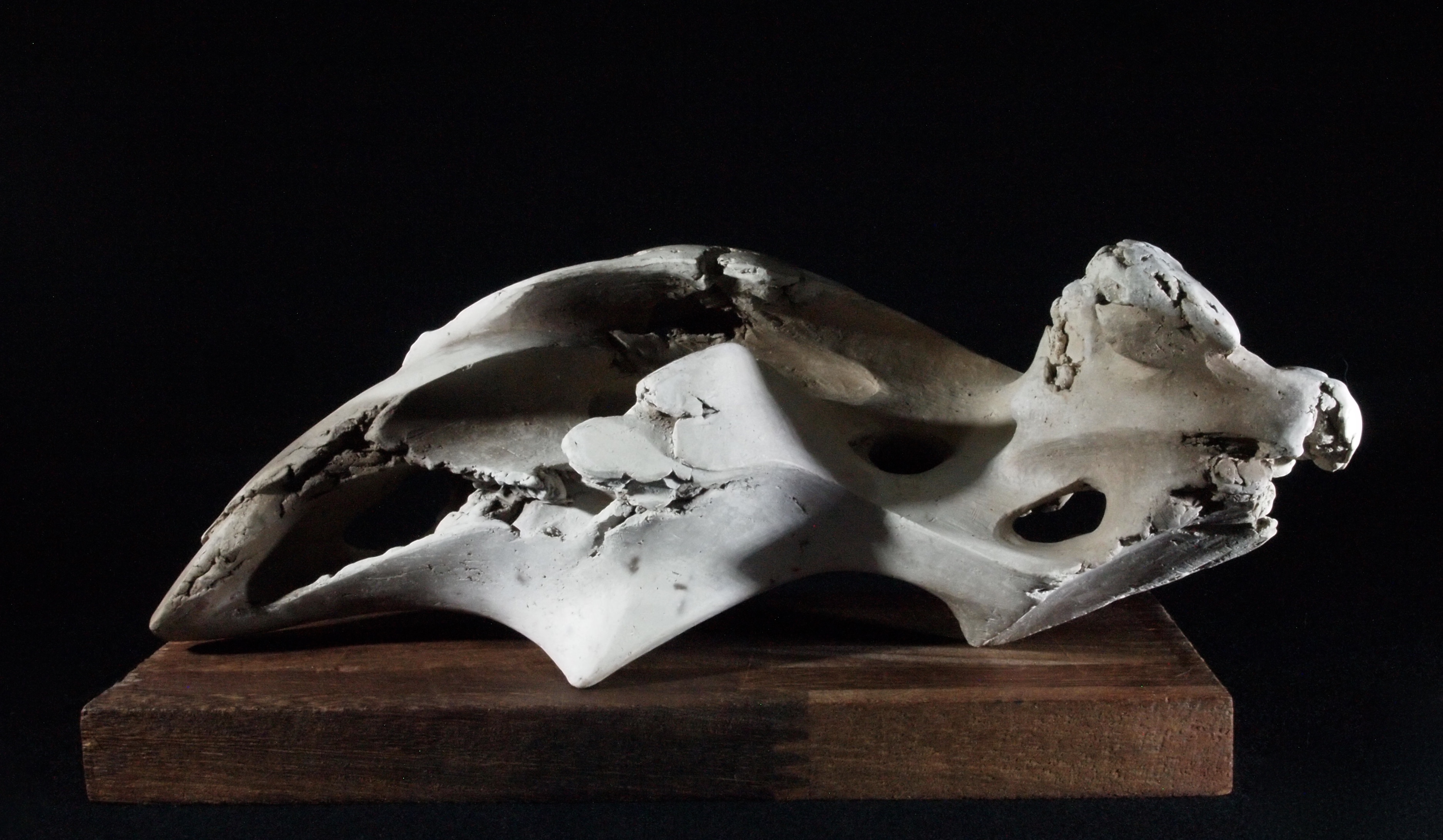
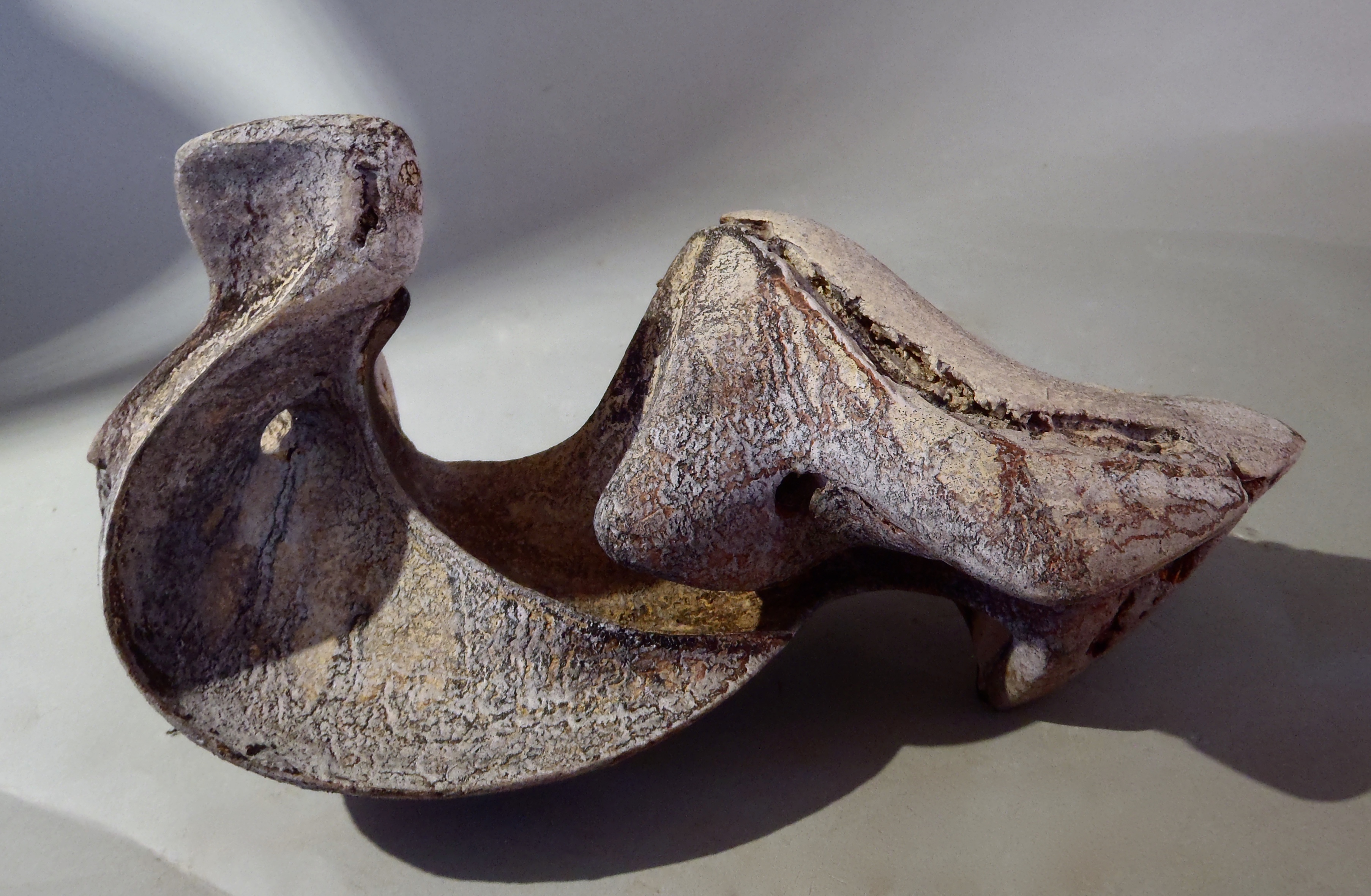
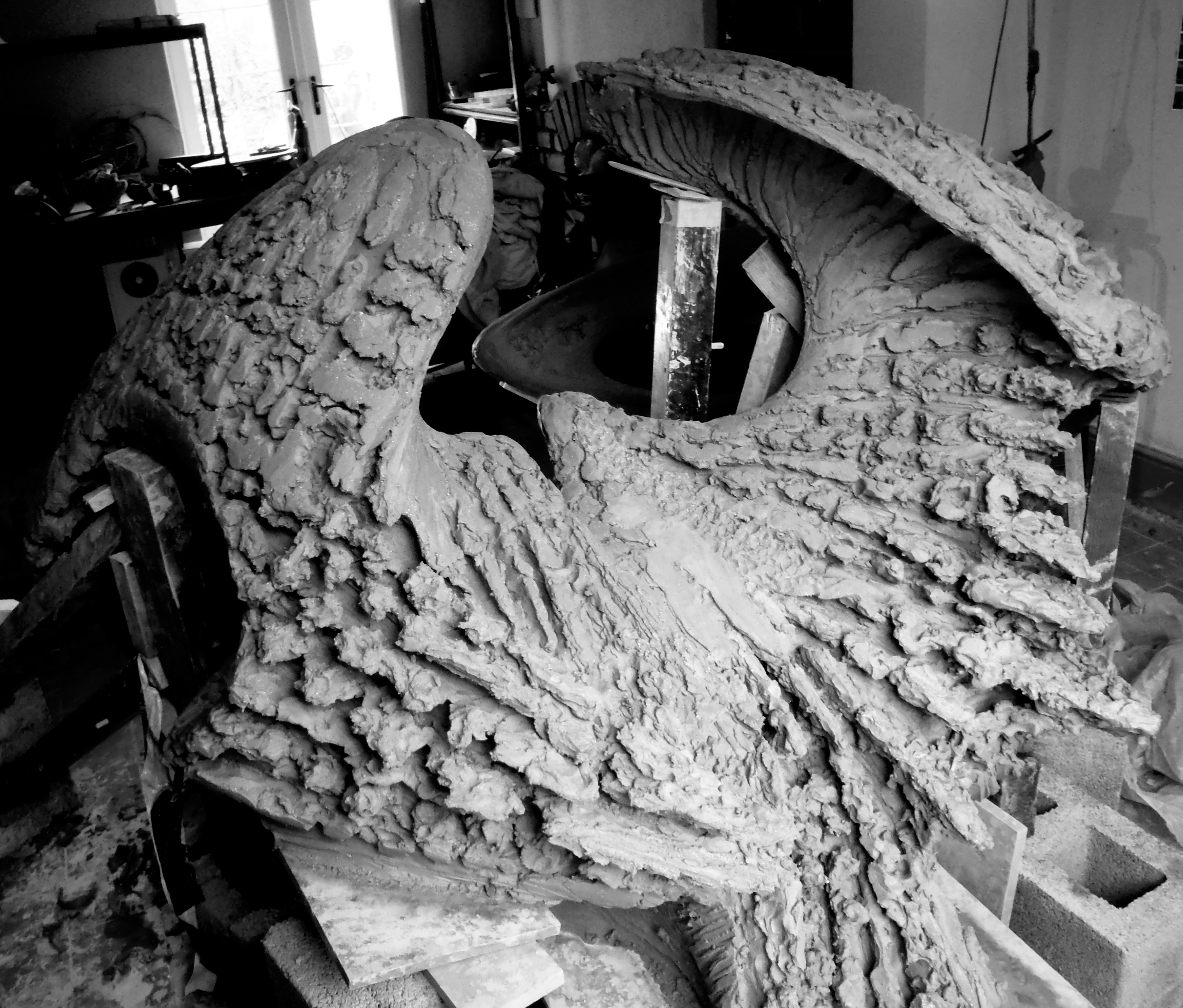
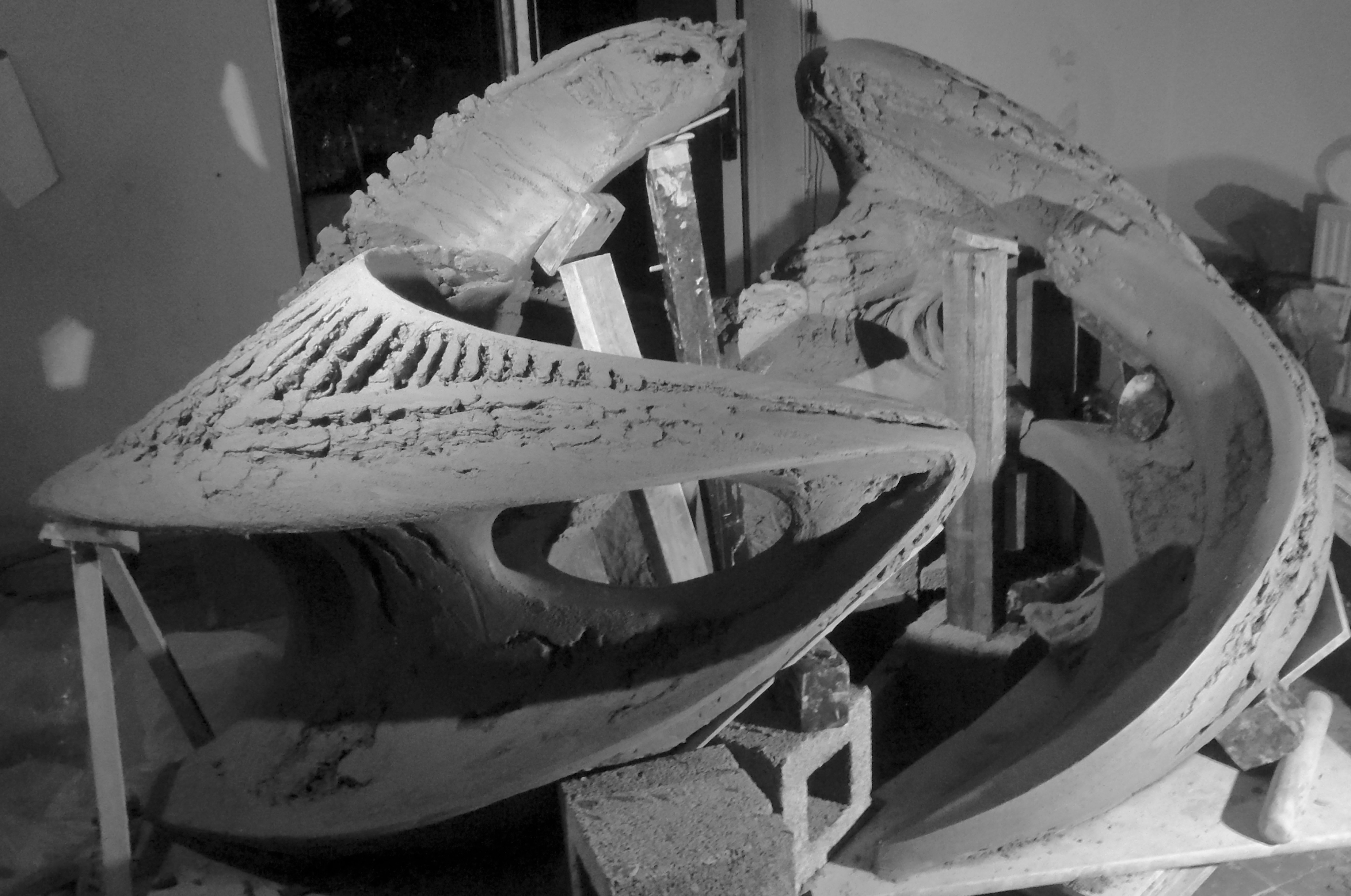
How To Make A Head; Clay Armatures and building Hollow.

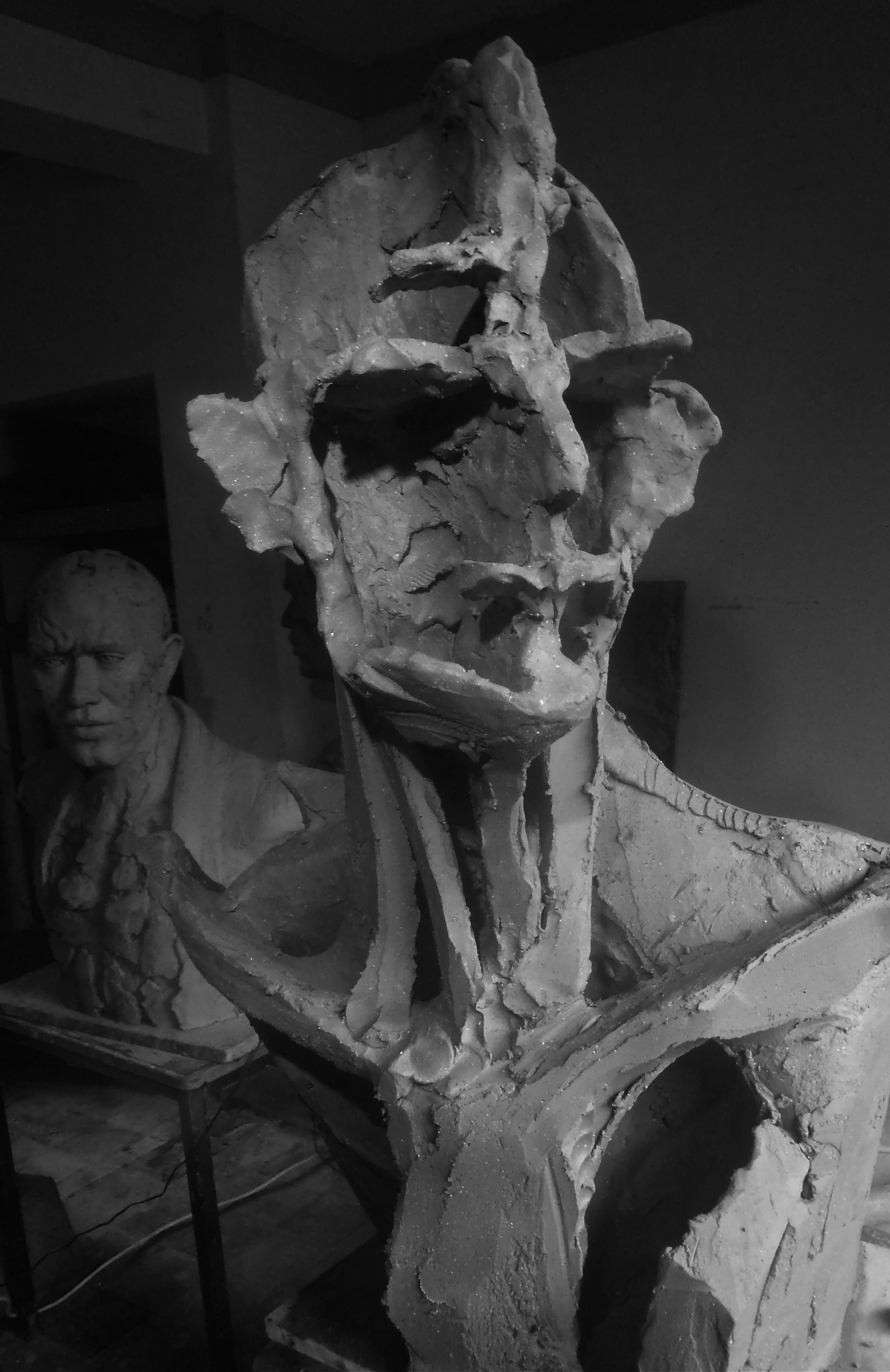
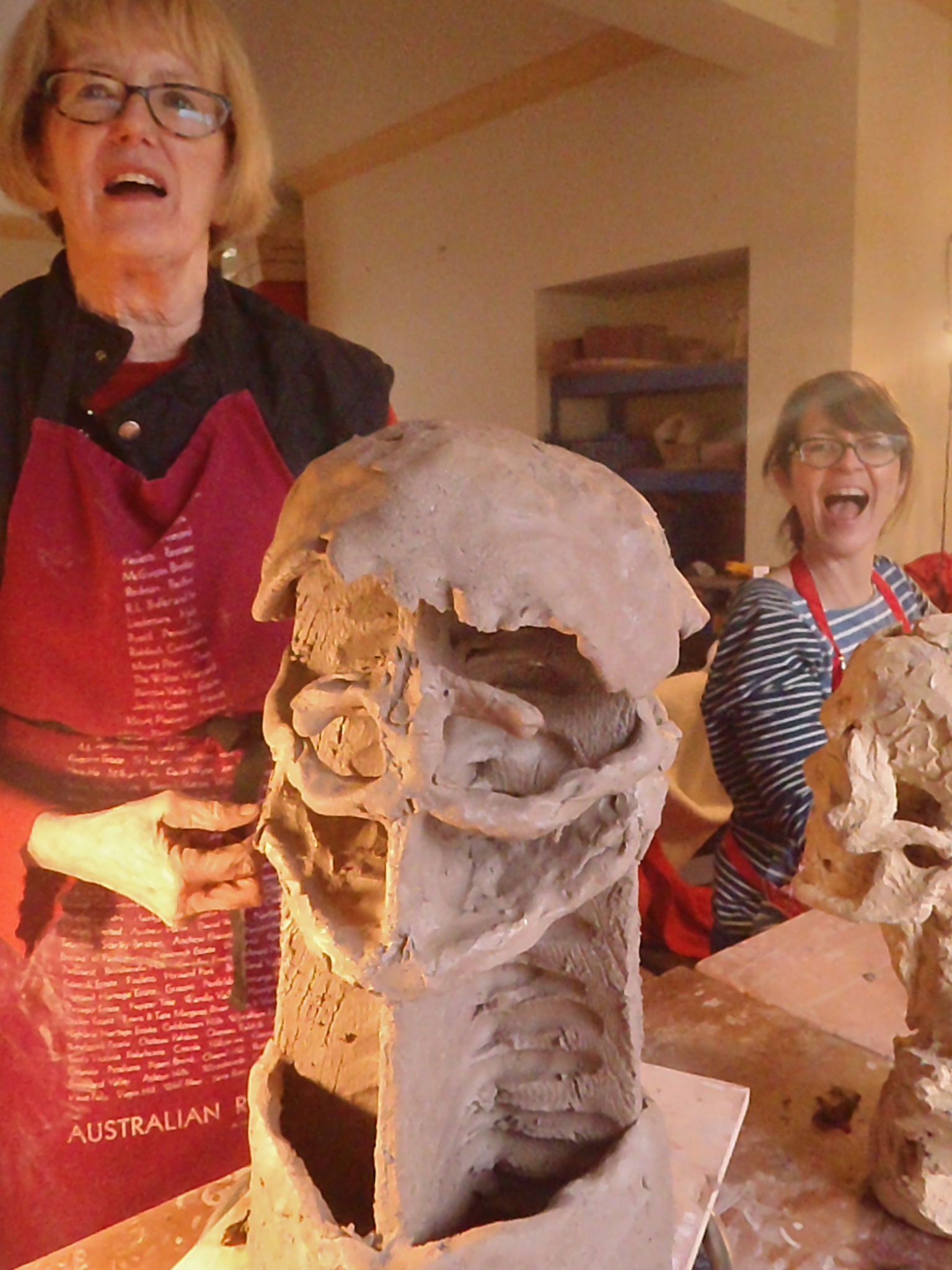
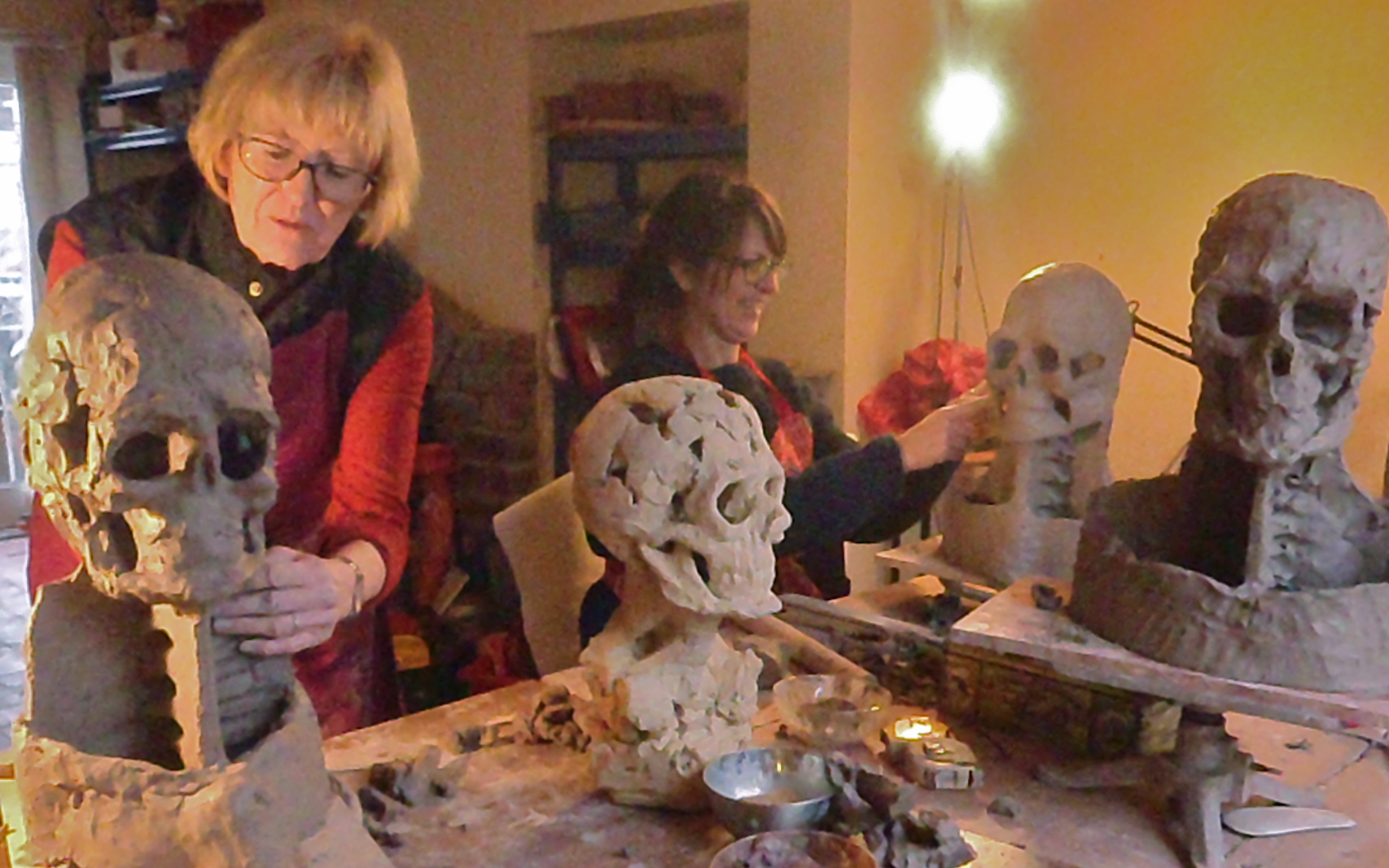
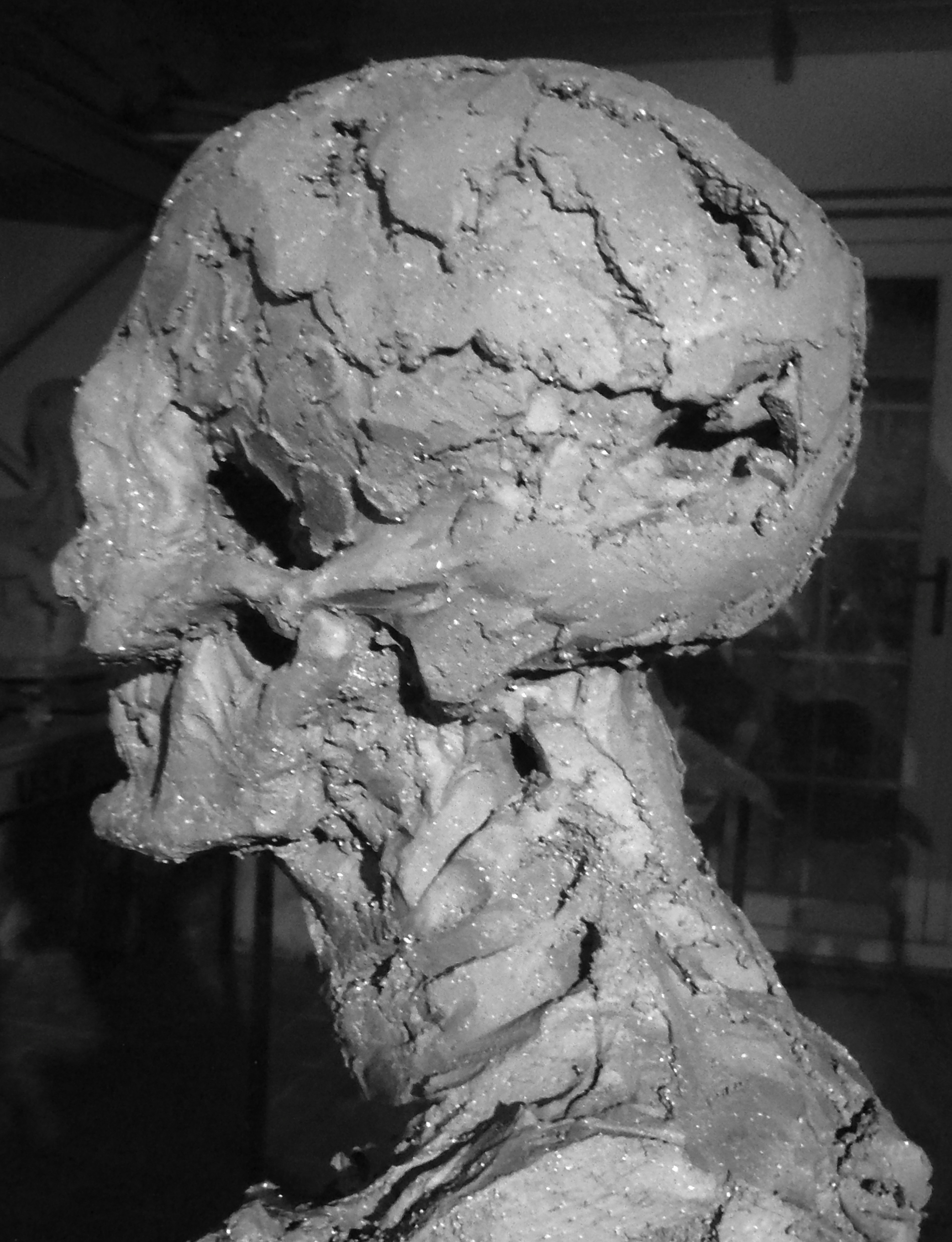
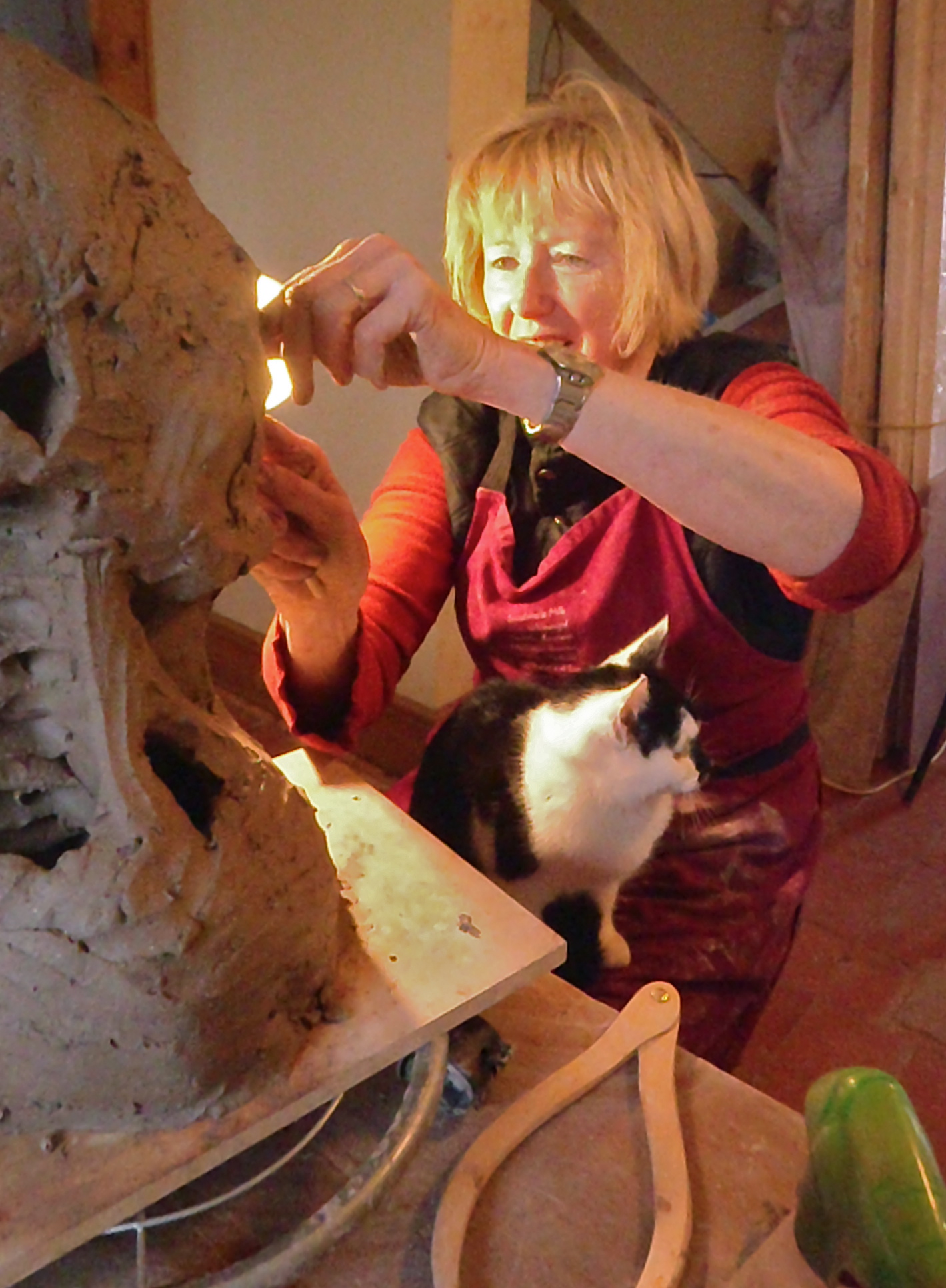
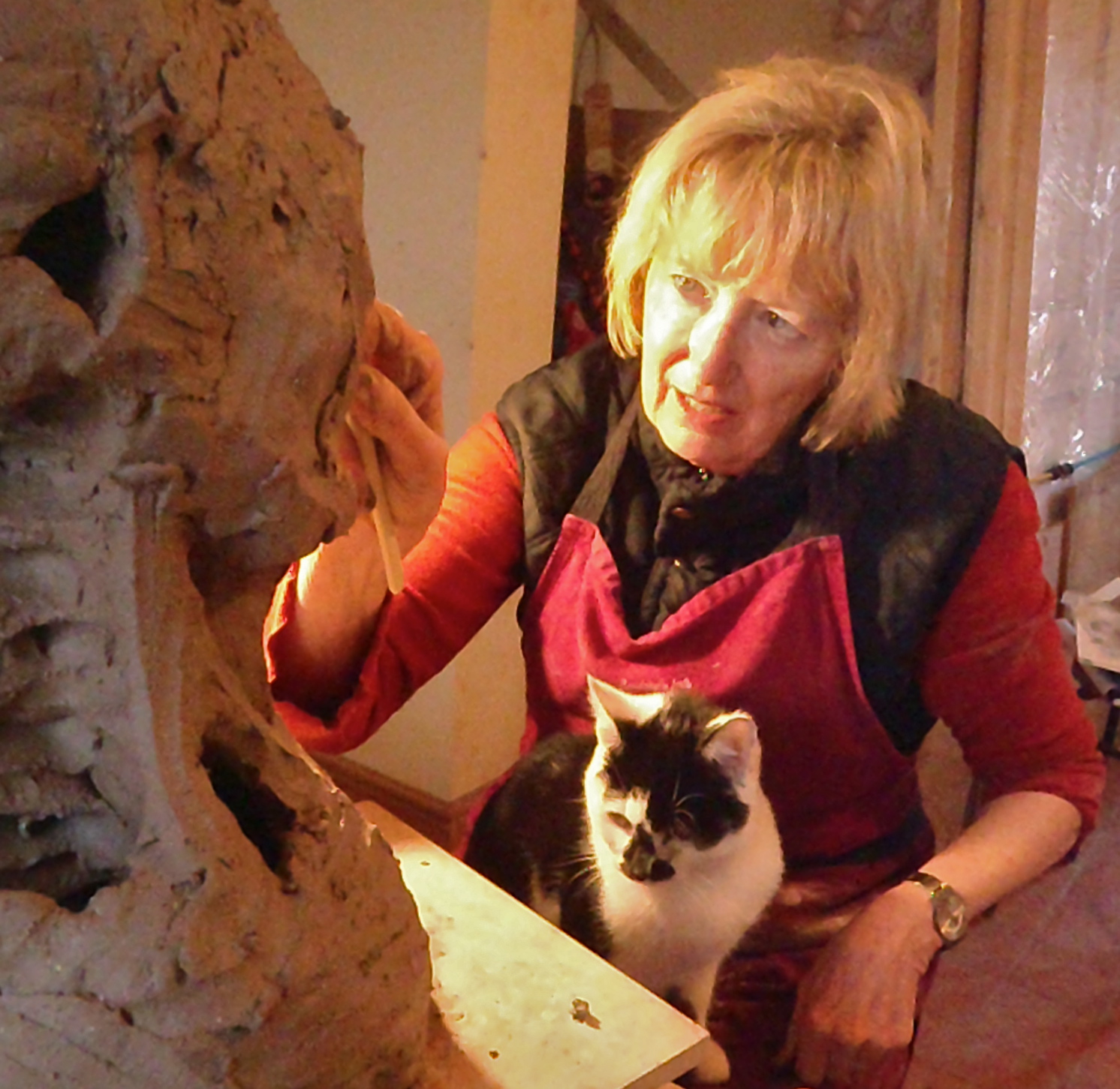
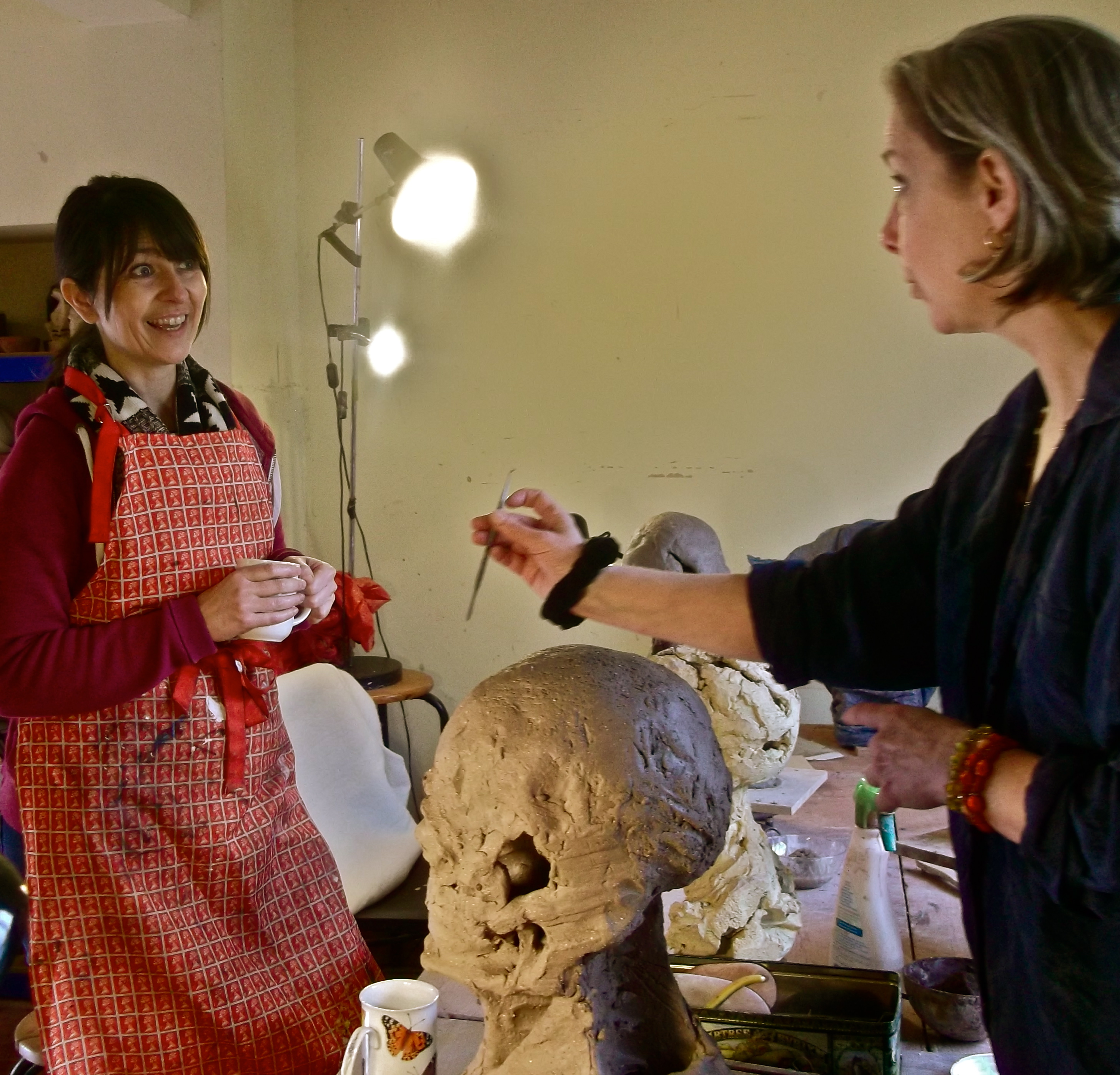
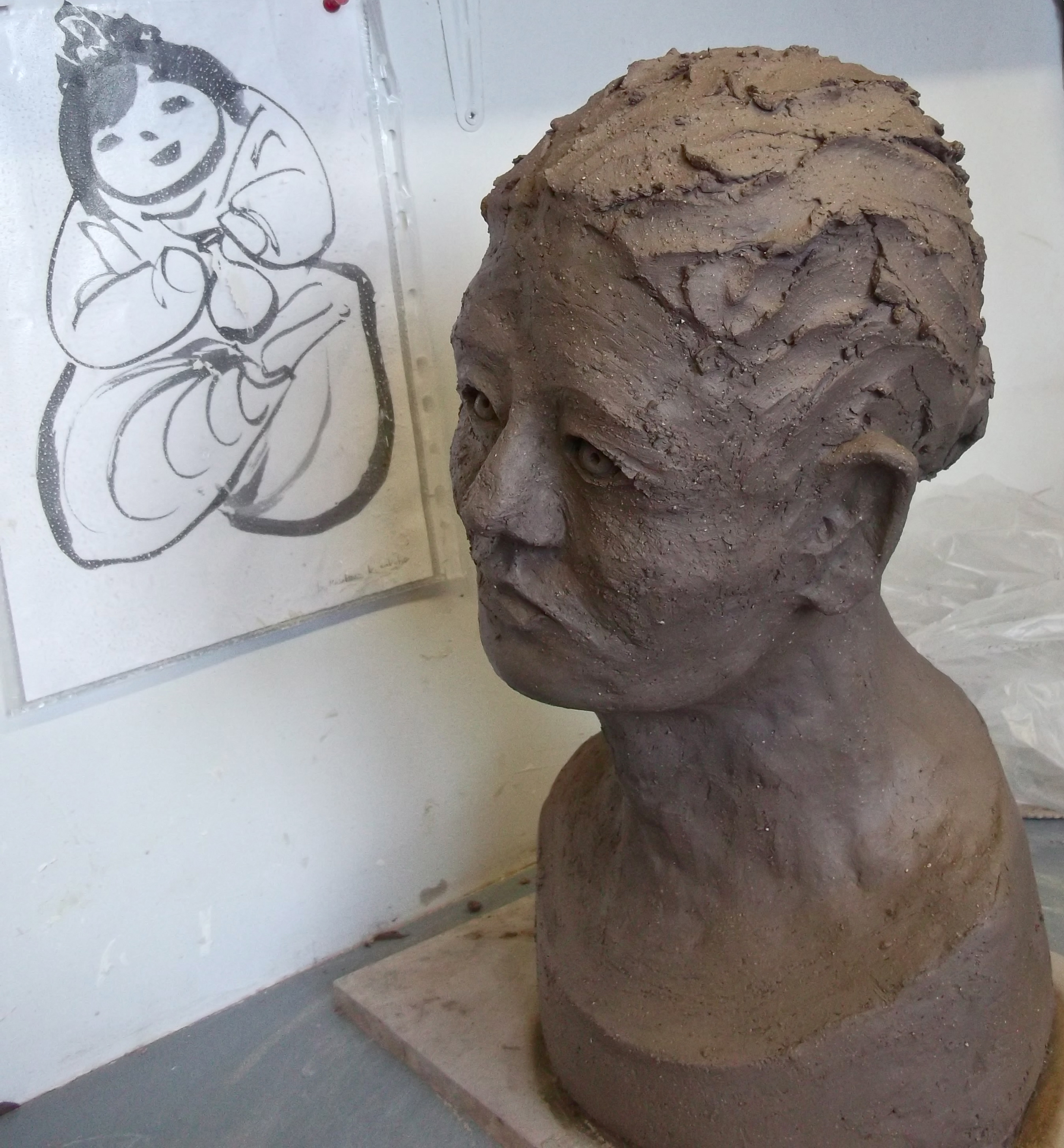
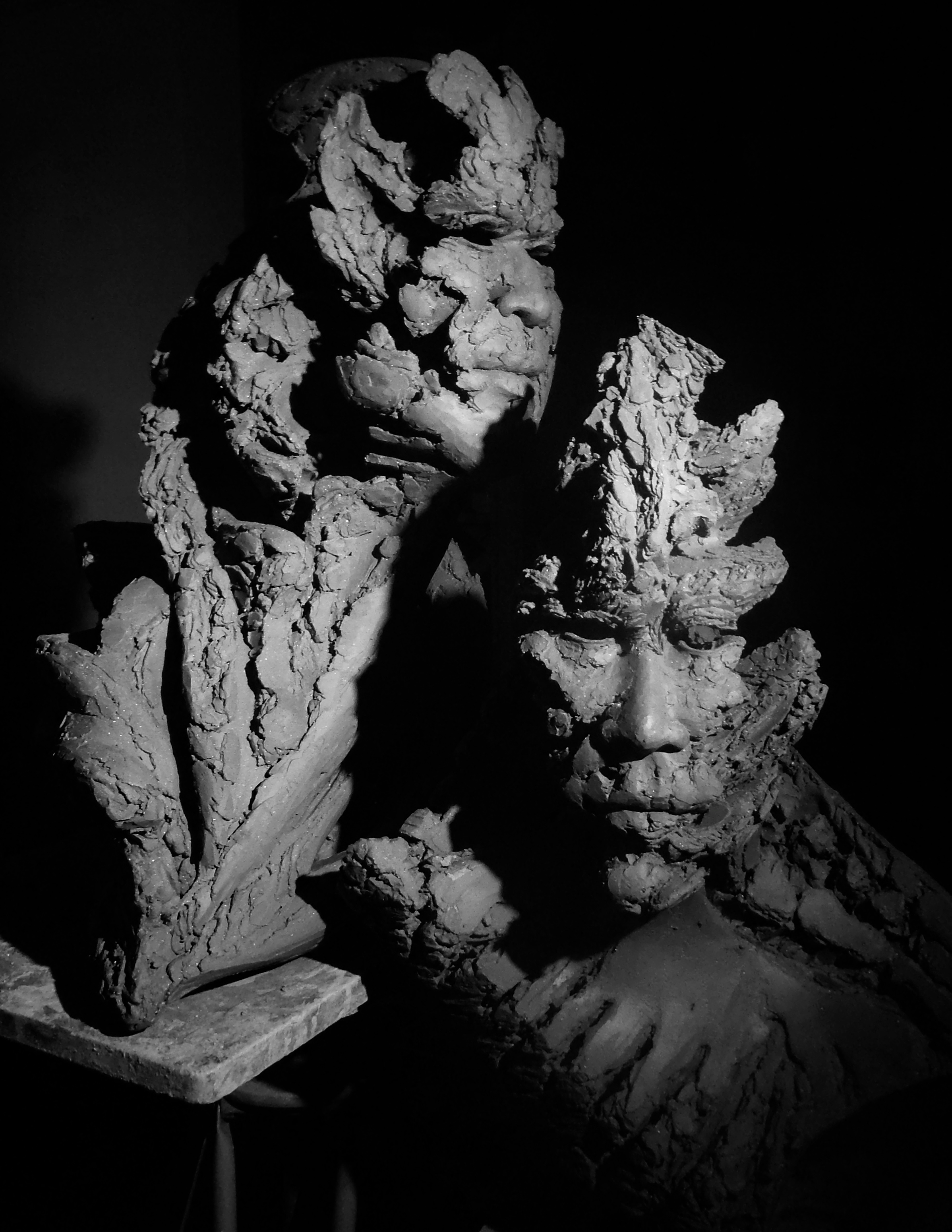
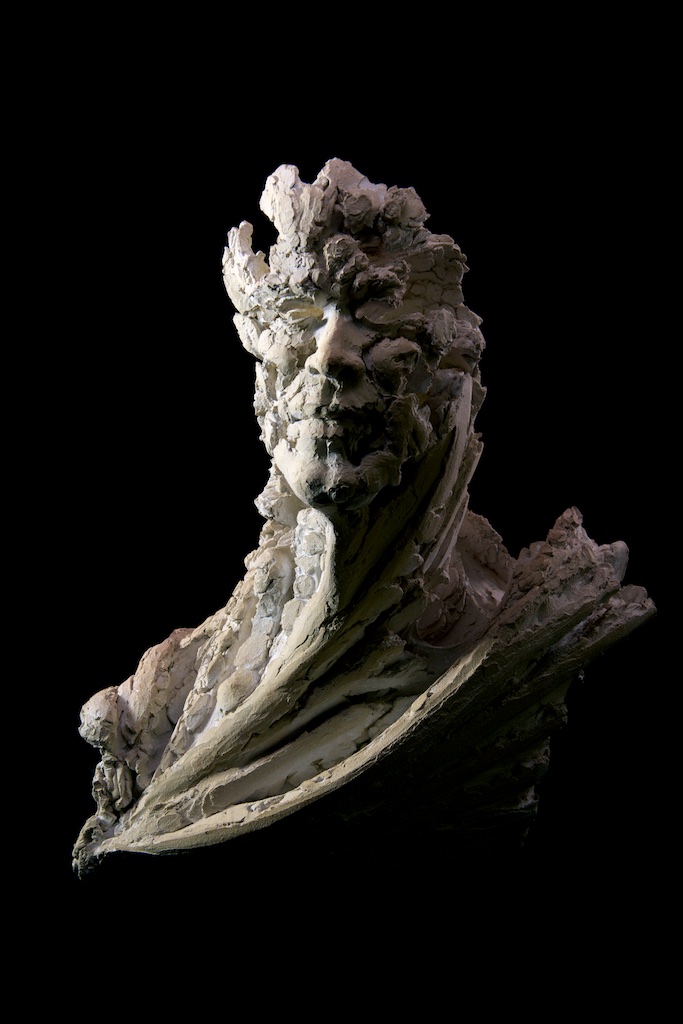
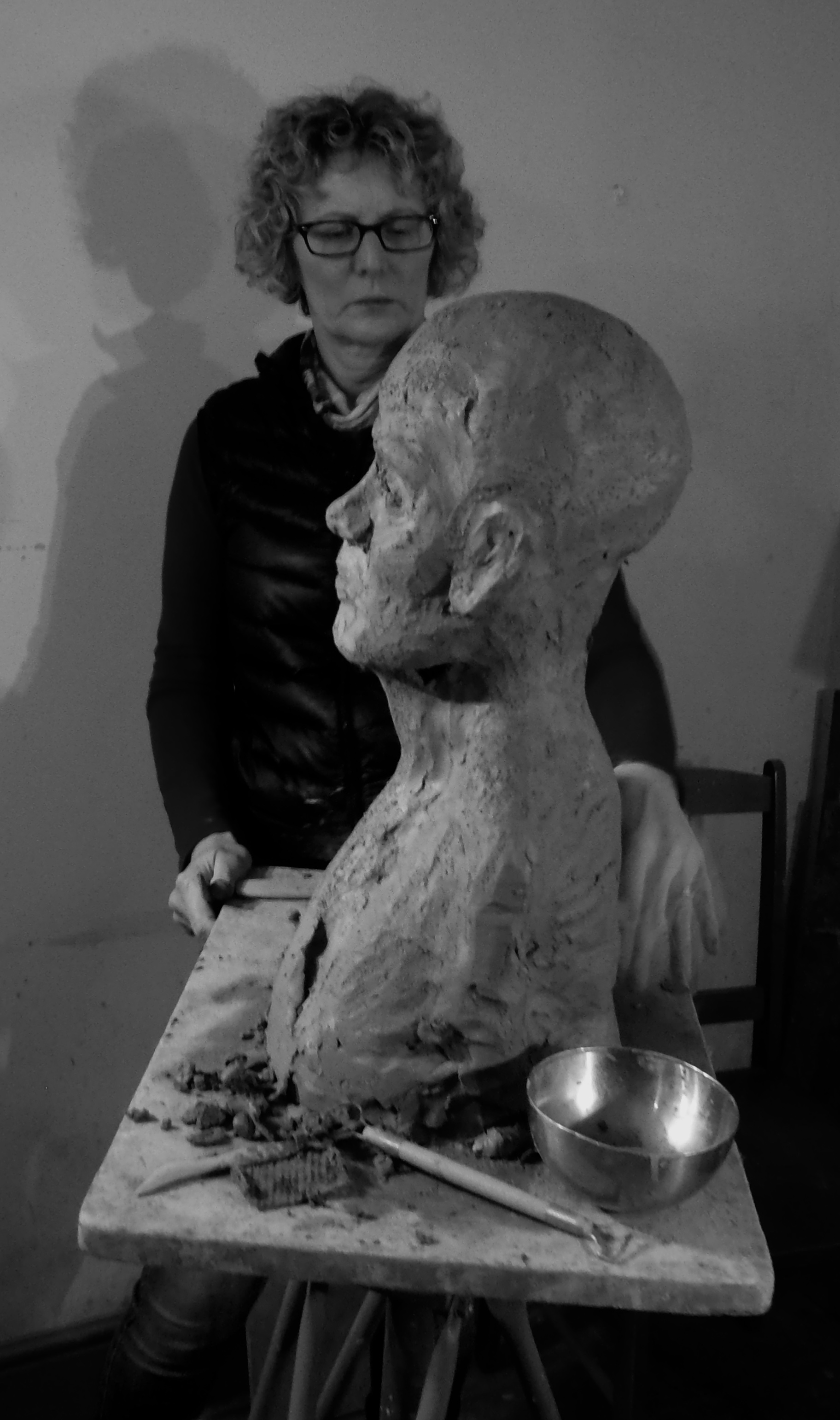
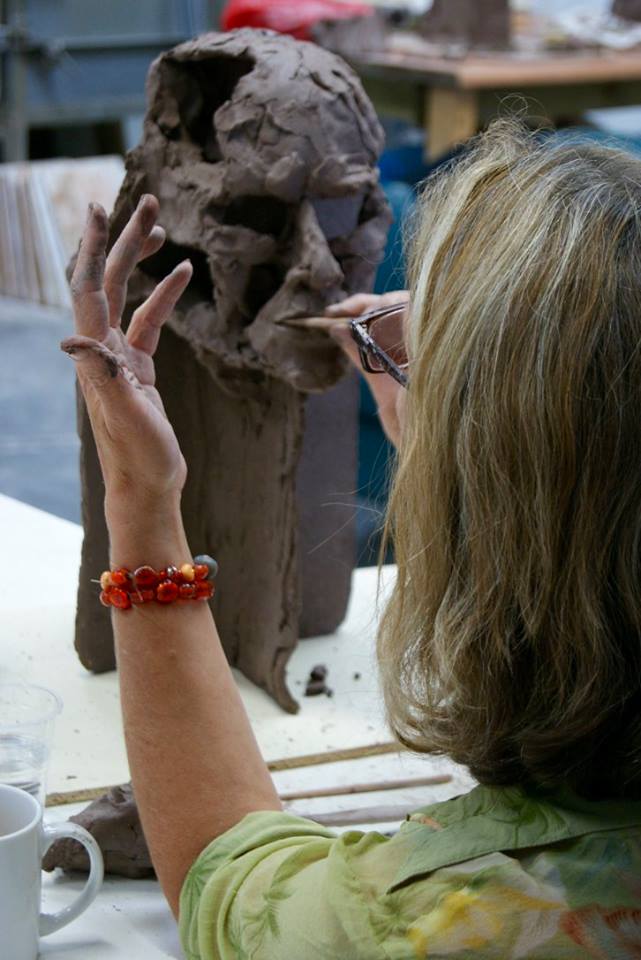
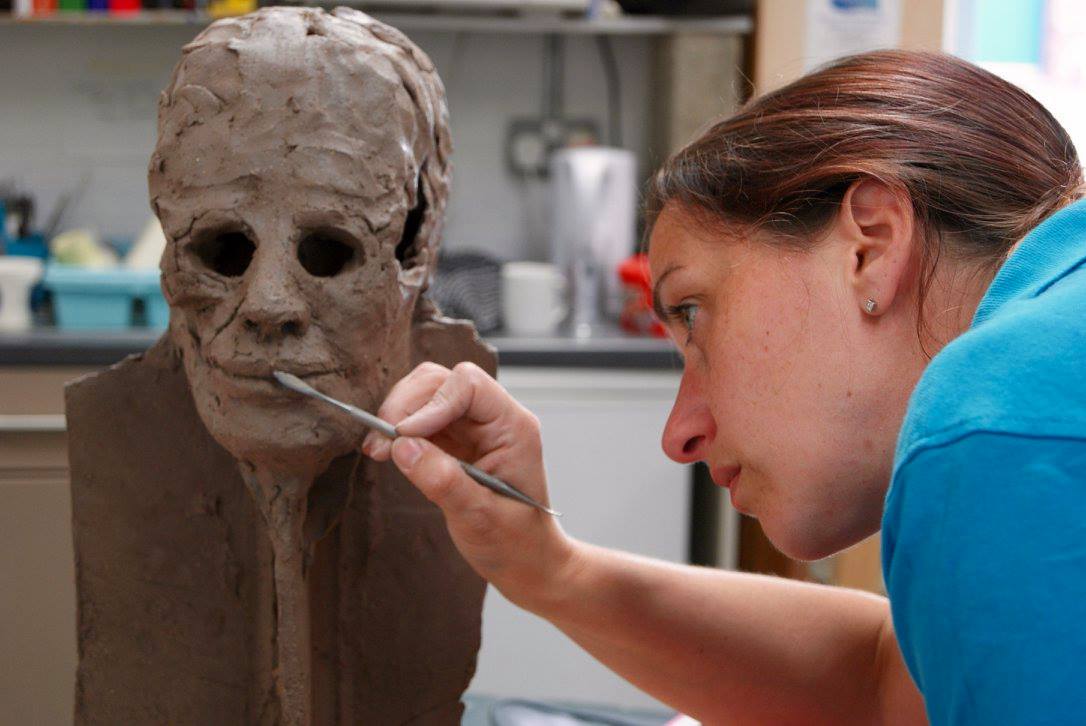
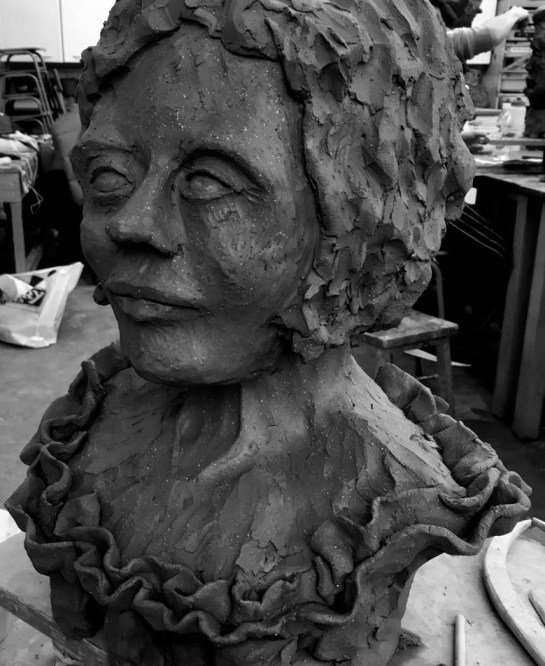
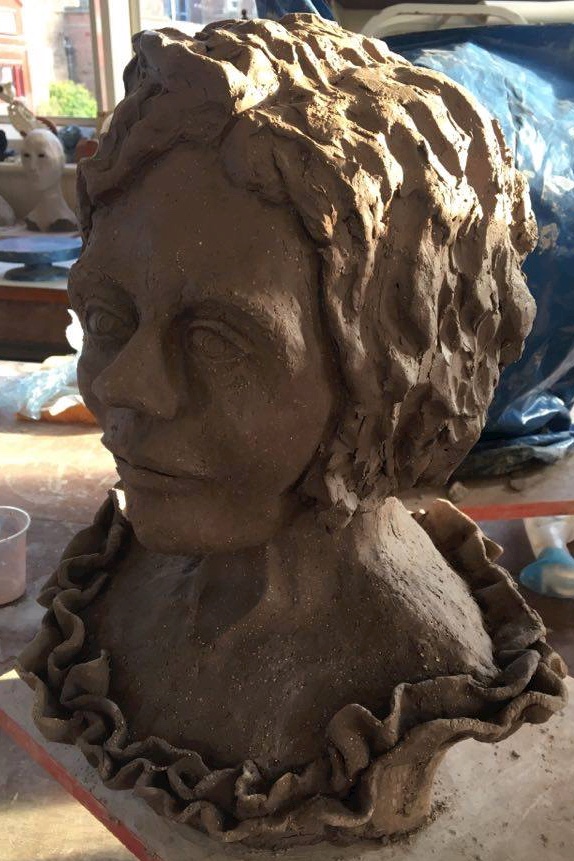
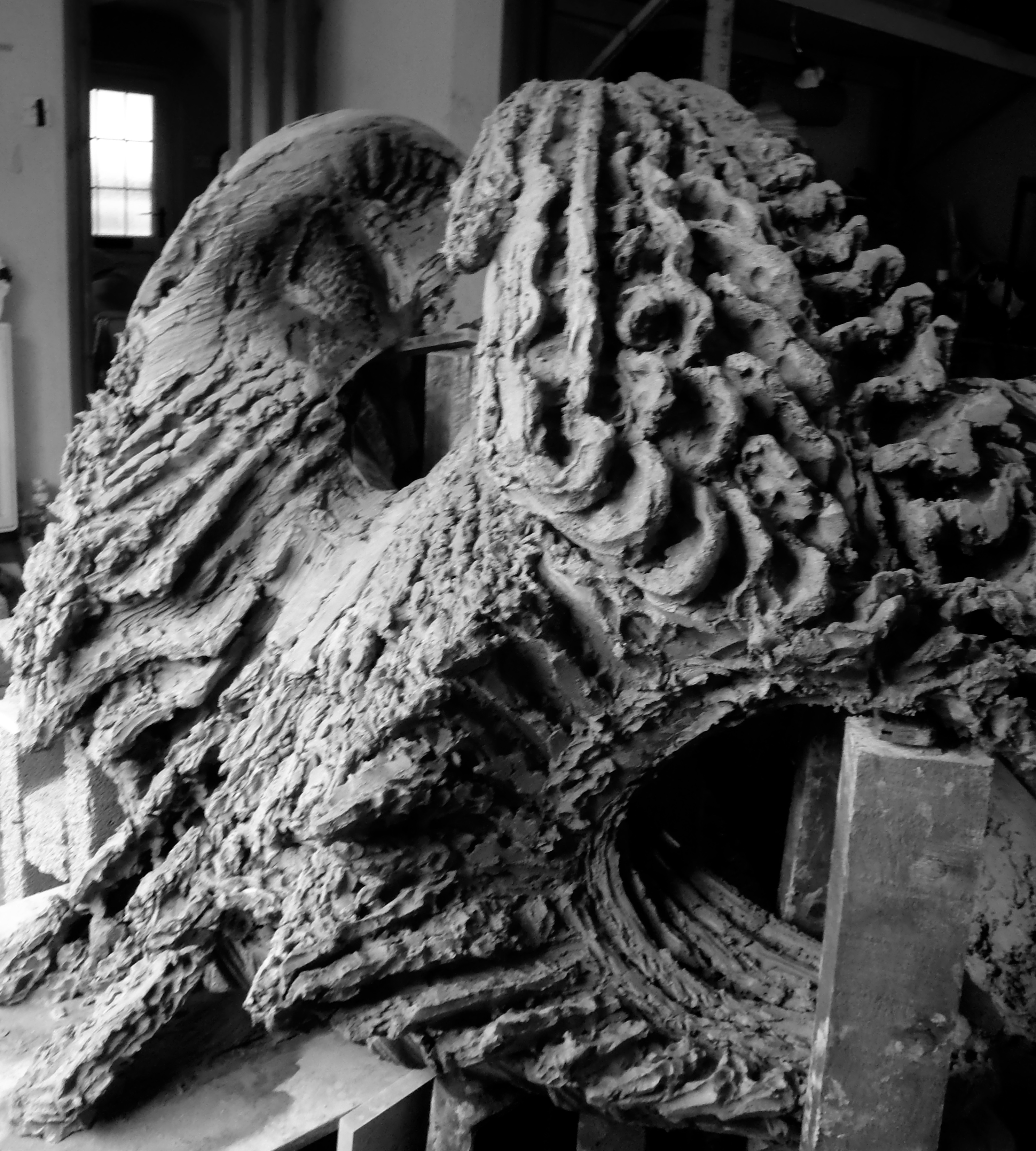
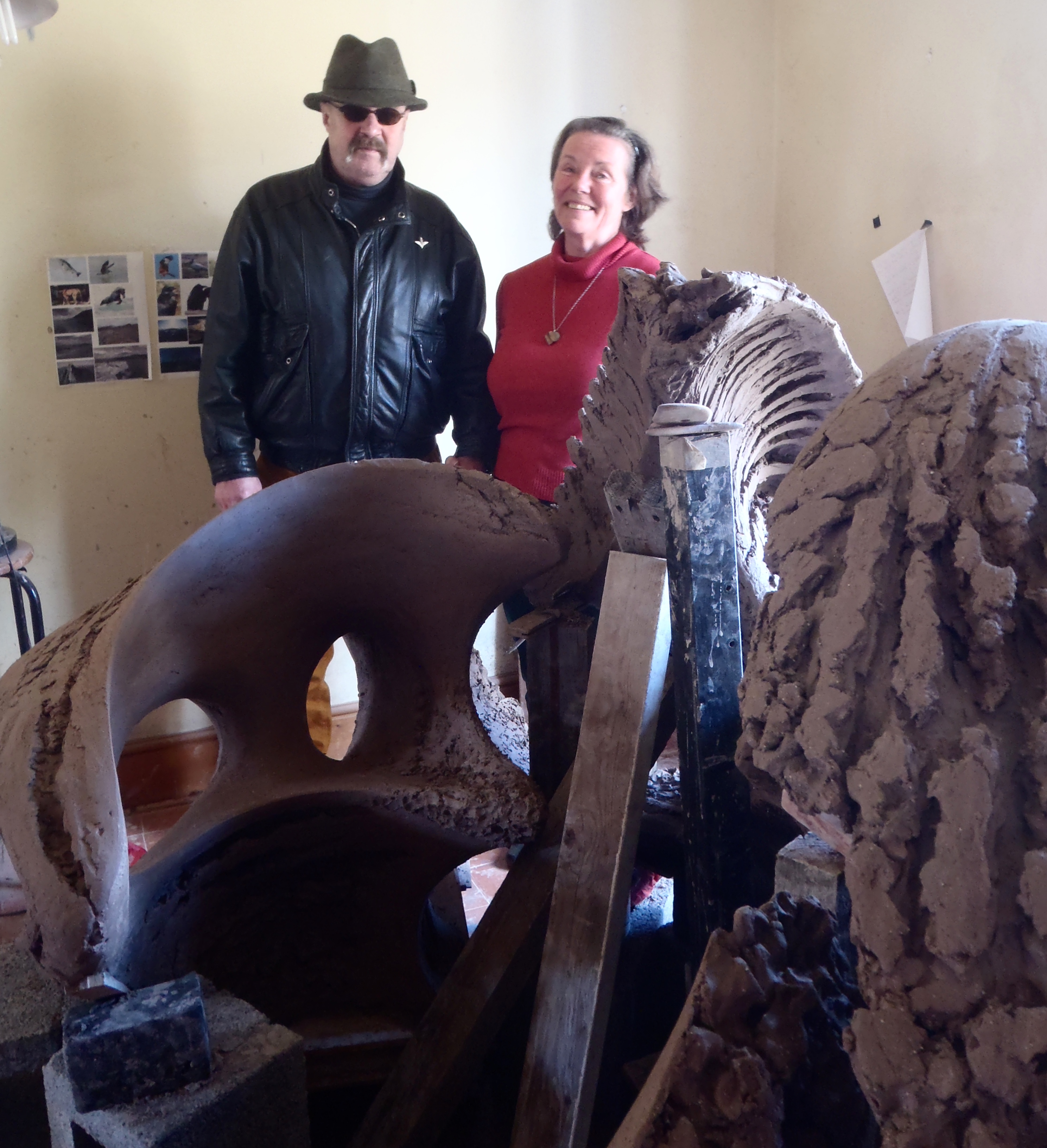
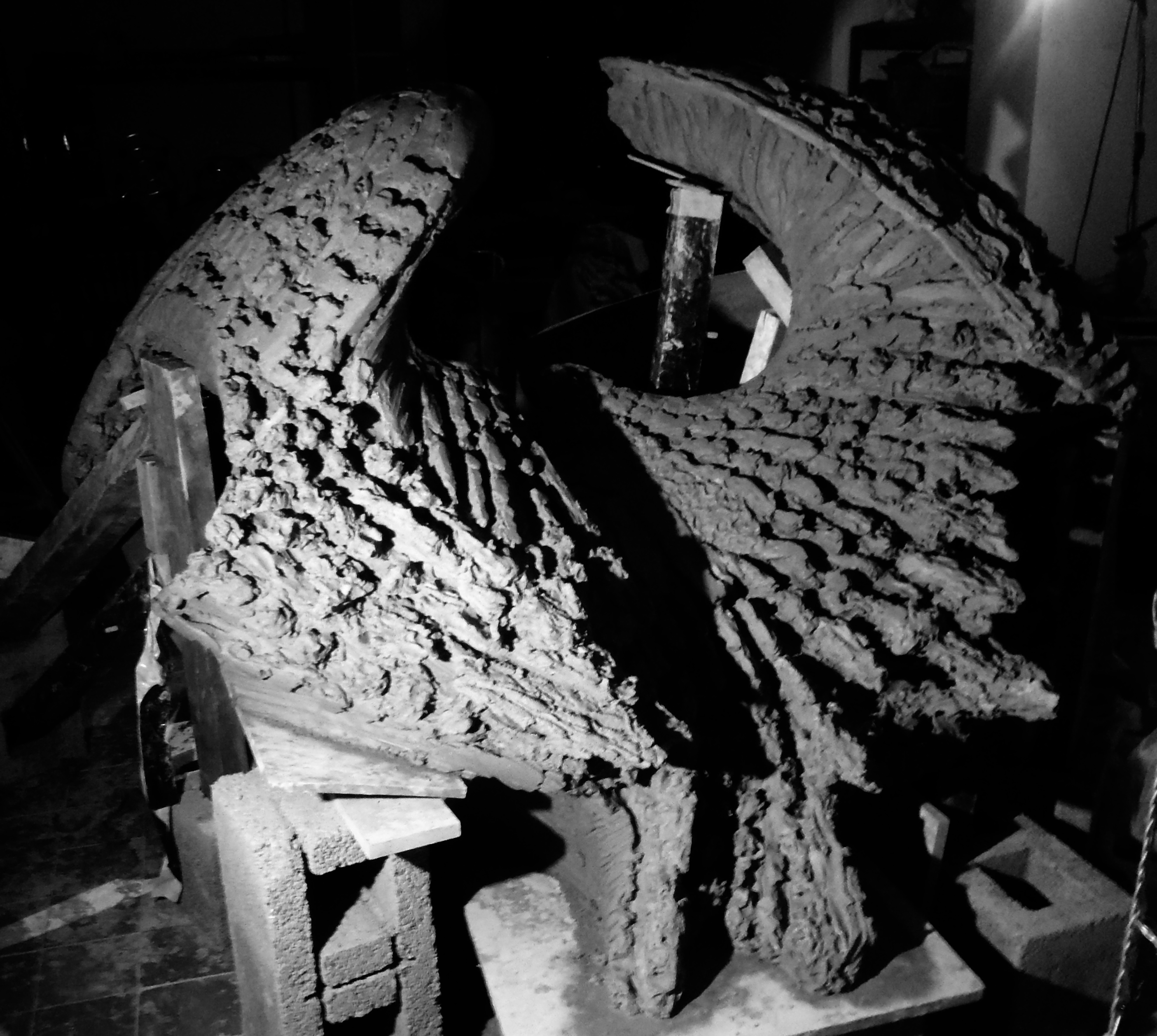
Busts in progress, Aug 2014.

The Head

The key reason making heads is so hard is that the perception (the way we take in our knowledge) that we have built up over our lifetime of what shape the head is, is based around communication and assessing each other. Making a head requires going against what ‘feels’ right and using information we are unlikely to have bothered with before. Portraiture has a system to organise the huge quantity of subtle details. Learning this system will broaden your knowledge, and your access to more knowledge, enormously. That’s why the study of Portraiture and Figurative Sculpture is traditionally the bed-rock of Art.

It is not rocket science and you can do it. The challenge is fascinating and very rewarding.

The Technique

Because clay shrinks as it dries and is floppy when very wet a Clay Armature that will support and  shrink with the form through the drying and the firing is invaluable.

Most techniques for building  hollow have a strong ‘voice’ of their own and will influence the final look of the piece. They can demand that you harden lower sections and are then unable to change them when you later realise they are wrong. This is a real disadvantage irregardless of your skill level. It is better to work solid over a clay armature especially if you are not using a scale-model and hollow out just before finishing touches. It’s not difficult. That technique is detailed here: Working solid and hollowing out.

Or you can use this technique of building outwards from a Clay Armature to make your sculpture hollow.

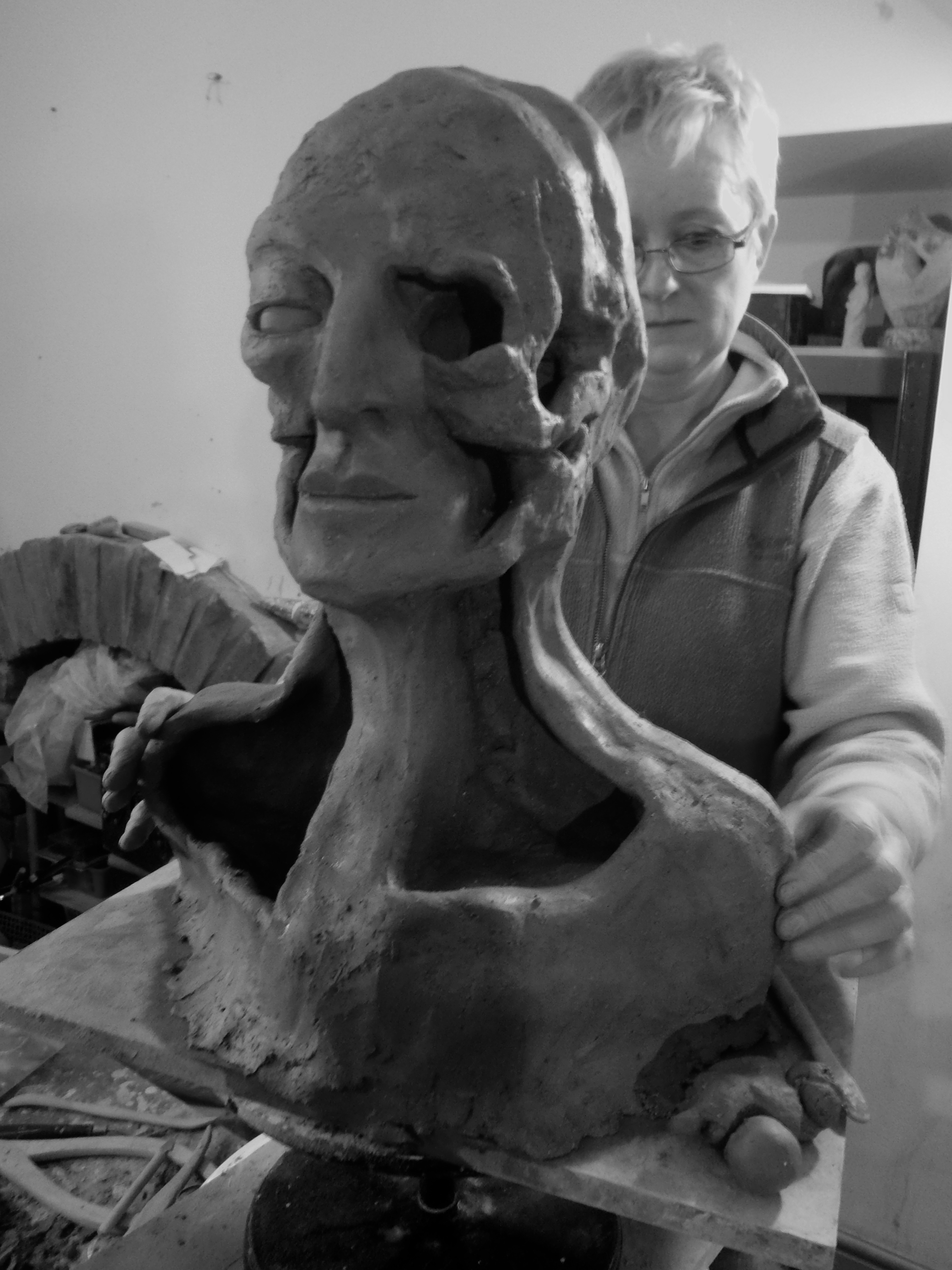
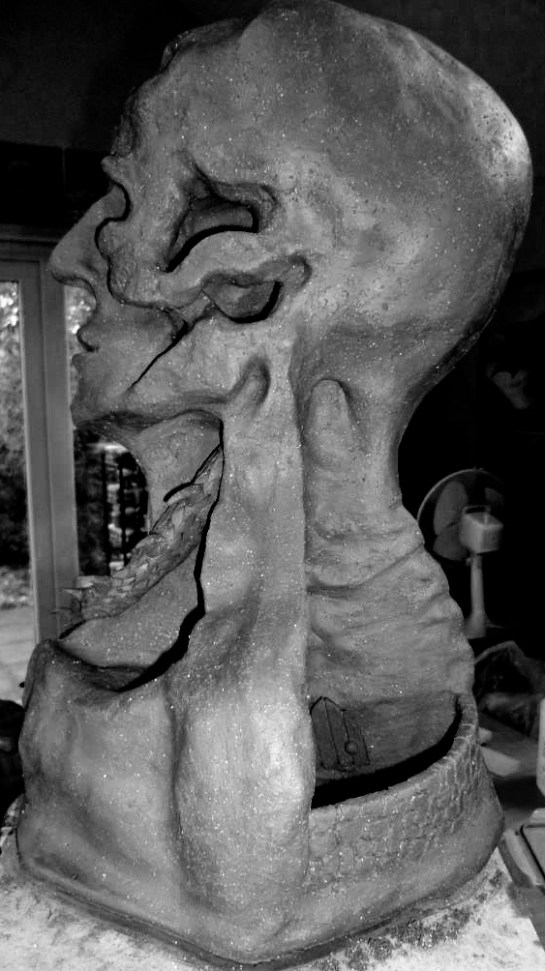
Clay armature for a bust, aug 2014
3rd Bust armature in progress, Aug 2014.
OLYMPUS DIGITAL CAMERA
in progress, Aug 2014.

Here I chose to leave gaps that show the Armature but of course you don’t have to. The step by step manner of this method and the fact that you work all over the head  in layers from the start  makes it ideally suited to help you organise the huge amount of information in your mind while learning to make Portraits and other Sculpture.

The Workshop

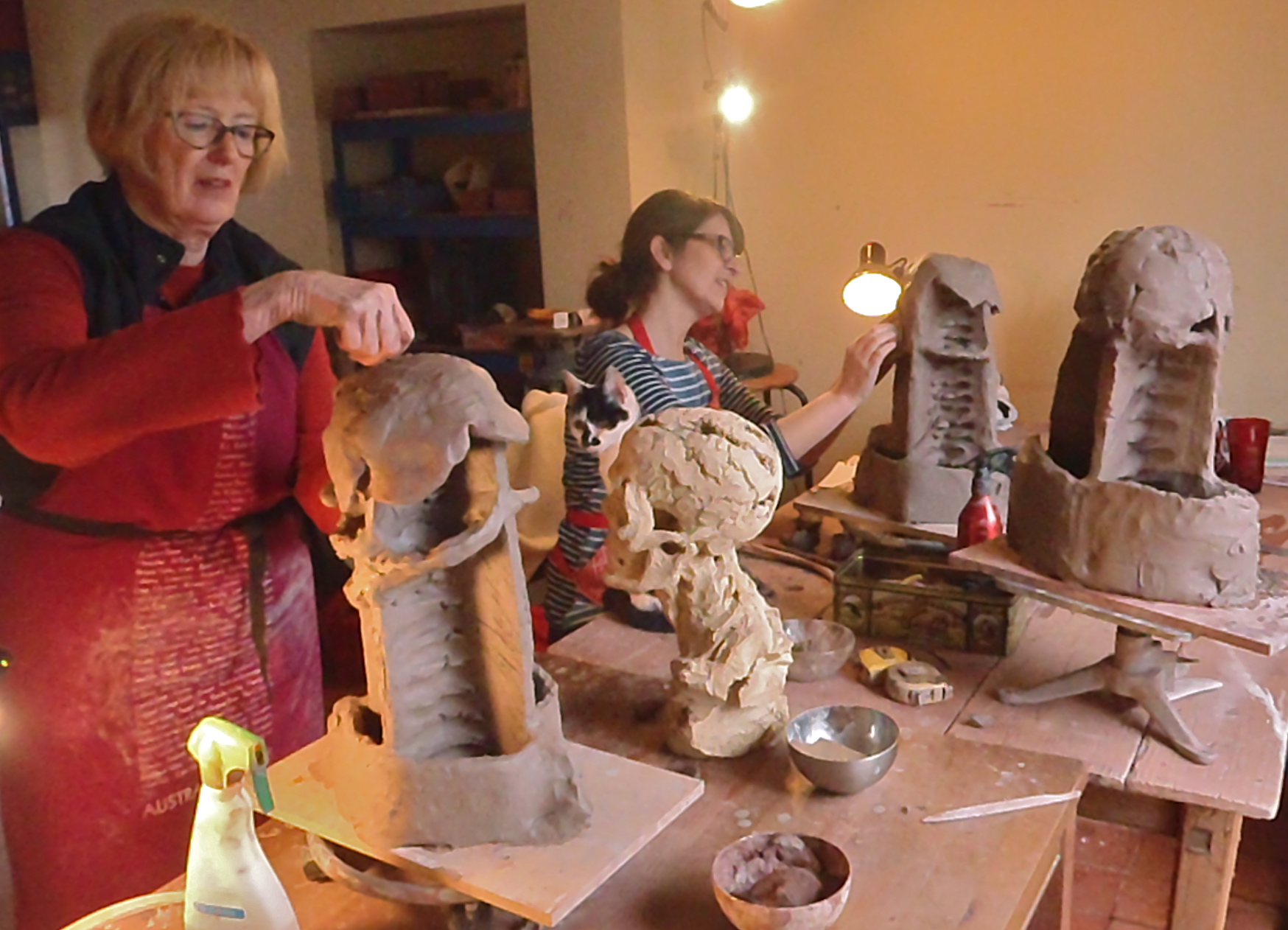
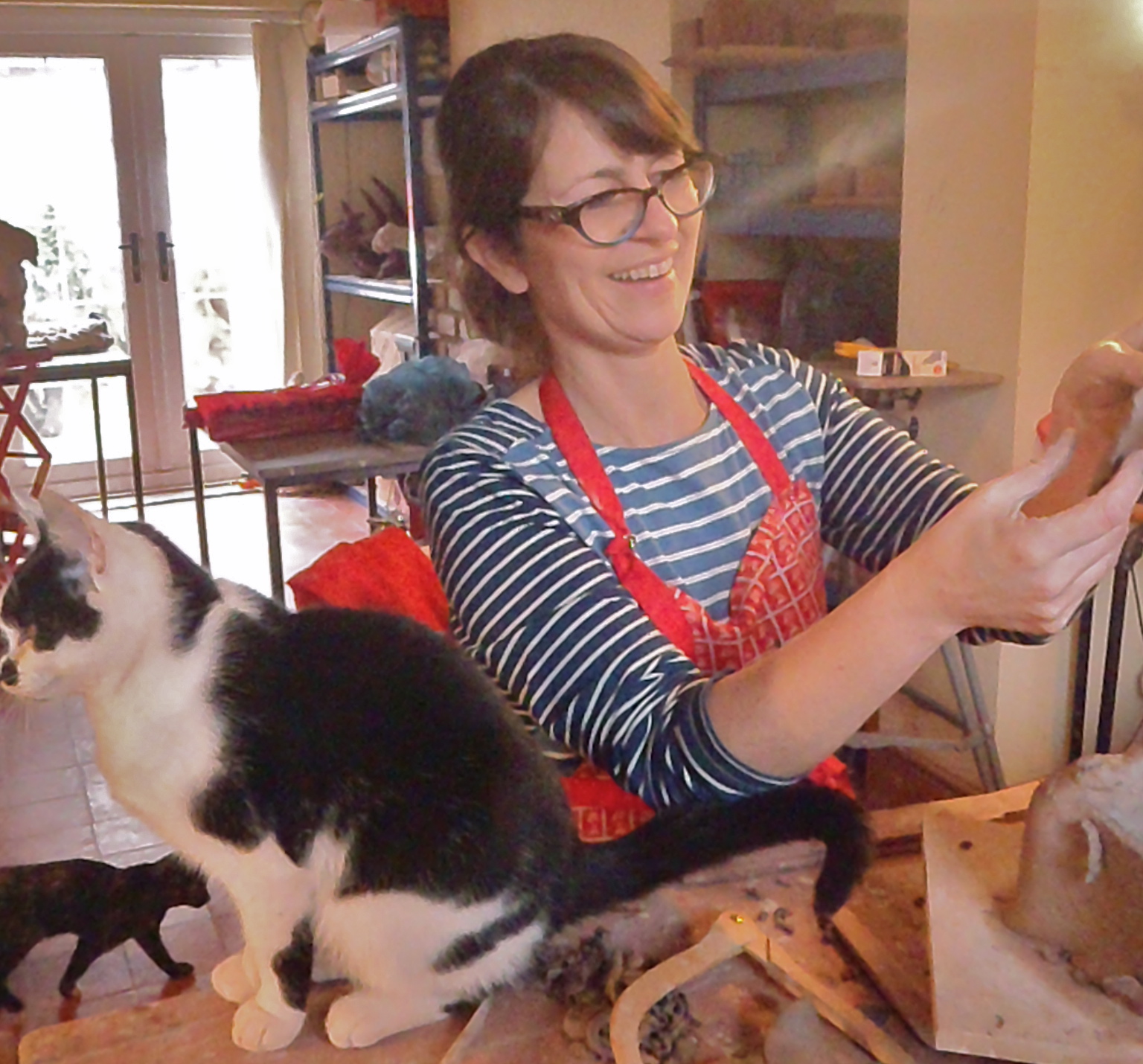
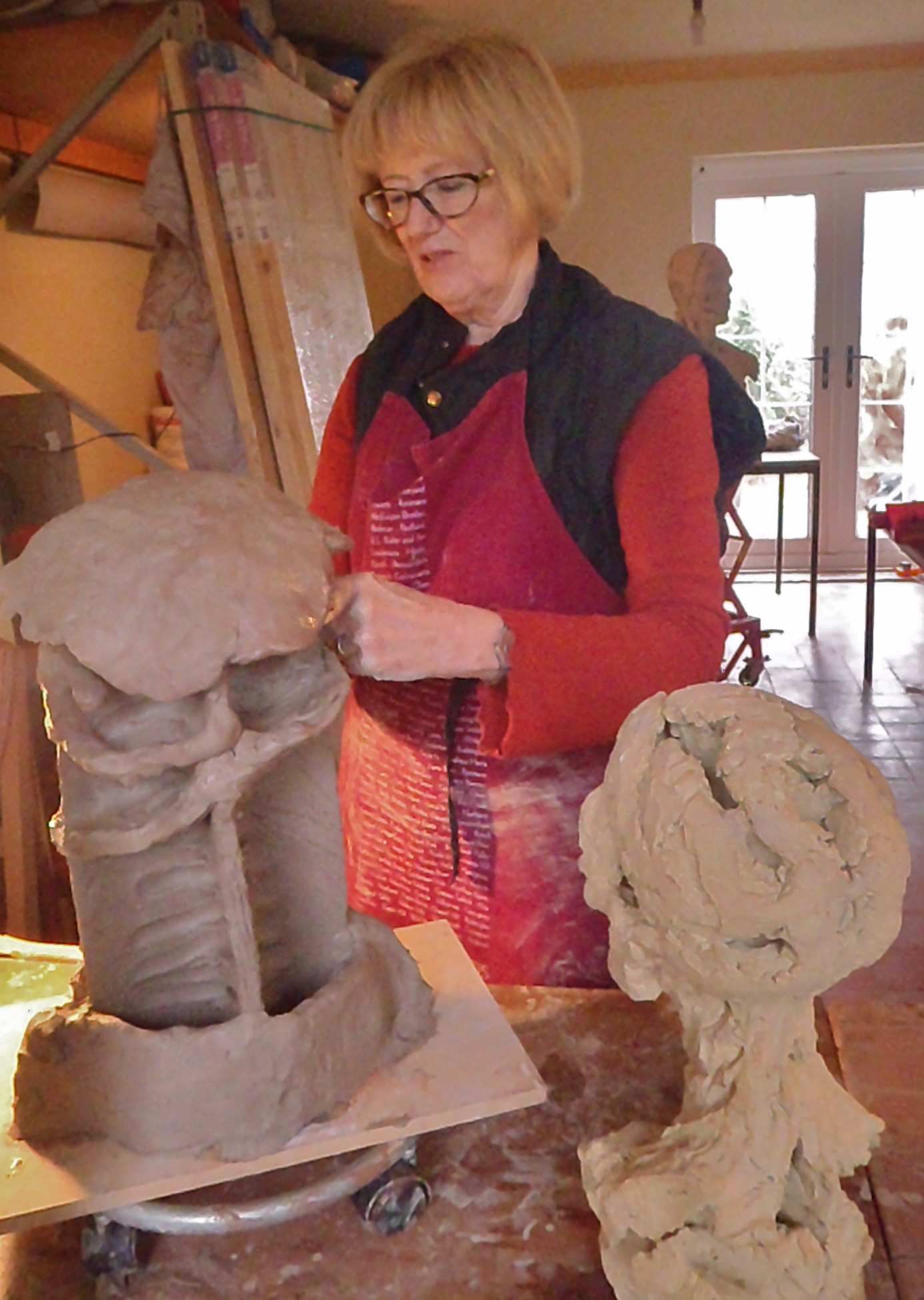
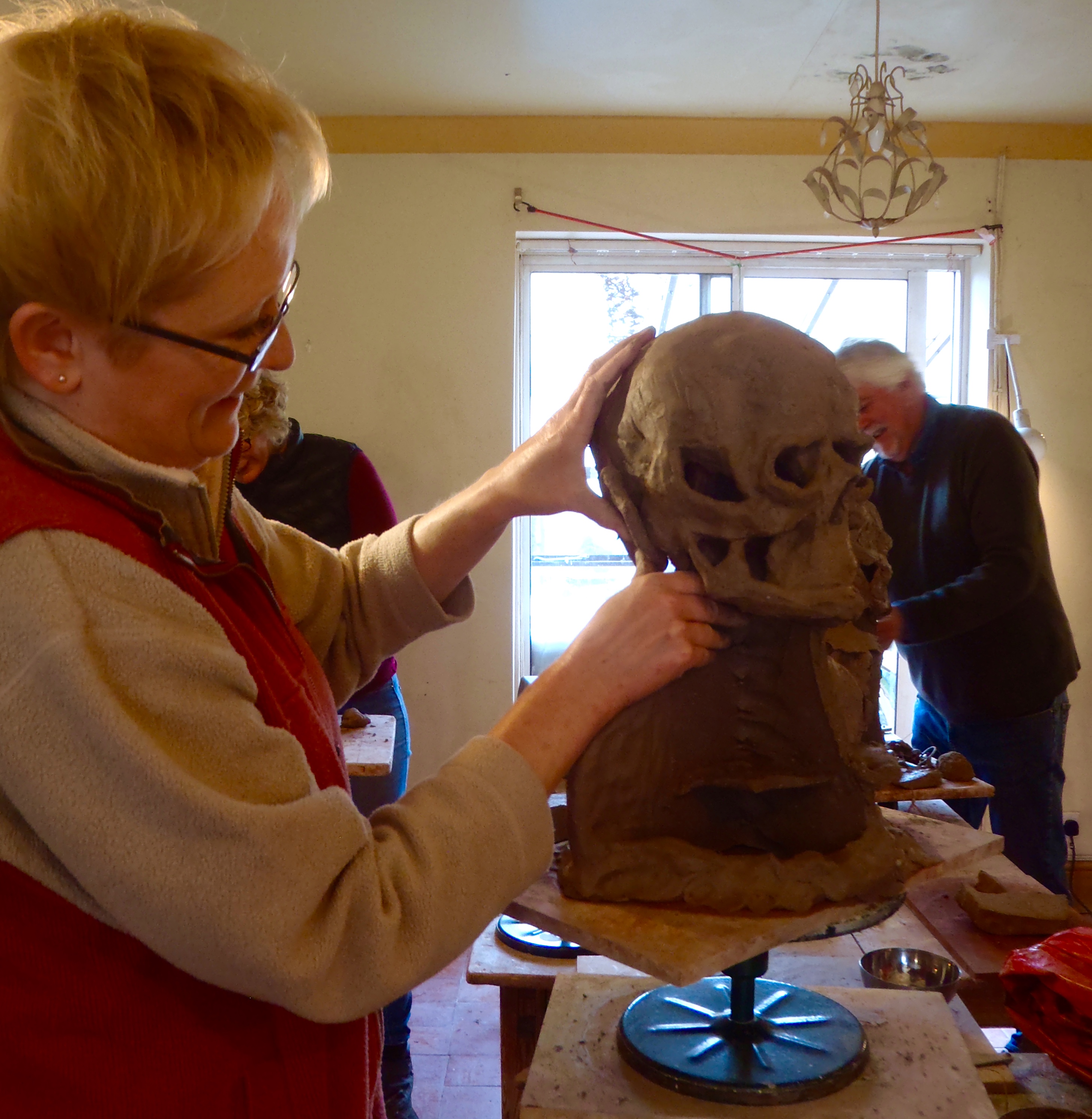
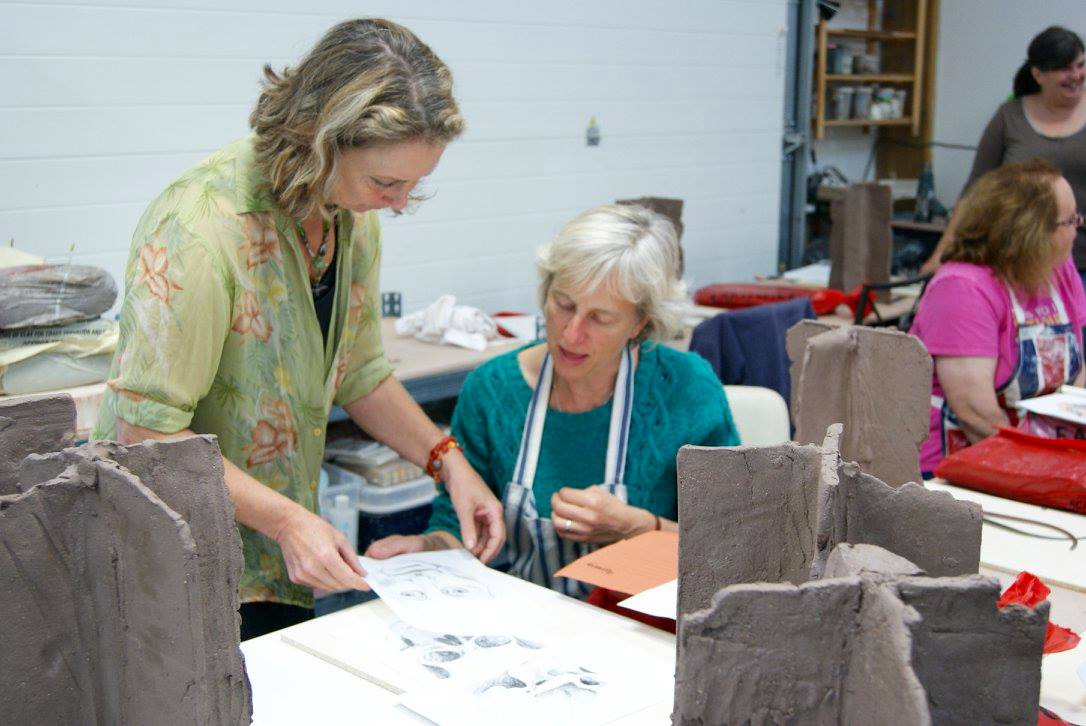
Two people with a creative back-ground but who had never done a head before came to Osprey Studios for a 2 day Workshop designed to give them the practical skills needed to make heads on their own and get 2/3 of the way through a head. Day 1 was The Skull built onto the central support (that I had prepared and allowed to harden 3 days earlier). Day 2 was The Head up to the point before finishing touches. The students both took their heads home to finish. We used the excellent Scarva Crank (ES50) clay.

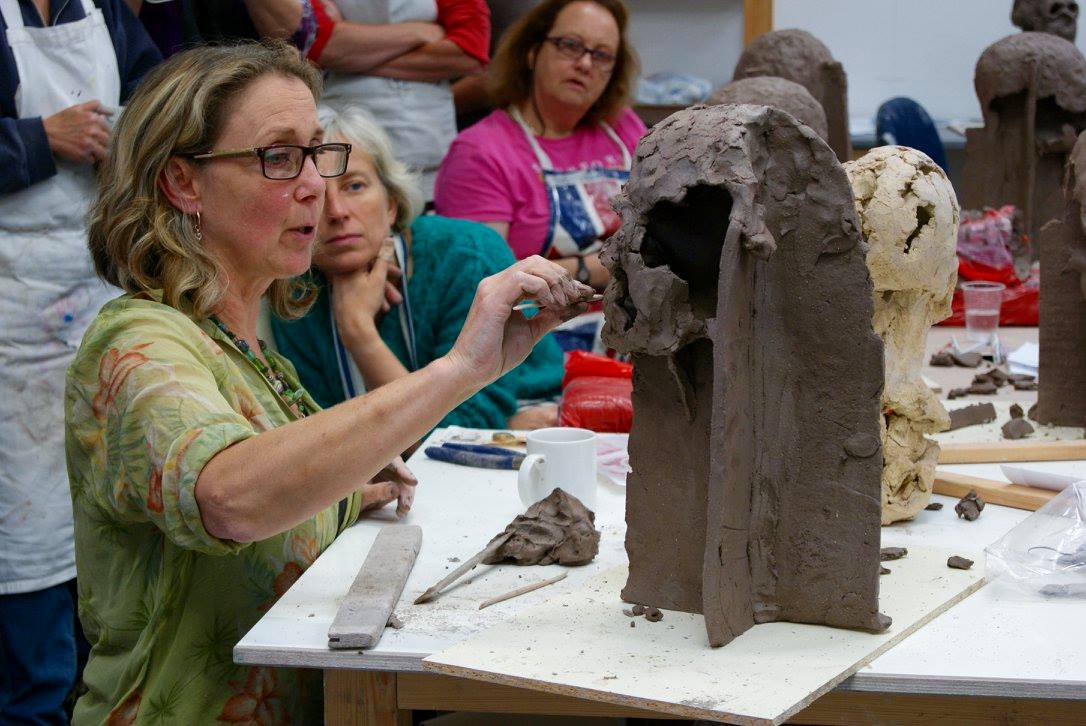
the leather-hard clay armature for the head
the leather-hard clay armature for the head. It will bear the weight  and be a scaffold for your additions. Some of it will get cut away as the bust becomes leather hard and can support itself.
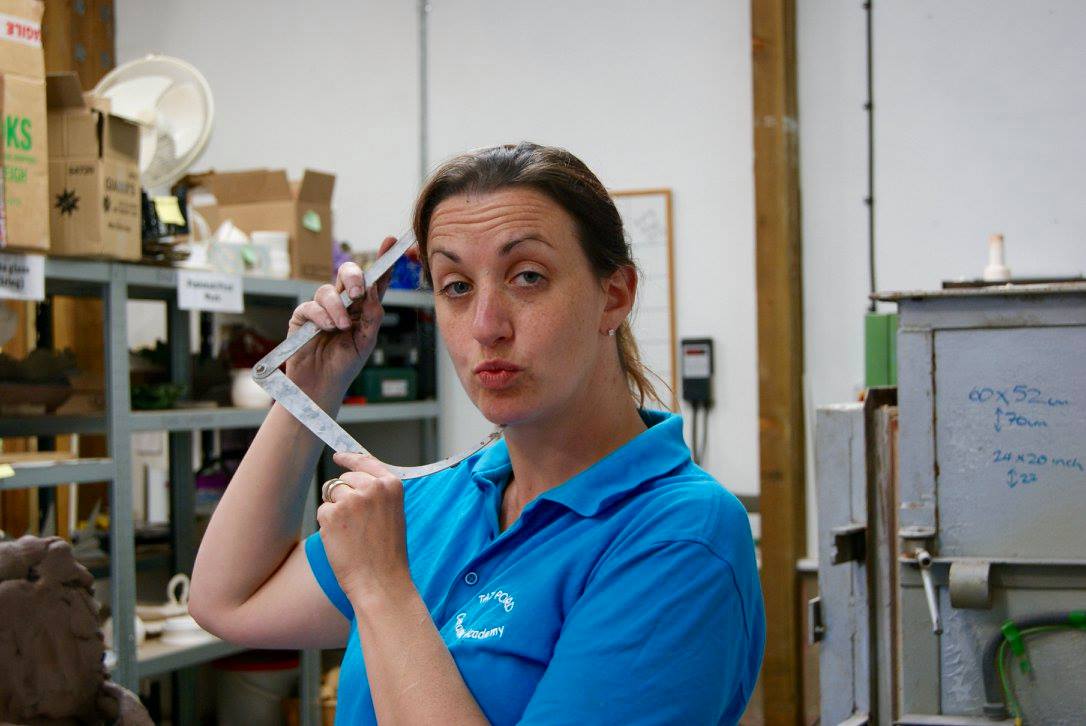
measuring from your own head with callipers and placing the information on the armature in a way that also reinforces it..
Measure from your own head with callipers and add the information onto the armature. Some of these small, pinched slabs will also reinforce the armature. Start with where the neck emerges from the shoulders, then the chin, then the top of the head to ensure  you will hit a height that will fit in your kiln. Leave some room for error; later you can trim away from the base or add clay there to adjust the height.
I had made the Skull we used as a model previously using the same method.
I had made the Skull we used as a model previously using the same method. We also used photos from the internet and measured on our own and each other’s head. Having a model is expensive and sometimes distracting at this early stage of conquering the basics. This Workshop is designed to show you a method you can repeat at home.
Block out the skull using thin slabs attached to the armature.
Block out the skull using thin slabs attached to the armature. Work your way around the form in ‘layers’; don’t focus on one part for to long. Each part informs the whole and they need to evolve together. Mark the place of the eye-sockets, nose, mouth, chin without getting distracted by their shape. Then these bars of clay will hold up the next layer, etc.
It's surprisingly hard work. Take regular breaks to allow the info to sink in.
It’s surprisingly hard work. Take regular breaks to allow the info to sink in.
Spend plenty of time over the back of the head to ensure the size is correct.
There will be points when it looks dreadful!
There will be times when it looks dreadful!
And points when it looks guaranteed to be a masterpiece.
And points when it looks guaranteed to be a masterpiece. Both of these phases pass!
Measure everything repeatedly and keep moving forward methodically
Take the Skull up to the stage before finishing touches and allow to go leather-hard.
Take the Skull up to the stage before finishing touches and allow to go leather-hard. We chose to tilt the skulls a bit at this stage so that the Heads would be more expressive.

You can print these skull images to work from and there are 2 work-sheets for you at the end of this post.

OLYMPUS DIGITAL CAMERA
Block out the whole head over the foundation of the Skull.
‘Block out’ the whole head over the foundation of the Skull; Work all around the head in rough, refining the whole form in layers rather than concentrating on one spot then moving to the next. It is crucial that you are willing to remove any part that is wrong, no matter how much time you feel you have spent on it. A beautifully worked eye slightly in the wrong place will ruin the whole. Every minute you spend on this work is building your skill so there is no time wasted.
You will reap the benefits of all the careful measuring you did on the skull.
You will reap the benefits of all the careful measuring you did on the skull. Note that “The Eye” is the area all the way to the edge of that eye-socket not just the bit defined by the eye-lashes. ”The Mouth” starts up inside the nose and goes out toward the cheeks and the chin; it is not just the lips. Subtleties all across that area of muscle and skin over the teeth of the skull will express the mood of this person. Think a range of conflicting emotions and feel the small changes in your own mouth-area. Don’t look in a mirror, just feel them. Do it again in front of a mirror.  “Act” the expression you want your Portrait to have while you are working and you will find it easier to capture it in clay.
Continue measuring repeatedly using callipers and check your modelling by hold a horizontal or vertical stick to it and looking carefully at the shape of the negative space.
Walk away from your work and look in detail at something out the window ; this will 'clear your eye'. Turn and look at the head; what is the first thing you notice? It might be an error you couldn't see when you were up close and immersed in the work. Or it might be that it looks way better than you expected.
Walk away from your work and look in detail at something out of the window; this will ‘clear your eye’. Turn and look at the head; what is the first thing you notice? It might be an error you couldn’t see when you were up close and immersed in the work. Or it might be that it looks way better than you expected.
There are many tricks and techniques for making all the features and U Tube is a treasure trove. Try out different styles to find the one that you like.
Use a similar modelling style for that hair to avoid that 'Wig' look.
Use the modelling style you used on the rest of the sculpture for the hair to avoid that ‘Wig’ look. As you get nearer to being done the quality of your mark-making as you add clay becomes important. Look at lots of Portraits with Google-Images, choose the look you like best and try out using different tools until you find your own style.
If you think you may have added a thickness over 3cms cut and hollow at the stage before finishing touches.
If you think you may have added a thickness over 3cms cut and hollow at the stage before finishing touches. If not you can fire the head with the armature in situ. Dry very slowly, preferably in a tent of news-paper that will keep off drafts and slow down the evaporation. While it is wrapped up the water from the added clay will migrate into the clay-armature and soften it; you might need to put a temporary support under the chin to stop the head tipping forward until the clay has stiffened up evenly.
Double-check all your measurements and then move into Finishing Touches.
Double-check all your measurements and then move into Finishing Touches. During this stage you are reinforcing this new perception and understanding of the head that is not just about communication but is relevant to portraiture. This will allow you to see more too.
This final stage, especially over the eyes, will take a third of your total work time. A head usually takes 30 hours.
This final stage, especially  the eyes, will take a third of your total work time. A head usually takes 30 hours.
Exactly like learning a musical instrument or a sport, practice will develop the fine-motor skills specific to this difficult task. It is ALL about Practise, good technique, and the right tools and clay. If you add enjoying doing it you will make beautiful Busts full of expression. 'Talent' is a mirage.
Exactly like learning a musical instrument or a sport, practice will develop the fine-motor skills and perception specific to this difficult task. It is ALL about Practise, good technique, and the right tools and clay. If you add ‘enjoying doing it’ you will make beautiful Busts full of expression. ‘Talent’ is a mirage. I revisit figurative work regularly so that my skills don’t slip away.
The measuring frees you up to be expressive with your modelling .
The measuring frees you up to be expressive with your modelling . Your ‘Creative Intuition’ is largely a collection of Skills that have become so ingrained you can take them for granted. They will be inter-woven across your mind, so the deep-set memories of the experience of dancing  at a party, the exhilaration you feel out on the mountain, emotions that have shown on your face, will be part of your Skill. While you are making things music can help you access specific memories; I use particular Albums to re-set the mood each time I return to a sculpture.

A set of good portrait tools will make all the difference. Tiranti’s are famously lovely. Just holding one makes you want to work, they are beautiful. The M Series Hardwood Tools are designed for Portraiture and will fit perfectly to the important, tricky parts of the face. Scarva have a good range of quality tools and the set of fine modelling tools look like they will be nice and the price is very low. I am very pleased with my  metal modelling tools from Amazon.

Choose a clay with plenty of mixed, medium to fine grog (gritty bits). Scarva ES 50 is out-standing.

Mary Cousins finished her head back in her own Studio. She has named her Butterfly.
Butterfly by Mary Cousins
Madam Butterfly by Mary Cousins.
Madam Butterfly by Mary Cousins. Mary makes absolutely lovely, fluid, sensuous porcelain pottery.

Once you have got the hang of this excellent method you can use it to open out the space of a form.

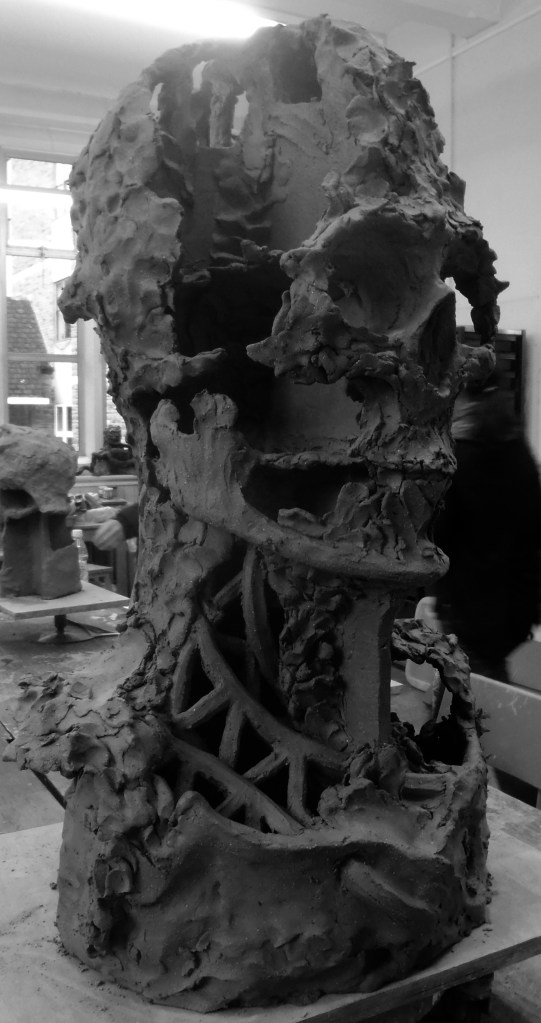
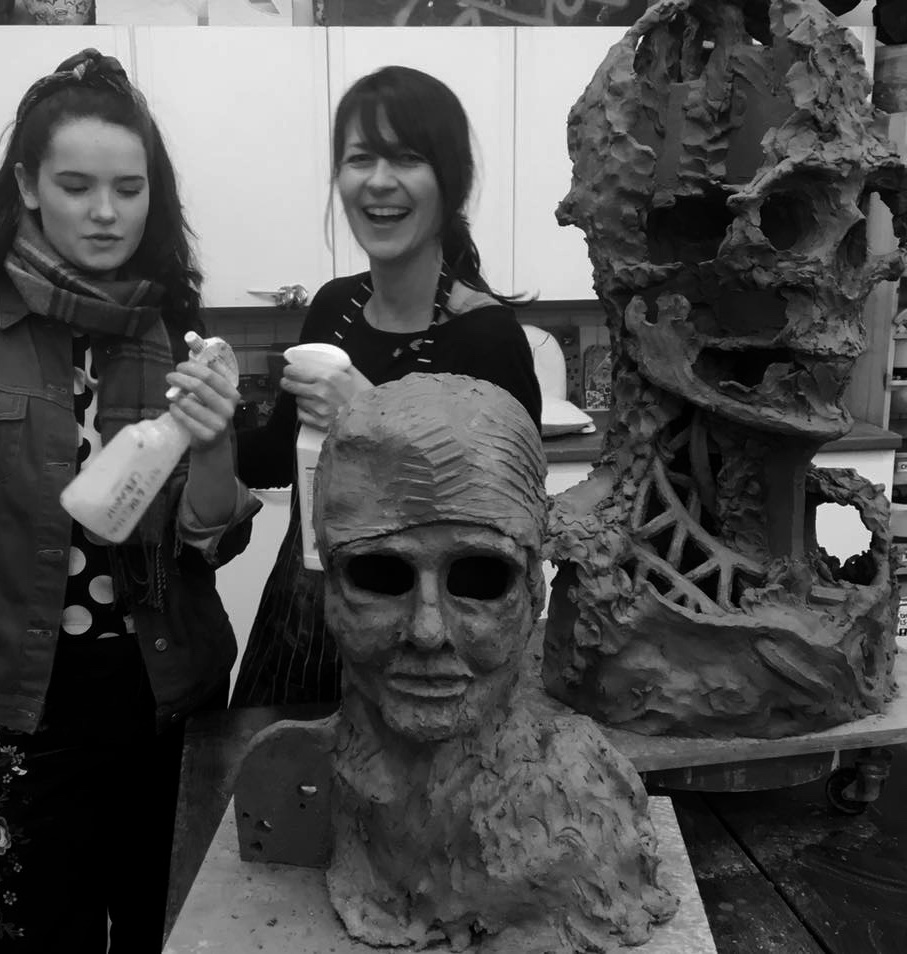
Frame-works for The Wyvern IV and, in the back ground, The Leviathan.

These Armatures or ‘frameworks’ were planned to be very much part of the fractured image. But the ‘corrugation’ and circular holes you can see are strengthening the Armature and would be very suitable to an armature that would ultimately be hidden. Playing around with these Armatures lead the Sculptures in un-anticipated directions.

The Wyvern and The Leviathan. in progress, Sept 2014.

Here are some work-sheets you can print off and use.

Scull Work-sheet, Rebecca Buck.
Skull Work-sheet, Rebecca Buck.
Portrait/clay armature Work-sheet. Rebecca Buck.
screen-shot-2017-03-01-at-21-47-48

A good one from google images: 

In February 2016 we ran this Workshop again but on Day 2 we played more freely. We still covered the essentials. I’ll add Workshop photos over time because you will find looking at how other people have handled it helpful and the variety inspiring.

OLYMPUS DIGITAL CAMERA
The group’s skulls after Day 1.
Sheila Mone
Sheila Mone
Phil Hughes
Phil Hughes
Kay Milward
Kay Milward
Kay Milward
Kay Milward
Kay Milward
Kay Milward
Pi, my Studio Manager.
Phil Hughes and Martine Wills.
Phil Hughes  making his bust into a  poignant Warrior . And Martine Wills.
Sheila Mone
Sheila Mone
Kay Milward
Kay Milward
Kay Milward
Kay Milward
Martine Wills
Martine Wills
Sheila Mone
Sheila Mone , leaving a lot of bust section open using expressive curves.
Kay Milward
Kay Milward
Kay Milward
Kay Milward
Kay Milward
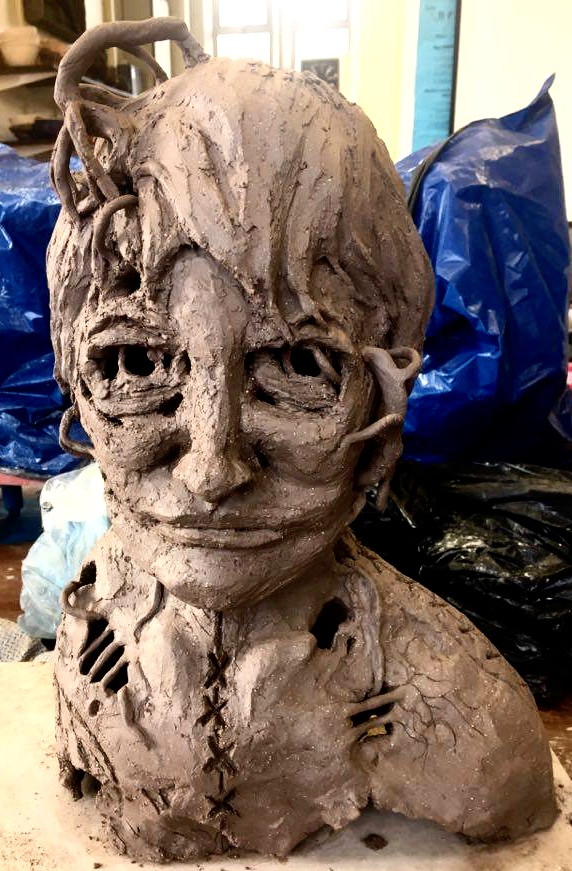
Kay Milward took her piece into the surreal with fantastic effect.

September 2016, I ran a Masterclass with the wonderful North Devon Ceramics Academy & Studio. Taz Pollard and Nicola Crocker run an excellent Studio making their own work and giving very popular classes in pottery and hand-building. They have created a lovely, business- like space with an open, welcoming atmosphere that leads everyone into making their best work. They will be running Masterclasses, workshops and classes regularly, in all aspects of ceramics and it was a pleasure to work with them. We packed a massive amount of work into one day and group worked their butts off. Taz and Nicola kept everyone afloat with delicious, home-made food, drinks and humour.

Masterclass with Rebecca Buck, North Devon Ceramics Academy & Studio
North Devon Ceramics Academy & Studio

Art teacher Sheila Mone and her lovely, forward looking department head Matt Peake, invited me to Monmouth School to work with their A Level students. The school has a set of very handsome studios and the quality student work reveals that this Art Department understands the important contribution and highly transferable skill set that art brings to a pupil.

We had 12 hours over 2 days and the work would be completed over the rest of the following weeks. The frameworks were beautifully made a few days in advance and left to stiffen. Day 1 was the skull with full measuring and day 2 was open with the only condition being that the eyes/mouth/nose placements were maintained. Some had photos to work from and I was pleased at the care and thought these students had put into their interpretation, bringing in themes and messages. Most of them had done very little clay work before! So it was a leap into the deep-end and they achieved a fantastic amount through intensive hard work. Wonderful! I went home on cloud nine!

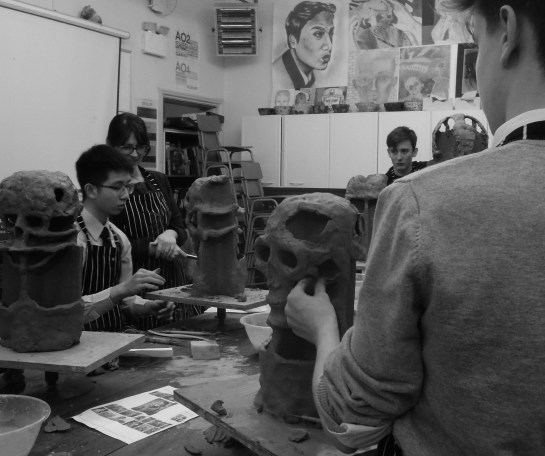
Monmouth School A level students 2 day Workshop with Rebecca Buck.
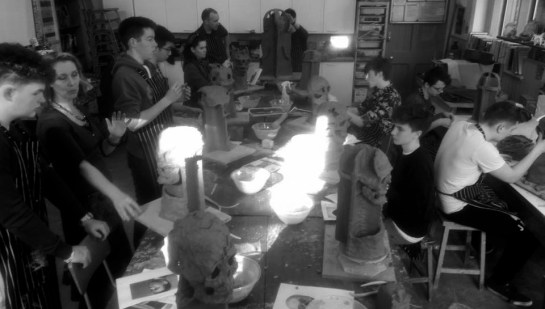
Monmouth School A level students 2 day Workshop with Rebecca Buck. Sheila Mone talking through ideas with this student while the others listen in and collect information. These guys have great study skills.
Monmouth School A level students 2 day Workshop with Rebecca Buck.
Monmouth School A level students 2 day Workshop with Rebecca Buck. Tony blocking out the skull in preparation for a portrait of Donald Trump.
With both of these heads the pupils used photos, aimed for a likeness. Setting boundaries like this will really help you to progress. The head in the back then went on to be beautifully stylised. The excellent head in front is based on Mohammed Ali. You can feel the strength and dignity of the man.
Rebecca Buck Osprey Studios
Robert moving forward from blocking out the skull to setting the key high points on the bones on the right plain.
Monmouth School A level students 2 day Workshop with Rebecca Buck.
Monmouth School A level students 2 day Workshop with Rebecca Buck. Wilfred tidying the frame in preparation for developing the face. Because time was tight we left out the back of the head. This makes developing the head more difficult and I don’t recommend it. But handled stylishly it can look great.
Monmouth School A level students 2 day Workshop with Rebecca Buck.
Monmouth School A level students 2 day Workshop with Rebecca Buck. An excellent level of concentration.
Monmouth School A level students 2 day Workshop with Rebecca Buck.
Monmouth School A level students 2 day Workshop with Rebecca Buck. After giving general instruction I go one-to-one as much as possible. I aim to guide each student towards their own ‘voice’ in building, theme, and modelling style.
Monmouth School A level students 2 day Workshop with Rebecca Buck.
Monmouth School A level students 2 day Workshop with Rebecca Buck. Wilfred has a good selection of views of his model . A selection of images from different angles is invaluable.
Monmouth School A level students 2 day Workshop with Rebecca Buck.
Monmouth School A level students 2 day Workshop with Rebecca Buck. Really difficult to pull off but a great  challenge is 1/2 skull 1/2 face. This brave student had a steady, methodical approach that is ideal in portraiture.
Monmouth School A level students 2 day Workshop with Rebecca Buck. This wonderful student had already done a very good head after looking through this post so this time he chose to work double the size.
Monmouth School A level students 2 day Workshop with Rebecca Buck. Harry had already done a very good head after looking through this post. And he has used clay on large pieces. So this time he chose to work double the size. Take your measurements and use a ruler to double them. Do not attempt to do it by eye. Larger than life heads carry an immediate power. It’s a great scale if you have a message to convey.
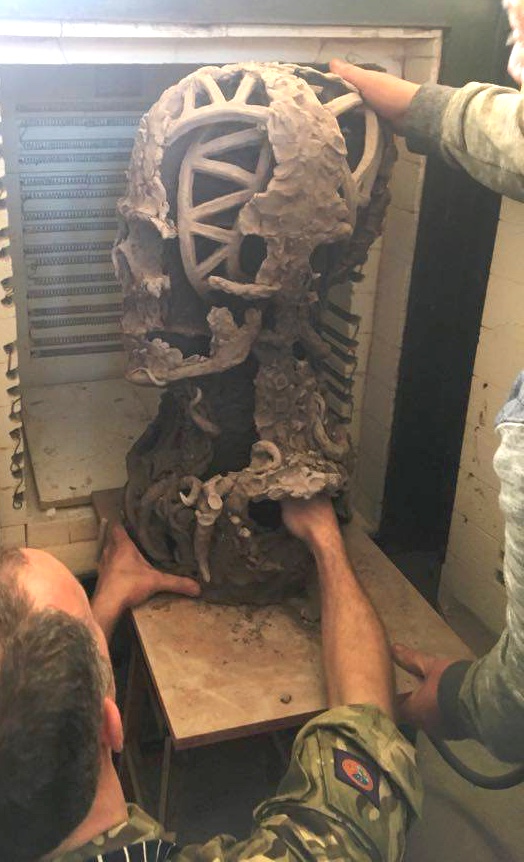
Harry’s piece just fits in the kiln!
Harry’s next head. Fantastic work on the very difficult area of the shoulders/base. 
Monmouth School A level students 2 day Workshop with Rebecca Buck.
Monmouth School A level students 2 day Workshop with Rebecca Buck. The dark, haunting eyes in the photo were done by this very skilled student, Robert, by cutting through and harnessing the dark interior of the head. Really effective and evocative.
Monmouth School A level students 2 day Workshop with Rebecca Buck.
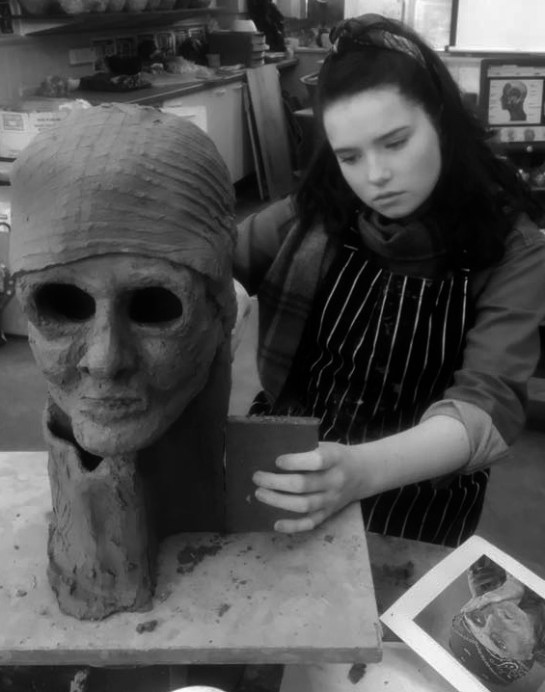
Monmouth School A level students 2 day Workshop with Rebecca Buck. Rhianna had a powerful image of an elderly homeless man and wanted to portray his story. She left the eyes empty but cut smaller holes through the back of the head behind the eye-level telling an inner, nearly hidden narrative.
Monmouth School A level students 2 day Workshop with Rebecca Buck.
Monmouth School A level students 2 day Workshop with Rebecca Buck. The art department assistant, Kate Owens, beautiful use of clay.
Monmouth School A level students 2 day Workshop with Rebecca Buck. Kate Owens.
Monmouth School A level students 2 day Workshop with Rebecca Buck.
Monmouth School A level students 2 day Workshop with Rebecca Buck. Harry’s theme here is a simple “contrast hard geometric form with organic form.” The size, the forward unyielding gaze, the beautiful, enchanting modelling style, the flow of the geometric inner form and the places where it mimics the natural structure of a head evoke a mysterious presence.
Monmouth School A level students 2 day Workshop with Rebecca Buck.
Monmouth School A level students 2 day Workshop with Rebecca Buck. Sheila Mone helped her students and worked on her own fascinating bust.
Monmouth School A level students 2 day Workshop with Rebecca Buck.
Monmouth School A level students 2 day Workshop with Rebecca Buck. Excellent modelling skills and empathetic sensitivity are giving this moving image sculptural form.
Monmouth School A level students 2 day Workshop with Rebecca Buck.
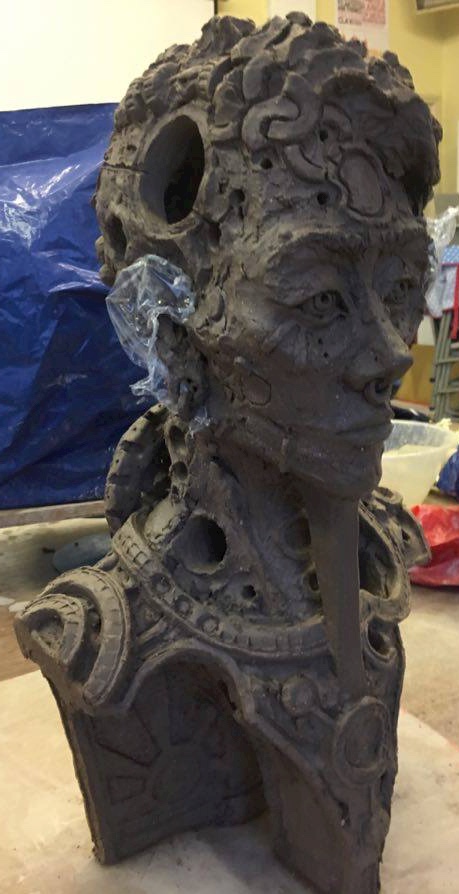
Monmouth School A level students 2 day Workshop with Rebecca Buck. This a stylish, contemporary design for the base. It is very difficult to handle the truncated aspects of the bust. There are various ‘classic’ motifs that work really well but it’s very refreshing to see a new approach. This piece was then taken further to become this beautifully
The piece above was then taken further to become this beautifully defined character.
Monmouth School A level students 2 day Workshop with Rebecca Buck.
Monmouth School A level students 2 day Workshop with Rebecca Buck. A few of the guys had to leave early including the student doing a superb job of Mohamed Ali using a beautiful, sophisticated modelling technique. The head of Donald Trump is being handled with great skill and thoughtfulness by another student. In each case they are aiming to capture the inner life of the man not just his shell. Of course this is very difficult but the challenge is engrossing and very satisfying and having a particular direction will get you through the many intimidating intersections on the road to a portrait. Art department Head Matt Peake worked alongside his students on the wonderful, humorous self portrait you can see front, right of this photo. The wide variety of approaches were a credit to the Art Department and the wider school.
Monmouth School A level students 2 day Workshop with Rebecca Buck.

How To Make A Head; Clay Armatures and building Hollow.

Busts in progress, Aug 2014.

The Head

The key reason making heads is so hard is that the perception (the way we take in our knowledge) that we have built up over our lifetime of what shape the head is, is based around communication and assessing each other. Making a head requires going against what ‘feels’ right and using information we are unlikely to have bothered with before. Portraiture has a system to organise the huge quantity of subtle details. Learning this system will broaden your knowledge, and your access to more knowledge, enormously. That’s why the study of Portraiture and Figurative Sculpture is traditionally the bed-rock of Art.

It is not rocket science and you can do it. The challenge is fascinating and very rewarding.

The Technique

Because clay shrinks as it dries and is floppy when very wet a Clay Armature that will support and  shrink with the form through the drying and the firing is invaluable.

Most techniques for building  hollow have a strong ‘voice’ of their own and will influence the final look of the piece. They can demand that you harden lower sections and are then unable to change them when you later realise they are wrong. This is a real disadvantage irregardless of your skill level. It is better to work solid over a clay armature especially if you are not using a scale-model and hollow out just before finishing touches. It’s not difficult. That technique is detailed here: Working solid and hollowing out.

Or you can use this technique of building outwards from a Clay Armature to make your sculpture hollow.

Clay armature for a bust, aug 2014
3rd Bust armature in progress, Aug 2014.
OLYMPUS DIGITAL CAMERA
in progress, Aug 2014.

Here I chose to leave gaps that show the Armature but of course you don’t have to. The step by step manner of this method and the fact that you work all over the head  in layers from the start  makes it ideally suited to help you organise the huge amount of information in your mind while learning to make Portraits and other Sculpture.

The Workshop

Two people with a creative back-ground but who had never done a head before came to Osprey Studios for a 2 day Workshop designed to give them the practical skills needed to make heads on their own and get 2/3 of the way through a head. Day 1 was The Skull built onto the central support (that I had prepared and allowed to harden 3 days earlier). Day 2 was The Head up to the point before finishing touches. The students both took their heads home to finish. We used the excellent Scarva Crank (ES50) clay.

the leather-hard clay armature for the head
the leather-hard clay armature for the head. It will bear the weight  and be a scaffold for your additions. Some of it will get cut away as the bust becomes leather hard and can support itself.
measuring from your own head with callipers and placing the information on the armature in a way that also reinforces it..
Measure from your own head with callipers and add the information onto the armature. Some of these small, pinched slabs will also reinforce the armature. Start with where the neck emerges from the shoulders, then the chin, then the top of the head to ensure  you will hit a height that will fit in your kiln. Leave some room for error; later you can trim away from the base or add clay there to adjust the height.
I had made the Skull we used as a model previously using the same method.
I had made the Skull we used as a model previously using the same method. We also used photos from the internet and measured on our own and each other’s head. Having a model is expensive and sometimes distracting at this early stage of conquering the basics. This Workshop is designed to show you a method you can repeat at home.
Block out the skull using thin slabs attached to the armature.
Block out the skull using thin slabs attached to the armature. Work your way around the form in ‘layers’; don’t focus on one part for to long. Each part informs the whole and they need to evolve together. Mark the place of the eye-sockets, nose, mouth, chin without getting distracted by their shape. Then these bars of clay will hold up the next layer, etc.
It's surprisingly hard work. Take regular breaks to allow the info to sink in.
It’s surprisingly hard work. Take regular breaks to allow the info to sink in.
Spend plenty of time over the back of the head to ensure the size is correct.
There will be points when it looks dreadful!
There will be times when it looks dreadful!
And points when it looks guaranteed to be a masterpiece.
And points when it looks guaranteed to be a masterpiece. Both of these phases pass!
Measure everything repeatedly and keep moving forward methodically
Take the Skull up to the stage before finishing touches and allow to go leather-hard.
Take the Skull up to the stage before finishing touches and allow to go leather-hard. We chose to tilt the skulls a bit at this stage so that the Heads would be more expressive.

You can print these skull images to work from and there are 2 work-sheets for you at the end of this post.

OLYMPUS DIGITAL CAMERA
Block out the whole head over the foundation of the Skull.
‘Block out’ the whole head over the foundation of the Skull; Work all around the head in rough, refining the whole form in layers rather than concentrating on one spot then moving to the next. It is crucial that you are willing to remove any part that is wrong, no matter how much time you feel you have spent on it. A beautifully worked eye slightly in the wrong place will ruin the whole. Every minute you spend on this work is building your skill so there is no time wasted.
You will reap the benefits of all the careful measuring you did on the skull.
You will reap the benefits of all the careful measuring you did on the skull. Note that “The Eye” is the area all the way to the edge of that eye-socket not just the bit defined by the eye-lashes. ”The Mouth” starts up inside the nose and goes out toward the cheeks and the chin; it is not just the lips. Subtleties all across that area of muscle and skin over the teeth of the skull will express the mood of this person. Think a range of conflicting emotions and feel the small changes in your own mouth-area. Don’t look in a mirror, just feel them. Do it again in front of a mirror.  “Act” the expression you want your Portrait to have while you are working and you will find it easier to capture it in clay.
Continue measuring repeatedly using callipers and check your modelling by hold a horizontal or vertical stick to it and looking carefully at the shape of the negative space.
Walk away from your work and look in detail at something out the window ; this will 'clear your eye'. Turn and look at the head; what is the first thing you notice? It might be an error you couldn't see when you were up close and immersed in the work. Or it might be that it looks way better than you expected.
Walk away from your work and look in detail at something out of the window; this will ‘clear your eye’. Turn and look at the head; what is the first thing you notice? It might be an error you couldn’t see when you were up close and immersed in the work. Or it might be that it looks way better than you expected.
There are many tricks and techniques for making all the features and U Tube is a treasure trove. Try out different styles to find the one that you like.
Use a similar modelling style for that hair to avoid that 'Wig' look.
Use the modelling style you used on the rest of the sculpture for the hair to avoid that ‘Wig’ look. As you get nearer to being done the quality of your mark-making as you add clay becomes important. Look at lots of Portraits with Google-Images, choose the look you like best and try out using different tools until you find your own style.
If you think you may have added a thickness over 3cms cut and hollow at the stage before finishing touches.
If you think you may have added a thickness over 3cms cut and hollow at the stage before finishing touches. If not you can fire the head with the armature in situ. Dry very slowly, preferably in a tent of news-paper that will keep off drafts and slow down the evaporation. While it is wrapped up the water from the added clay will migrate into the clay-armature and soften it; you might need to put a temporary support under the chin to stop the head tipping forward until the clay has stiffened up evenly.
Double-check all your measurements and then move into Finishing Touches.
Double-check all your measurements and then move into Finishing Touches. During this stage you are reinforcing this new perception and understanding of the head that is not just about communication but is relevant to portraiture. This will allow you to see more too.
This final stage, especially over the eyes, will take a third of your total work time. A head usually takes 30 hours.
This final stage, especially  the eyes, will take a third of your total work time. A head usually takes 30 hours.
Exactly like learning a musical instrument or a sport, practice will develop the fine-motor skills specific to this difficult task. It is ALL about Practise, good technique, and the right tools and clay. If you add enjoying doing it you will make beautiful Busts full of expression. 'Talent' is a mirage.
Exactly like learning a musical instrument or a sport, practice will develop the fine-motor skills and perception specific to this difficult task. It is ALL about Practise, good technique, and the right tools and clay. If you add ‘enjoying doing it’ you will make beautiful Busts full of expression. ‘Talent’ is a mirage. I revisit figurative work regularly so that my skills don’t slip away.
The measuring frees you up to be expressive with your modelling .
The measuring frees you up to be expressive with your modelling . Your ‘Creative Intuition’ is largely a collection of Skills that have become so ingrained you can take them for granted. They will be inter-woven across your mind, so the deep-set memories of the experience of dancing  at a party, the exhilaration you feel out on the mountain, emotions that have shown on your face, will be part of your Skill. While you are making things music can help you access specific memories; I use particular Albums to re-set the mood each time I return to a sculpture.

A set of good portrait tools will make all the difference. Tiranti’s are famously lovely. Just holding one makes you want to work, they are beautiful. The M Series Hardwood Tools are designed for Portraiture and will fit perfectly to the important, tricky parts of the face. Scarva have a good range of quality tools and the set of fine modelling tools look like they will be nice and the price is very low. I am very pleased with my  metal modelling tools from Amazon.

Choose a clay with plenty of mixed, medium to fine grog (gritty bits). Scarva ES 50 is out-standing.

Mary Cousins finished her head back in her own Studio. She has named her Butterfly.
Butterfly by Mary Cousins
Madam Butterfly by Mary Cousins.
Madam Butterfly by Mary Cousins. Mary makes absolutely lovely, fluid, sensuous porcelain pottery.

Once you have got the hang of this excellent method you can use it to open out the space of a form.

Frame-works for The Wyvern IV and, in the back ground, The Leviathan.

These Armatures or ‘frameworks’ were planned to be very much part of the fractured image. But the ‘corrugation’ and circular holes you can see are strengthening the Armature and would be very suitable to an armature that would ultimately be hidden. Playing around with these Armatures lead the Sculptures in un-anticipated directions.

The Wyvern and The Leviathan. in progress, Sept 2014.

Here are some work-sheets you can print off and use.

Scull Work-sheet, Rebecca Buck.
Skull Work-sheet, Rebecca Buck.
Portrait/clay armature Work-sheet. Rebecca Buck.
screen-shot-2017-03-01-at-21-47-48

A good one from google images: 

In February 2016 we ran this Workshop again but on Day 2 we played more freely. We still covered the essentials. I’ll add Workshop photos over time because you will find looking at how other people have handled it helpful and the variety inspiring.

OLYMPUS DIGITAL CAMERA
The group’s skulls after Day 1.
Sheila Mone
Sheila Mone
Phil Hughes
Phil Hughes
Kay Milward
Kay Milward
Kay Milward
Kay Milward
Kay Milward
Kay Milward
Pi, my Studio Manager.
Phil Hughes and Martine Wills.
Phil Hughes  making his bust into a  poignant Warrior . And Martine Wills.
Sheila Mone
Sheila Mone
Kay Milward
Kay Milward
Kay Milward
Kay Milward
Martine Wills
Martine Wills
Sheila Mone
Sheila Mone , leaving a lot of bust section open using expressive curves.
Kay Milward
Kay Milward
Kay Milward
Kay Milward
Kay Milward
Kay Milward took her piece into the surreal with fantastic effect.

September 2016, I ran a Masterclass with the wonderful North Devon Ceramics Academy & Studio. Taz Pollard and Nicola Crocker run an excellent Studio making their own work and giving very popular classes in pottery and hand-building. They have created a lovely, business- like space with an open, welcoming atmosphere that leads everyone into making their best work. They will be running Masterclasses, workshops and classes regularly, in all aspects of ceramics and it was a pleasure to work with them. We packed a massive amount of work into one day and group worked their butts off. Taz and Nicola kept everyone afloat with delicious, home-made food, drinks and humour.

Masterclass with Rebecca Buck, North Devon Ceramics Academy & Studio
North Devon Ceramics Academy & Studio

Art teacher Sheila Mone and her lovely, forward looking department head Matt Peake, invited me to Monmouth School to work with their A Level students. The school has a set of very handsome studios and the quality student work reveals that this Art Department understands the important contribution and highly transferable skill set that art brings to a pupil.

We had 12 hours over 2 days and the work would be completed over the rest of the following weeks. The frameworks were beautifully made a few days in advance and left to stiffen. Day 1 was the skull with full measuring and day 2 was open with the only condition being that the eyes/mouth/nose placements were maintained. Some had photos to work from and I was pleased at the care and thought these students had put into their interpretation, bringing in themes and messages. Most of them had done very little clay work before! So it was a leap into the deep-end and they achieved a fantastic amount through intensive hard work. Wonderful! I went home on cloud nine!

Monmouth School A level students 2 day Workshop with Rebecca Buck.
Monmouth School A level students 2 day Workshop with Rebecca Buck. Sheila Mone talking through ideas with this student while the others listen in and collect information. These guys have great study skills.
Monmouth School A level students 2 day Workshop with Rebecca Buck.
Monmouth School A level students 2 day Workshop with Rebecca Buck. Tony blocking out the skull in preparation for a portrait of Donald Trump.
With both of these heads the pupils used photos, aimed for a likeness. Setting boundaries like this will really help you to progress. The head in the back then went on to be beautifully stylised. The excellent head in front is based on Mohammed Ali. You can feel the strength and dignity of the man.
Rebecca Buck Osprey Studios
Robert moving forward from blocking out the skull to setting the key high points on the bones on the right plain.
Monmouth School A level students 2 day Workshop with Rebecca Buck.
Monmouth School A level students 2 day Workshop with Rebecca Buck. Wilfred tidying the frame in preparation for developing the face. Because time was tight we left out the back of the head. This makes developing the head more difficult and I don’t recommend it. But handled stylishly it can look great.
Monmouth School A level students 2 day Workshop with Rebecca Buck.
Monmouth School A level students 2 day Workshop with Rebecca Buck. An excellent level of concentration.
Monmouth School A level students 2 day Workshop with Rebecca Buck.
Monmouth School A level students 2 day Workshop with Rebecca Buck. After giving general instruction I go one-to-one as much as possible. I aim to guide each student towards their own ‘voice’ in building, theme, and modelling style.
Monmouth School A level students 2 day Workshop with Rebecca Buck.
Monmouth School A level students 2 day Workshop with Rebecca Buck. Wilfred has a good selection of views of his model . A selection of images from different angles is invaluable.
Monmouth School A level students 2 day Workshop with Rebecca Buck.
Monmouth School A level students 2 day Workshop with Rebecca Buck. Really difficult to pull off but a great  challenge is 1/2 skull 1/2 face. This brave student had a steady, methodical approach that is ideal in portraiture.
Monmouth School A level students 2 day Workshop with Rebecca Buck. This wonderful student had already done a very good head after looking through this post so this time he chose to work double the size.
Monmouth School A level students 2 day Workshop with Rebecca Buck. Harry had already done a very good head after looking through this post. And he has used clay on large pieces. So this time he chose to work double the size. Take your measurements and use a ruler to double them. Do not attempt to do it by eye. Larger than life heads carry an immediate power. It’s a great scale if you have a message to convey.
Harry’s piece just fits in the kiln!
Harry’s next head. Fantastic work on the very difficult area of the shoulders/base. 
Monmouth School A level students 2 day Workshop with Rebecca Buck.
Monmouth School A level students 2 day Workshop with Rebecca Buck. The dark, haunting eyes in the photo were done by this very skilled student, Robert, by cutting through and harnessing the dark interior of the head. Really effective and evocative.
Monmouth School A level students 2 day Workshop with Rebecca Buck.
Monmouth School A level students 2 day Workshop with Rebecca Buck. Rhianna had a powerful image of an elderly homeless man and wanted to portray his story. She left the eyes empty but cut smaller holes through the back of the head behind the eye-level telling an inner, nearly hidden narrative.
Monmouth School A level students 2 day Workshop with Rebecca Buck.
Monmouth School A level students 2 day Workshop with Rebecca Buck. The art department assistant, Kate Owens, beautiful use of clay.
Monmouth School A level students 2 day Workshop with Rebecca Buck. Kate Owens.
Monmouth School A level students 2 day Workshop with Rebecca Buck.
Monmouth School A level students 2 day Workshop with Rebecca Buck. Harry’s theme here is a simple “contrast hard geometric form with organic form.” The size, the forward unyielding gaze, the beautiful, enchanting modelling style, the flow of the geometric inner form and the places where it mimics the natural structure of a head evoke a mysterious presence.
Monmouth School A level students 2 day Workshop with Rebecca Buck.
Monmouth School A level students 2 day Workshop with Rebecca Buck. Sheila Mone helped her students and worked on her own fascinating bust.
Monmouth School A level students 2 day Workshop with Rebecca Buck.
Monmouth School A level students 2 day Workshop with Rebecca Buck. Excellent modelling skills and empathetic sensitivity are giving this moving image sculptural form.
Monmouth School A level students 2 day Workshop with Rebecca Buck.
Monmouth School A level students 2 day Workshop with Rebecca Buck. This a stylish, contemporary design for the base. It is very difficult to handle the truncated aspects of the bust. There are various ‘classic’ motifs that work really well but it’s very refreshing to see a new approach. This piece was then taken further to become this beautifully
The piece above was then taken further to become this beautifully defined character.
Monmouth School A level students 2 day Workshop with Rebecca Buck.
Monmouth School A level students 2 day Workshop with Rebecca Buck. A few of the guys had to leave early including the student doing a superb job of Mohamed Ali using a beautiful, sophisticated modelling technique. The head of Donald Trump is being handled with great skill and thoughtfulness by another student. In each case they are aiming to capture the inner life of the man not just his shell. Of course this is very difficult but the challenge is engrossing and very satisfying and having a particular direction will get you through the many intimidating intersections on the road to a portrait. Art department Head Matt Peake worked alongside his students on the wonderful, humorous self portrait you can see front, right of this photo. The wide variety of approaches were a credit to the Art Department and the wider school.
Monmouth School A level students 2 day Workshop with Rebecca Buck.

Peaks at Cupola Contemporary Art.

43823307_2083943141645436_5821873833820291072_n

This stunning Exhibition is part of a series run by Cupola looking at art and our relationship to the environment. I could not have been more pleased to see my sculpture thoughtfully and expertly set with gorgeous paintings from 3 outstanding artists.

44076993_2088784687827948_6011573176255905792_n

Cupola Contemporary Art’s award-winning Gallery is one of the UK’s most established. They are welcoming, friendly and hugely helpful. No heavy selling or rushing. They will give you knowledgable guidance and support to help you find the art-work that really speaks for you. It is clear they are genuine: they love their gallery and the creative process. There is a wide choice of materials, styles and prices including beautiful unique and affordable gifts like un-framed drawings or prints and jewellery. 44775361_2101981446508272_8965180284014166016_n

Cupola looks after their artists so they get our very best work. They encourage us to take risks, try new things but they never push for ‘sellable’. With their very loyal, customers are looking for sincere art, real communication.

44726402_2101981496508267_570492293950210048_n

“Cupola Gallery brings together 4 artists who deal with landscapes.  The exhibition will feature 3 painters and 1 sculpture.  The 3 painter’s distinct styles embody a meteorological exploration of the landscape shifting moods and seasons fluidly from painting to painting.  The painter’s fluid approach is complemented by Rebecca Bucks almost geological sculptures, the predominantly black and white ceramics embodying the land itself.

Painting 2 (seven Stones for a Drunken Philosopher)

Paul Evans takes inspiration from the modernist canon of Abstract Expressionism and Art Informel.  Paul work explores aspects of our physical and emotional relationship with nature something that he consider to be ‘a complex response to a complex field of interactions’.


Alison Tyldesley’s work aims at capturing movement, intense light and atmosphere – particularly glowing horizons, wild skies, receding hills and textured foregrounds. Her paintings are not always depictions of a particular scene, although she cannot help her work referencing the peak district she immerses herself in.

Edge


John Bainbridge practice is strongly rooted in the Northern Pennines.  The rich colour and texture of the land is enhanced by the Pennines’ unique quality of light and the atmospherics of seasonal wind and weather.  The paintings try to reflect the close contact he has had with the land through fell running in all conditions, day and night!

_F149639

Water and Stone, Bracelet Bay, 2014, 24cmH x 56cm L x 33cm W, Marbled architectural ceramic. Photo by Stephen Foote.


Rebecca Buck’s sculptures deal with the landscape on a geological and spiritual level.  Fascinated by climate change Rebecca’s ceramics are a combination of roughhewn textures and polished smooth surfaces, as if the clay had been less formed by hand but from the erosion and weathering of the elements.” Karen Sherwood, Cupola Gallery Owner.

I have 14 sculptures in this inspiring, intense Show including new pieces hot out of the kiln that I havn’t photographed yet.

Rebecca Buck, Osprey Studios

Arctic Harbinger, 33cm L x 13cm H x 12cm D.

Rebecca Buck Osprey Studios.

Guardians of the Valley, 30cm H x 67cm W x 26cm D.

Rebecca Buck Osprey Studios.

Wyvern IX, 14cm H x 38cm L x 15cm D.

Rebecca Buck Osprey Studios.

Guardians of the Valley, 30cm H x 67cm W x 26cm D.

Rebecca Buck Osprey Studios.

Over Half A Century II.

Rebecca Buck, Osprey Studios.

The Land I, 24cm H x 65cm L x 19cm D.

_F145911crop

Detail,Up Is Down VI. Photo by Stephen Foote

_F145907

Up is Down VI, second view. Photo by Stephen Foote.


Marking Time Sculpture, Bronllys Hospital, one year on.

To get the best out of our modest budget we used some new techniques and on my 1 year maintenance visit to this the lovely site I was hugely pleased to see they have worked really well. Despite a very harsh winter the sculpture looks fresh and is weathering in a uniform, gentle way. The moss is slowly collecting in the deep textures as planned.

The lovely, thoughtful planting has re-grown beautifully, complimenting the form perfectly, softening the site and integrating it into the lovely woodland which is overflowing with flowers and birds.

The paths are still level, easy for patients to use and now look like they have been there forever.

While I was there working a lot of people strolled by. They said this had become their sanctuary, a moment of peace and escape from the pressures in the hospital, where they could revive. This is exactly what we wanted. A wonderful result.

Everyone is welcome to visit this stunning spot at Bronllys Hospital grounds in Powys, Wales.

You can read the whole story of this wonderful project, including how the sculpture was designed with local people and built at Osprey Studios, in the other Marking Time posts here on this site.

The Landscape Series.

This Series is a collaboration with Photographer and Documentary Cameraman Stephen Foote.   Click on any picture to see it full size.

Stephen Foote and I met up after 30 years in 2014. We were good friends as teenagers, both rather disengaged with school, both making art in our own time. 30 years on we both still use art work as a major part of our interaction with this nutty world. Sharing our images was a key way we got to know each other again and harnessing that process in a joint project was simply a way of capturing what was occurring naturally. We set a straightforward ” Artists Respond to Landscape ” brief and kept a very open mind while we walked, talked, Steve took pictures and I just took it all in. We met every few months and sent each other pictures of the ensuing work in-between times.

Steve is also a Cameraman and was involved in filming for Panorama during the early, very heated phase in Kiev and the Crimea. I was coming to the end of the Up Is Down Series . Our first visit was Bracelet Bay, Mumbles, Swansea. Then we went into Porth Yr Ogof caves and had a mind-blowing day for me; we spent hours in the dark, natural cave while Steve took a fab series of photographs. I stood in the river in the darkness, held the lights and listened to the flow of water, felt the under-ground breezes. From there the project clarified for us as the travels of the water from the sky above the Brecon Beacons to the river, especially the Tawe, on down to the wide bay at Swansea, and out into the Ocean where much of it will return to the clouds and begin the circle again. As it flows it leaves it’s mark on the stone, the ground, the life it passes.

These pictures are roughly in sequence for the progression of work over time, with Steve’s photos next to the related sculptures in some cases.

1981984_10203331966200635_1180227792_n_F147928_F146711_F148822_F148792

Rebecca Buck, Osprey Studios

Wyvern, 10cm H x 18cm L x 11cm D.

Rebecca Buck, Osprey Studios

Wyvern, 10cm H x 18cm L x 11cm D.

Wyvern X, 21cm L x 12cm H x 11cm D.


Water and Stone, Bracelet Bay, 2014, 24cmH x 56cm L x 33cm W, Marbled architectural ceramic.

Water and Stone, Bracelet Bay, 2014, 24cmH x 56cm L x 33cm W, Marbled architectural ceramic. Photo by Stephen Foote

Stephen Foote; Dunes

Stephen Foote; Dunes

Bracelet Bay, Mumbles, Swansea by Steve Foote

Bracelet Bay, Mumbles, Swansea by Steve Foote

in progress, July 2014

Wyvern I in progress, July 2014. 68cm H x 64cm W.

Bracelet Bay, Mumbles, Swansea by Steve Foote

Bracelet Bay, Mumbles, Swansea by Steve Foote


Bracelet Bay, Mumbles, Swansea by Steve Foote.

Bracelet Bay, Mumbles, Swansea by Steve Foote.

It was this fabulous picture of Bracelet Bay that shifted me abruptly into figures, much to my own surprise. The character of the Wyvern developed while making the public sculpture the Balarat Pit Marker in The Edge Series: the coal, a buried treasure to be used wisely or there would be consequences, watched over by a shape-shifting Welsh dragon.

Busts in progress, Aug 2014.

Wyvern busts in progress, Aug 2014.

Here the Wyvern is a guardian of stone.

_F149565

Wyvern V, 2015, 27cm H x 51cm L x 25cm D, black ceramic. Cavin Morris Gallery, New York.

_F149575

Wyvern V, 2015, 27cm H x 51cm L x 25cm D, black ceramic. Cavin Morris Gallery New York.

_F148027

Porth Yr Ogof Cave, Brecon Beacons, by Steve Foote, 2014. We spent hours down here and as I assisted the photography, standing in the river and pitch black, I felt the underground wind and heard all the sounds of water travelling through the rocks. Extraordinary. A living, breathing world of unparalleled beauty.

_F148012

Bracelet Bay, Mumbles, Swansea by Steve Foote

_F147944

Bracelet Bay, Mumbles, Swansea by Steve Foote

_F147861 (1)

Bracelet Bay, Mumbles, Swansea by Steve Foote

OLYMPUS DIGITAL CAMERA

The Wyvern III, 2014

Rebecca Buck Osprey Studios

Wyvern II, 2014, 69cm H x 54cm W, x 31cm D, ceramic. Photo Stephen Foote.

OLYMPUS DIGITAL CAMERA

The Wyvern IV, Sept 2014

OLYMPUS DIGITAL CAMERA

The Wyvern and The Leviathan. in progress, Sept 2014.

_F148835_F147916_F147947_1020888

_F149441

Wyvern VIII, 2015, 39cm H x 71cm L x 34cm D, ceramic. Cavin Morris Gallery New York.

_F149423

Wyvern VIII, 2015, 39cm H x 71cm L x 34cm D, ceramic. Cavin Morris Gallery New York.

_F149448

Wyvern VIII, detail. Photo Stephen Foote.

Rebecca Buck Osprey Studios

Wyvern VIII, Cavin Morris Gallery New York. Photo Stephen Foote.

_F147762_F148186_F149794

Water moves from one sphere to the next in all it’s forms, changing everything it passes. On heavy, stormy days here in the Brecon Beacons it careens in sheets 10cm deep across the grassy hills, colliding in the streams and rivers to tear down towards Swansea Bay. It drops through the gaps and cracks it has left in the stone to the fabulous caves it has been cutting for Millenia. Standing out in the middle of all this you can see the mountain ponies, uncompromising, resolute and beautiful. They became the Guardian of the water, the Leviathan, in it’s mountain form.

_F149706

Leviathan V, 2015, 11.5cm H x 25cm L x 9.5cm W, ceramic. Photo Stephen Foote.

_F149704

Leviathan VI, 2015, 12.5cm H x 21cm L x 8cm W, ceramic. Cavin Morris Gallery New York.

_F149707

Leviathan V, 2015, 11.5cm H x 25cm L x 9.5cm W, ceramic. Photo Stephen Foote.

OLYMPUS DIGITAL CAMERA

The Wyvern and the Osprey, 2014.

The Osprey followed as the guardian of the sky.

_F148170

Stephen Foote Photography.

_F149506

Osprey II, 65cm W x 50cm H. Photo Stephen Foote.

_F149503

Osprey II, 65cm W x 50cm H. Photo Stephen Foote.

_F148669

Osprey I, 40 cm W x 25cm H.Photo Stephen Foote.

Steve’s landscape photos unify everything exquisitely, portraying a vivid place with such clarity you can feel it around you. My sculptural response inevitably, and with some regret, separated the features which got me thinking more carefully about their connections.

The  sphinx-like form and majesty of the Brecon Beacons also showed up first in the Balarat Pit Marker. A classic sculptural motif, the reclining  figure, with it’s many options for themes. Like the complex internal aspect of the Beacons complete with breath, life (water) running through veins in the rock, hidden secrets, moods, supporting of forests, wildlife, and us since the dawn of time. The subtlety of age: the Beacons are especially ancient and have been many things in their past. ‘The Land’ sculptures are about this part of what we saw.

_F149767_F149751_F149774_F149776

Rebecca Buck Osprey Studios.

The Land II, 21cm H x 52cm L x 27cm D. Cupola Contemporary Art, Sheffield, UK.

Rebecca Buck, Osprey Studios

The Land VIII, 21cm L x 12cm H x 11cm W.

Rebecca Buck, Osprey Studios.

The Land III, 15cm H x 43cm L x 12cm D.  

Rebecca Buck, Osprey Studios.

The Land IV, 15cm H x 26cm L x 14cm D.

Rebecca Buck, Osprey Studios.

The Land I, 24cm H x 65cm L x 19cm D.


At this point the Series branches off into new territory lead by images and news about Climate Change rather than Steve’s photos and my local landscape. I have been following the fascinating progression of Climate Change for 35 years. At last it is a main-stream subject. It’s intriguing how people are still trying to avoid seeing it, the deniers but mostly the avoiders. My guilty secret is that I see it as thrilling: nature rejoicing in it’s power and spectacular magnificence, the wonder of transformation. Throwndown at Hoedown is an ongoing Series now.

This fascinating article by Randall Morris about Masks describes the process that I am trying to work through here. I have learnt a great deal from Randall since joining Cavin Morris Gallery. His amazing collection and beautiful writing brings clarity to, and pin points the essence of, what is important in art. I am an animist by nature and it is my job to portray what I see but the distractions can be over-whelming.

Short essay by Randall Morris

The Up is Down Series  proceeded The Landscape Series and was a transitionary point in how I put together forms, particularly in relation to their bases. The research involved clarified my thinking and ability to see.

Most of the sculptures in The Landscape Series are built with the technique explained in Heads and clay armatures.

Pennard Primary Lead Creatives Project, part 3.

The upper part of Pennard Primary School’s sculpture is complete, cut into sections and drying. It has been a joy to build. The pupils panels and tiles for the lower half are drying beautifully. I’m putting together the Book now and it’s lovely to review the wonderful time we had with this fabulous group.

Studio Diary: The Marking Time Sculpture at Bronllys Hospital, Powys, part 8.

The cut sections had a slow dry for a month and the last 6 weeks in a tent with the dehumidifier. Water is still collecting!! Soon I’m going to have to start the firing. But if the sections are still damp they will explode into a trillion smithereens….


Rebecca Buck, Osprey Studios.


The letter tiles look great.

Rebecca Buck, Osprey Studios.

Studio Diary: The Marking Time Sculpture at Bronllys Hospital, Powys.part 7.


Rebecca Buck, Osprey Studios.

The Marking time sculpture is built and cut into sections. Each part will be prepared for a long managed drying and a very slow firing.

Rebecca Buck, Osprey Studios.

It has been wonderful work. Very challenging and engrossing. The scale is great: I spent a lot of time working with-in the embrace. The supports worked really well, didn’t get in the way  and there has been no cracking at all. Scarva ES 50 Crank is an outstanding clay.

Rebecca Buck, Osprey Studios.

OLYMPUS DIGITAL CAMERA

Rebecca Buck, Osprey Studios.

The edges are sharp and there is good variety and rhythm in the texture. The sculpture changes as you walk around it, with that rhythm creating unity and a flow that draws you in.

Rebecca Buck, Osprey Studios.

Once it is installed I will use the earth pigments that have become a really valuable material in my work recently, to add a thin white wash over the whole piece. The soft yellow of the clay will glow through the white and in the dappled shade of the woodland we will get a dream-like radiance. Over time the moss will add the finishing touch, making the form part of the place.

Rebecca Buck, Osprey Studios.

Rebecca Buck, Osprey Studios.

The Red Kite, which represents the community supporting military from all angles with love, strength and unity, is very overt. During the consultation people spoke about a dragon in the mist, etherial, a force of nature. The dragon is there in the form making the embrace that shelters, guards and protects the vivid, swirling blue mosaic which is life. The dragon’s face shifts, the eye changing with the light.

OLYMPUS DIGITAL CAMERA

I have put blue underglazes on the wonderful mosaic pieces made by the fab pupils of out-standing art teacher, Ross Bennet, at Llandrindod Wells High School. The colour will deepen in the fire. A range of rich blue, high-quality glass pebbles will be set with these ceramics in the middle of the embrace.

OLYMPUS DIGITAL CAMERA

The 3 corner-tiles have soft blues added. They will also deepen in colour and have the same satin-matt texture.

OLYMPUS DIGITAL CAMERA

The 3rd corner tile will be done with Mount Street Junior School in Brecon. It will have the story of an army joining forces with a dragon that is shown in part 2 and the tri-corner  celtic knot will feature again.

OLYMPUS DIGITAL CAMERA

OLYMPUS DIGITAL CAMERA

Rebecca Buck, Osprey Studios.

Rebecca Buck, Osprey Studios.

Rebecca Buck, Osprey Studios.

OLYMPUS DIGITAL CAMERA

Studio Diary: The Marking Time Sculpture at Bronllys Hospital, Powys.part 5.

Marking Time Sculpture for Bronllys Hospital, Powys, UK.

Marking Time Sculpture for Bronllys Hospital, Powys, UK.

The full structure is built and the 1st layer of the textured surface is on. It has been every bit as challenging as I hoped!

Marking Time Sculpture for Bronllys Hospital, Powys, UK.

Marking Time Sculpture for Bronllys Hospital, Powys, UK.

The next stage is developing  the surface to enhance the flow of the curves. The clay with extra grog added will go on in layers using ever-smaller tools. It takes a great deal of time but it will leave fascinating, subtle surfaces and edges that are also very strong.

Marking Time Sculpture for Bronllys Hospital, Powys, UK.

Marking Time Sculpture for Bronllys Hospital, Powys, UK.

In these early stages it can look distractingly chaotic. Any part that just doesn’t work well can be removed and redone.

Mick Farrell and Janet Epplestone visiting Osprey Studios to help with their very useful feed-back.

Mick Farrell and Janet Epplestone visiting Osprey Studios to help with their very useful feed-back.

It was lovely to have Mick and Janet call in to give me their objective feed-back. And some gorgeous flowers for my birthday! I will get in as many people as I can to double-check how the piece is being read. The Red Kite is becoming very clear. Bringing together the Dragon will be the trickiest bit.

Marking Time Sculpture for Bronllys Hospital, Powys, UK.

Marking Time Sculpture for Bronllys Hospital, Powys, UK.

What do artists do all day?

At Bracelet Bay, Wales, UK.

At Bracelet Bay, Wales, UK.

Here is a collection of my thoughts and descriptions about making sculpture written in reply to student’s questions.

A Level project at Monmouth School: natural forms in art, particularly in portraiture both 3D and 2D.

It would be of great help for you to answer a few questions for this investigation. Any further insight into your personal influence of natural forms would also be greatly appreciated. My specific questions are:

You say that your abstract forms start with a theme or a known form and I know that you draw all the time, but I wondered whether you start with sketches specific to the planned piece or go straight into working with the clay?

Drawing from life has been an important part of my training but I never do it now. I still use the figure and heads to practise my skills (use it or loose it) but always in 3D and clay. These days I draw imaginatively for fun and to capture impressions and these sometimes are shapes which I might re-explore in clay.

Generally I go straight to clay with a theme as a starting-point.

With my best work I am filling in the space with clay- the form is there already.

Or, most often, I play intuitively and then work through the challenges that emerge. Rarely do I have a specific intension other that a guiding idea but I admit that frequently I’ll realise I am making something else! The front of your mind can go chattering on while the bigger part of your brain does the real work. Music is wonderful for keeping the two focussed. If I start dancing or singing I know I’m working well.

The system is to arm yourself with as much real-life information about natural forms as you can cram into your head. This becomes the structure of your ‘intuition’. Add reading, ideas, opinions, dancing, experiences and especially music. Really good, practiced craftsmanship then allows you to access this unique perception of life and put it into your medium so that you can share it.

The great benefit is I can turn to clay to work out everything. It’s my language, my thought process and what I have to offer the world.

I keep my studio and, as best as I can, my life-style, organised and tidy so that I am fit and ready to respond to events. For example the storms of this winter and the news about progressive arctic warming has gone straight to clay without me over-thinking it.

The most difficult part is maintaining belief in this process and keeping a clear head amidst constant distractions and doubts. Sculptors like Barbara Hepworth and Henry Moore both used this approach. Many artists do. I turn to them to renew my courage.

In your blog you say that organic, natural forms are a strong influence on your abstract work and you talk about the influence of Barbara Hepworth in particular. Has she also influenced your more figurative work and which other artists have influenced your figurative work in particular?

Both Hepworth and Moore did many forms that were figures that they could see in the landscape in the way of animism and that gave me the confidence to show the figures I see. Most of my sculptures are of somebody, frequently birds of prey.

When I was young Brancusi and Giacometti blew my mind. Now I look at a lot of out-sider and art brut on Facebook (a fantastic resource for sculpture where you can study techniques in the artist’s Albums and ask questions). I greatly admire the fabulous craftsmanship and uncompromising imagination of Alex Oliver

( https://www.facebook.com/profile.php?id=100008249700514 ), Christophe Charbonnel

(https://www.facebook.com/Christophe-Charbonnel-117379408457506/  ) and the perfection and power of Patrick Villas’s modelling (https://www.facebook.com/patrick.villas.14

Seeing their work has opened the door to my using such naturalistic forms expressively. (before they were always disciplined exercises). My sons get me watching a lot of Marvel and super-hero fantasy films and the art-work is absolutely fabulous. They’ve pushed me to be more playful with my figurative work and that’s done all my sculpture a lot of good.

As well as rock forms, some of your pieces remind me of shells worn away by the sea and I wondered whether you are influenced by other natural forms, such as shells, leaves or coral?

I watch a lot of natural history and science programs and spend a fair amount of my free time outside. Trees are crucial to me. And I do collect shells and rocks. My thorough training means I can see things clearly and remember forms very vividly.

Drawing and making studies in clay of skeletons, the figure and heads teaches you the vocabulary of forms and especially of how nature transitions from one form to another in everything. For example that difficult area between the eye, the cheek and the nose: so subtle. You will see that in shells and all living things as well. Fascinatingly it also shows up in stone that has been shaped by the various processes of water. You need that knowledge to make abstract forms.

1981984_10203331966200635_1180227792_n

Bracelet Bay, photograph by Stephen Foote.

This post about my currant series might be useful. https://ospreystudios.org/2018/02/03/throwdown-at-the-hoedown/


Guest-speaker Talk for Carmarthen School of Art.

I‘m a dual national, British/American and since my early teens I’ve been working intuitively using techniques, disciplines and materials from Figurative Sculpture and hand-built pottery to make mostly Abstract forms that describe ideas and experiences. I recently learned my work is Bio-morphic which sounds way better than some of the other things it’s been called.

I am going to give you an over-view of my work with  the whys and where-fores of doing it my way and  some ‘what’s the point thrown in’.

 I am 400 years old and I’ve been doing this for a Millenia, so my theories are tried and tested to breaking point. I work in clay but the majority of what I’m going to say applies to all art-forms.

Like all self-employed, vocational, sole-traders with a micro-buissness,(Yep! that’s us! ) our job is a roller-coaster over-loaded with risk, running on  low cash-flows.

There is a harmful myth that Artists are “different”. That isolates us. It makes it easier to not pay us. It makes prospective clients nervous about how to approach us. And it can distract us from important parts of our Practice.

Loads of  people, from Brick-layers to Social-Workers, pour their hearts into their work.

And they all wake up at 3am, wide-eyed with The Doubts: is their work good enough, shouldn’t they be doing more, in a different way, etc, etc!

I still get The Doubts about every 2 months. You look at your work and think “ this is RIDICULOUS!!! What am I DOING? I’ve really lost it this time.”

And some-times it’s true! You have, in fact, gone down a very bad road, for months, and it’s time to retrace your steps that bit older and wiser. Three steps forward, two steps back. Call in colleagues and get some sugar-less feed-back to help to see your way forward. And be ready to return the favour.

At Rhian Goodhand's Glass Studio.

At Rhian Goodhand‘s Glass Studio.

Or Type 2 Doubts where you walk in the Studio and think “What? Make sculpture? Me?!I can’t do THAT!?” The blank mind, empty hands…has your Muse and your Talent run off together and left you useless for ever?

Nah, you just need a break. Get outside, read, feel, experience, re-charge. Then get back to making lots of work: some of it will be really good.

Stephen Foote Photography.

Stephen Foote Photography. Steve and I have an on going collaborative project, The Landscape Series. We challenge each other and exchange really valuable, no-frills feed-back about the work. It has definatly upped my game.

Isolation and The Doubts wreak havoc with a lot of artist’s careers. There is all kinds of help and support for micro-businesses out there. Assume that it WILL apply to you. Keep books on your accounts. Talk shop with other Sole Traders.

And it is important to have some structure for, and understanding of, your creative process that will give you the confidence to hold your ground and routes to solve the problems.

Working Intuitively:

Where DO our ideas come from? Why do some pieces seem to build themselves using your hands?? Why don’t we think that is creepy?

Intuition is made up of your memories and perceptions that together are your Knowledge.

Many of your memories come from actual experiences, physical and emotional, many from films, books, art, daydreams and your imagination.

Add in the strong pull of the cocktail of hormones that are involved in our every move, societal  influences and Collective Consciousness (now accepted science and it must play a role along with  Inherited Memory).

Every bit of your life  stops off to be  shaped by your perception on the way into your memory bank.

The quality of your Perception is set by your learning and experience and it will develop and change. So your memories will change too. Your brain reviews memories every 2 years or so and chucks out the irrelevant, rarely used stuff and re-files handy, popular stuff according to up-dated perceptions.

So your Knowledge and your ability to gain knowledge is limited by prejudice, ignorance and inexperience.

Artists have an important role in Society. One of Barbara Hepworth’s many strengths was the conviction that societies, as far back as we know, have always needed and supported artists so that they could gain the skills required to unravel and describe the ideas, beliefs, moralities and experiences of the group so that everyone was on the same page.

So it’s very important to educate yourself and develop your perception constantly throughout your career to avoid being narrow minded or irrelevant.

Like Actors we need to rehearse the physical characteristics of emotions and experiences so that we can capture and express them.

A vivid intuition needs skilled craftsmanship that can capture and communicate ideas. Scintillating, profound knowledge will be wasted if you are all thumbs.

Just like musicians and sportsmen, artists need to train the specific muscles needed. And become expert in handling the medium that suits us best.

So we need to practice reliable, effective exercises throughout our career to keep our minds and bodies fit for creativity.


Barbara Hepworth at work.

Barbara Hepworth at work.

Henry Moore at work.

Henry Moore at work.

It really looks like this lad is checking his phone.

It really looks like this lad is checking his phone.


As a teen I loved the work of Barbara Hepworth and Henry Moore ( I still do) and I researched and did my best to re-create their education for myself. This was very much at odds with the currant art-practice 35 years ago and I got a lot of hassle for it at college. I get the impression that would not be the case here at Carmarthen School of Art. I was angrily accused of being ‘very early 20th century’ when I refused to explain my coil-built abstracts in terms of inner psychological angst and insisted on life drawing.

(My pieces were about inner psychological angst, mind, but I didn’t need tuition for that – I was already really good at it).

For 15 years, as well as making my art work, I went to any life-drawing, portrait or figure sculpture classes going. And I drew the classical sculptures, skeletons and taxidermy in museums as well.

Eventually  I switched to setting myself exercises using photos and skeleton diagrams. I still do this regularity to sustain the skills and measure my ability.

What you gain from this training is this:

  • a broadening of your ability to see and perceive what is in front of you.
  • a collection of memorised forms, details and structures that enrich your visual vocabulary.
  • an understanding and appreciation of the structure of forms.
  • fine motor-skills in your body specific to your art-work.
  • disciplined systems for organising the huge, over-whelming amount of information in front of you so that you can work with it.
  • clear mile-stones to aim for and use to assess your fitness: Figure study has definable rights and wrongs.

    The measuring frees you up to be expressive with your modelling .

    The measuring frees you up to be expressive with your modelling .

Add practicing and experimenting with your materials. And challenging your ideas by no- holds- barred discussion about everything with all kinds of people, not just artists. And understanding emotions by sharing your own with trusted friends and caring about others of all species.

Clay

I got into coil-building when I was 20, after my Foundation year (fantastic course in Banbury, Oxfordshire) when I was teaching pottery at a Summer Camp in the USA.

Life was very chaotic and stressful at that time and the rhythm and intense, absorbing relationship with clay that you get through coil-building and the slow, steady progression revealing the form drew me in like a sanctuary.

Big round pots, glazed hideously, developed into a-symmetric vessels with sheer clay surfaces, then to forms involving spirals, then sculptures incorporating birds, especially the Ospreys I watched on the New England lakes.

2 years on: I went to Exeter College of Art And Design here in the UK for a BFA in ceramic sculpture. The interior space of the forms ceased to be relevant and gradually the vessel openings were gone. My 2nd year was spent at Boston University’s excellent and intense Program in Artisanry, where the mostly post-grad potters could discuss foot-rings for hours with out being boring.

For 18 years, until I was 30, I did stints of waitressing double hours for a few months and then studio work for as long as my money lasted. I always worked from home, including when that was my Van. I fired at community centres, taught pottery and sculpture to Adult Ed, special needs and Summer Camp.

When I was about 28 I had gotten to coil-building naturalistic figures and of course I was struggling because that’s a fool’s errand right there.

I had made one that wasn’t too awful and this guy says to me, “yeah, that’s pretty nice, I guess you built it solid and hollowed it out, right?”

What?!

So I switched techniques for the figures and realised that wedding your-self to a technique isn’t loyalty, it’s absurd!

Always get outsiders to look at your work in progress. Ask them “ what’s the first thing you see?” and remove the plastic. Those fresh, first impressions can be so helpful. If there is a figurative element ask “is this about a character? Who are they, what are they doing?”

If they say “it’s a rooster running away” and you were aiming for “The Leviathan, Guardian of the Aquasphere, shape-shifted to the form of a rampant horse raging through the oceans” consider the differences between the two and you have the bit that needs work: the head was too narrow and the ears needed to be stronger.

Leviathan VIII, 56cm H x 97cm L x 28cm D.

Leviathan VIII, 56cm H x 97cm L x 28cm D.

Do it yourself: Take a break every 1 1/2 hours and go clear your eyes for 15 minutes. Load the washing machine, check messages. When you go back to the piece what’s the first thing you notice? It might be a problem. It might be a lovely bit.

Working Solid and Hollowing Out

So I spent the next 10 years working solid and hollowing out, loosing the advantage of the rhythm and voice of coiling but gaining the advantage of working on the whole form from the outset and being able to change your mind right up to the last minute.

You can separate the artsy work from the technical stuff: they use different parts of your head and don’t always mix well.

You block out the basic sizes,

Rough out the form

Refine all over in at least 5 cycles of adding/ subtracting.

Let it go leather hard on the surface,

Cut/Hollow/rebuild.

Do finishing touches in 3 rounds: Remove, Add, Burnish (especially the edges)

It’s a great method for any shape up to 75cm x 50cm – above that the weight becomes a pain and you are better off working hollow with a clay armature. You still might hollow parts out.

Or you can Coil-build from a scale model using an internal support structure made of clay….

Large scale sculpture in clay.

Around about when I turned 42 I got the opportunity to do something I had always wanted to try: working really big.

I made a 6m long x 2m high sculpture with 9 life-sized figures and a 2m x 1.5m piece with wildlife, both incorporating seating for a community regeneration group.

Both were ‘blocked-out’ in large brick-clay coils  using a scale model, then continued by adding and subtracting clay. They were then cut into sections which were hollowed out. The internal supporting structure (built w/ smaller coils) was discarded. The sections were fired and reassembled by a builder with cement, concrete, steel reinforcing and a lot of swearing.

A year or so later I was running a community Sculpture Studio aimed at ‘The Hard To Reach’ by a fab Regeneration group The Creation Development Trust in Blaengarw. (near Bridgend, UK). My group were awesome. They were mostly dealing with awful mental health problems so they couldn’t get jobs and had time, energy and intense life experiences to burn.

After they had all made some lovely things for friends and family it became clear they were going to drift off.  So we decided to make a big brick-clay sculpture together for the new park planned by the ferocious Community Council for a big area of waste ground.

Calon Lan would tell the epic story of Blaengarw from it’s notorious ancient history of un-tamable Silurians, through to the industrial revolution, mining, bitter strikes, a culture in ruins and a slow, often tortuous, re-building.

Parc Calon Lan, Blaengarw, South Wales.

Parc Calon Lan, Blaengarw, South Wales.

There was something important to do for every kind of Volunteer from researching through the local archives to the hard labour of building the structure 5m long x 2 m high in a basement barely big enough, designing letter stamps and carving narrative reliefs.

I’ve done about 14 of these intensely collaborative projects now in various sizes. Because the sculptures are big you can fit in loads of different ideas and styles. The Sculptor’s job is to find ways  to included as many people as possible and make damn sure the piece looks awesome (because your Volunteers trust you and deserve no less in return for the huge amount of time they donate), while being safe and vandal-proof because it’s in a public place.

I use the frame-work of ‘Co-production’ for all my projects. The very interesting theory is that humans are naturally co-operative and strive to be a useful, valued part of the group. So a good group leader asks for something in return for what they have to offer. Studies have shown that if you don’t use this method your project will probably be ineffective in enabling real change to take place. (All my funders have been involved in Community Regeneration on some level).

People will go all out if they feel valued as a contributor. If you are the Benevolent Professional bestowing your gifts upon the weak and needy you are requiring them to stay weak and needy. They will begin to drift off when they can’t stomach being patronised any longer. They wont have gained anything so your project has failed, leaving you frustrated and stressed and your reputation damaged.

So I offered to trade my skills on the tricky bits (eyes, hands etc), teach skills and ensure the final sculpture was fabulous in exchange for the local knowledge and experience, stories and symbols and the work each person took on for the task.

Building Calon Lan in a small basement.

Building Calon Lan in a small basement. (How to..)

Sharon was invaluable. She worked on every stage.

Sharon was invaluable. She worked on every stage.

Jim, ex-miner, ensured that the images were accurate.

Jim, ex-miner, ensured that the images were accurate.

A lot of Public Art is made like this though not always so hands-on. It’s expensive because Volunteers need a lot of time but you get massive value for money because  all the skill-sharing and co-production feeds back into the community.

These projects really highlight how much Visual Artists have to offer.

Many Artists specialise in non-verbal communication. A lot of people learn that way and regularly struggle to ‘find the words’ particularly after a trauma.  We can guide people towards the form of wordless communication that best allows them to express themselves ‘beyond words’.

While hands and eyes are busy on artwork people find talking openly feels much less dangerous. They start to take themselves less seriously as mistakes are made on the art and every one laughs uncritically. Problems fall into perspective and become interesting challenges.

We laughed and cried a river while making the big brick clay Pit Marker Memorials because of the stories we were telling in clay. We worked from the heart, unashamedly: we wanted to share the tears. Now people with generations of miners in their families go to the Ocean Colliery Pit Marker, set by a pond on the mountain where the pit head was, to remember and mourn. And visitors and new comers can go there and better understand the village and the  history that shaped it.

Ocean Colliery Pit Marker, Blaengarw, South Wales.

Ocean Colliery Pit Marker, Blaengarw, South Wales.

This is good, important work that sustains the humanity of our society.

Creative work is at it’s best when it communicates emotion with a sincerity that genuinely connects with the viewer.

Sculpture and pottery have the advantage over many other art-forms of being overtly physical so they can reach people more directly.

A lot of what we make is decorative. Stylish. Attractive. Or Narrative. Intriguing. It is understood and appreciated by the brain. Sometimes everything clicks and a piece is able to reach into people and connect with the heart and perhaps the soul.

That’s the best.

But there is a huge need for all kinds of art-work and processes. Our job is to find our niche in there and get as skilled as we can at providing our part of the  structure of civilisation no less!

I’ve taught clay work to all sorts of people with all kinds of abilities. Many have been inexperienced in creative work. Some people ‘take to it’ very quickly. They transfer skills developed in other activities easily, they are very dexterous.

It gets called ‘Talent’ but that has become a misleading term that stands in the way of a lot of creativity. People are lead to think Talent will come to you if you want it enough or that you are born with it as a blessing. And that others are denied it…

Talent describes prodigies and savants. The rest of us have born and acquired ‘aptitudes’ for particular types of work. As a social species humans come in various types for the good of the group.

Psychologists studying creative aptitude have put forward the idea of ‘Flow’. Flow is when you get lost and engrossed in an activity, time flies etc.

We all recognise this, yes? Nope.

They found that 7 out of 10 people experience Flow. 3 do not. Their aptitude is better for different work. Of the 7 that do there is a spectrum with those people lost in Flow or who need to spend a lot of time there at one end and those who can easily dip in and out at the other.

Go to the right point on the spectrum down at the ‘out there’ end, add circumstance and opportunity, training and practice and you will have an artist. All kinds of jobs require high levels of Flow and creativity. We are not crazy or weird, don’t let anyone call you that. Our passion does not set us apart either. People in every type of work pour their hearts into what they do.

I like this idea and it fits in well with my experiences with students and Volunteers. People often describe doing artwork as ‘therapeutic’. So why aren’t we all exquisitely calm?!

I don’t think artwork has medicinal properties but rather ‘nutritional ones: I’m pretty sure many people fall into mental health difficulties because their circumstance denies them access to creativity, non-verbal self expression and Flow.

Part of our ‘calling’ is to build bridges for these people through our own art-work and in guiding them to theirs. And that can be life or death stuff.

A lot of nonsense is bandied around about mental health illnesses fuelling creative genius. It is a cruel Myth. Some geniuses have done what they can to make the best of the awful, destructive diseases they are stuck with. Many people living with all sorts of disabilities are denied jobs so they choose to spend time productively on art-work.

Gwalia Mynydd Mawr Home. This lovely man couldn't speak any more but he drew beautifully and loved clay.

Gwalia Mynydd Mawr Home. This lovely man couldn’t speak any more but he drew beautifully and loved clay.(How to..)

                                                     ————————————

So Sculpture is my first language, the one I use to understand the world and sort out my thinking. And I also use it to communicate with other people.

It can be very difficult to tell if people are picking up on your message. They may have a strong, visceral reaction to your work but, not being able to find the words, say nothing.

A website and Facebook are great for making your work accessible, your ideas clearer and your self approachable. And I have found to my own surprise that I really enjoy running mine. I think my work has made big steps forward since I got into this stuff three years ago. Writing posts has clarified my ideas and getting really nice photos of the sculpture has helped me to look at it very objectively while rewarding me for putting in those hours spent on the edges and surfaces. People’s kind words, likes and shares are very encouraging.

And best of all I am part of a world-wide network of Makers of all kinds sharing photos, techniques, ideas, understanding and encouragement. I have learned a tremendous amount. Online stuff  now fills part of that  productive work pattern : 1.5 hours in the studio then break for 15 minutes. I used to do long, punishing hours deep into the night….that’s not ‘Work’. That’s looking a bit like ‘Obsession’ right there.  Now I work 6 days a week, 7-5ish, with proper breaks. Some of that time is paper-work and internet stuff. Some is outdoors walking, thinking, taking it in. Talking with peers, reading, listening. 

Music plays a crucial role in my sculpture. I use particular playlists for each Series. That inspires and guides the forms and brings me back to the right point after a break. My sons are into the vivid, wildly creative Games and animations that have become the voice of their generation and their influence has lead me to my best work yet.

On a good day I know look like an Olympic athlete, or at worst, Miss Marple on steroids, but the inconvenient truth is that I’m a dilapidated wreck. So everything in the studio is on wheels and, happily, I have the best assistant on the planet who can pack more sculpture into a kiln than physics can justify. I don’t intend to retire. I’ve already thought through how I could keep making stuff after the loss of any body-part. But will sculpture continue to work for me? Many artists see switching to a different job and life-style a failure or heresy. But our hard-won skills are entirely transferable, especially in a global, multicultural era that relies so much visual communication.

Osprey Studios. SA9 1YT.

Osprey Studios. SA9 1YT.